A new generation of right-wing politicians have shifted from promoting deregulation to championing anti-migrant politics warns SOLOMON HUGHES


 Latest editorial

Don’t play Tommy Robinson’s game
Another Europe is Possible’s separate protest against Ukip’s march on December 9 risks splitting the anti-racist forces on the basis of EU Leave or Remain. Now is not the time for division, says DAVID ROSENBERG

by the Greater Manchester Workers’ and Tenants’ Association
The US relationship with Israel has evolved into a strategic liability, argues RAMZY BAROUD
A champion motorcyclist, trade union organiser and communist, Clem Beckett went from Britain’s speedway tracks to the battlefields of Spain, where he gave his life resisting Franco’s forces at Jarama. GEOFF BOTTOMS pays tribute to this remarkable anti-fascist
The greatest threat to democracy may no longer come from political parties but from unelected tech oligarchs like Peter Thiel and his powerful Silicon Valley network, argues JOHN GREEN
Claiming to ease a fertiliser shortage, the Trump administration has suspended tariffs on Moroccan phosphate imports – deepening US support for the Morocco’s control over Sahrawi territory, writes LUKE ROTELLO





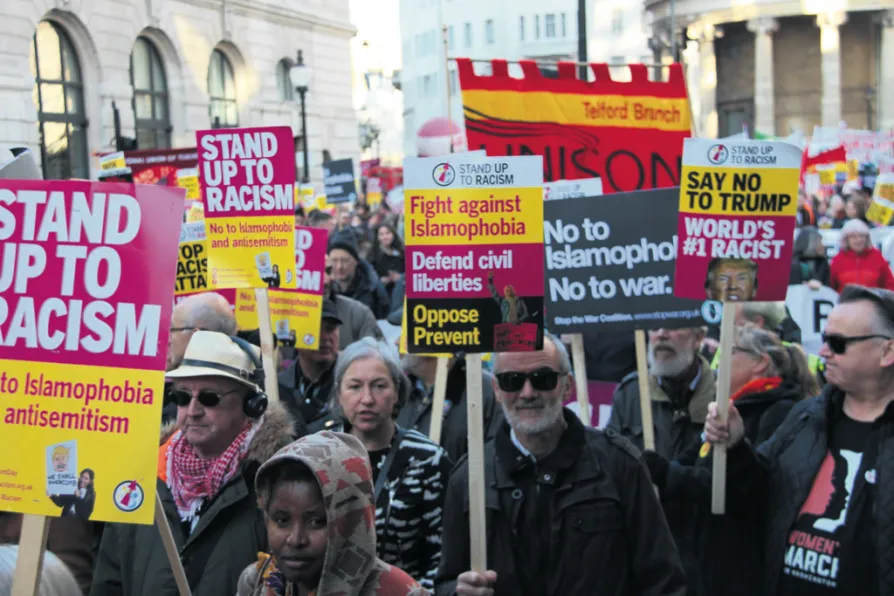
LAST week saw a vibrant and united anti-racist and anti-fascist march through London. It was cross-generational and multicultural.
It had a big turnout from several trade unions and bigger Labour Party representation than I can remember over many years.
It was built through blocs representing different sections, interests, identities, each of whom gave their segment of the march its own character. And it was internationalist — personified by the large bloc of Brazilians, which included a separate women’s section, and supporters of the Brazilian left in the wake of Jair Bolsonaro’s frightening presidential victory.

Similar stories
As extremist movements grow on the streets and at the ballot box, the emergence of the Together Alliance points to a vital strategy: unity across trade unions, campaigners and communities, says TONY CONWAY
May elections will soon be upon us and SABBY DHALU calls for a maximum mobilisation, across Britain, to defeat Reform UK and the right at the ballot box

Once again, our broad-based coalition outnumbered the anti-migrant protest in Faversham, but tackling the sentiment behind this wave of anger requires explaining the real reasons pushing millions into leaving their homelands, argues NICK WRIGHT
CLAUDIA WEBBE argues that Labour gains nothing from its adoption of right-wing stances on immigration, and seems instead to be deliberately paving the way for the far right to become an established force in British politics, as it has already in Europe