

 Latest editorial
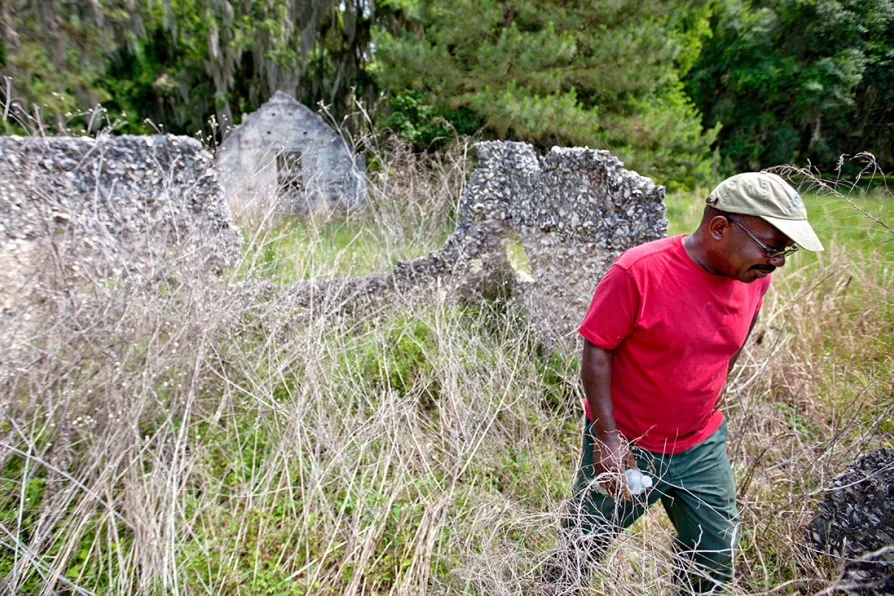 Ire Gene Grovner walks through remnants of the old slave's quarters at the Chocolate Plantation where his ancestors lived some eight generations ago on Sapelo Island, Ga., on May 16, 2013





VOTERS in a coastal Georgia county will decide on Tuesday whether large homes should be allowed on remote Sapelo Island, where black landowners fear the change could saddle them with unaffordable property taxes in one of the South’s few remaining Gullah-Geechee communities founded by freed enslaved Africans.
The referendum, organised by island residents, seeks to override McIntosh County commissioners’ 2023 decision to double the size of homes allowed in the tiny Hogg Hummock community.
Their vote weakened building limits that for decades helped keep property taxes low for one of the US’s most culturally unique black populations.
Tensions between Hogg Hummock’s black landowners and county officials have been high for more than a decade, fuelled by outsiders buying land in the community and building vacation homes.
Island natives worry their taxes will balloon as wealthy buyers build large homes, increasing property values.
Commissioners have blamed the changing landscape on native owners who sold their land.
Black residents and their supporters brought the fight to voters after gathering more than 2,300 petition signatures and challenging commissioners before the Georgia Supreme Court to force a special election.
Regardless of the outcome, the vote wasn’t expected to settle the dispute.
“I strongly believe we’re going to win,” said Jazz Watts, a Hogg Hummock descendant and landowner who was among the organisers of the referendum push. “What happens next is still kind of a legal question based on what the county does.”
Commissioners have said that if voters repeal their zoning changes, they will consider Hogg Hummock to be without any limits on development rather than go back to building restrictions that protected the community for three decades.
Gullah-Geechee communities are scattered along the south-east coast from North Carolina to Florida, where they have endured since the US civil war ended.
Experts say separation from the mainland caused these communities to retain much of their African heritage, including a unique dialect.
