 In this photo released by Xinhua News Agency, rescuers conduct work at a tornado-hit logistics park in Huangzhou District of Huanggang City in central China's Hubei Province on Tuesday, July 7, 2026 (Wu Zhizun/Xinhua via AP)






CHINA allocated millions in additional relief funding for disaster-hit areas yesterday, after severe storms destroyed homes and displaced thousands of people and a landslide killed 21 forestry workers.
The government allocated 50 million yuan (£5.5m) to restore roads, schools and other facilities in central China’s Hubei province, plus another 20m yuan (£2.2m) to help rebuild homes and resettle residents, state media said. Eleven people died and hundreds were injured on Monday night in violent thunderstorms and rare tornadoes.
The government also allocated 30m yuan (£3.3m) to Gansu province, where the landslide buried the forestry workers.
The money came on top of 100m yuan (£11m) previously allocated for schools, hospitals, transport and other infrastructure in southern China’s Guangxi region, where severe flooding has inundated cities and stranded residents following heavier-than-expected rainfall from Tropical Storm Maysak.
Six people were reported dead and about 130,000 have been evacuated after the storm sent torrents of water into towns and cities.
The forestry workers died when the landslide hit them as they walked through a remote valley in the mountains of north-western China’s Gansu province, state media reported today after rescue operations ended. Twelve others survived, seven with minor injuries.
Extreme weather elsewhere in Asia also claimed lives.
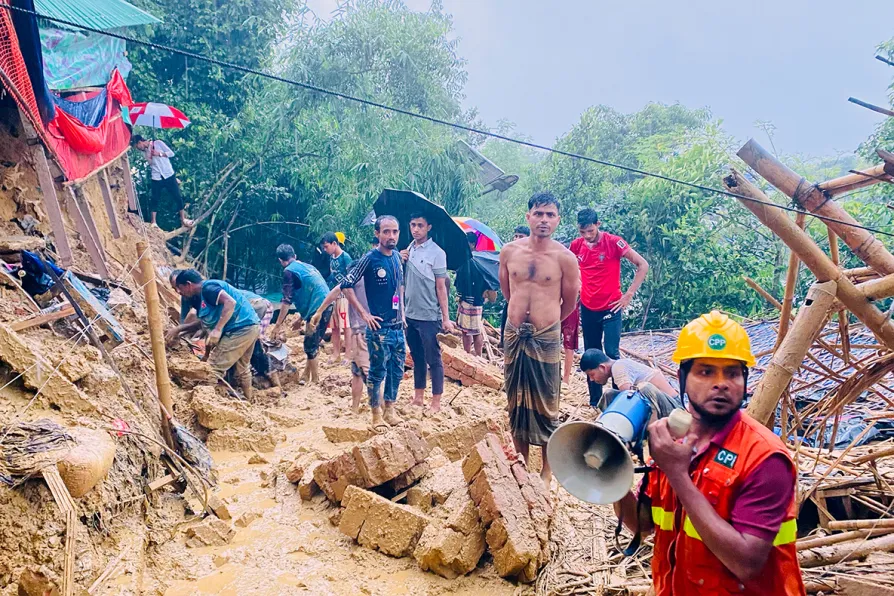
Landslides triggered by heavy monsoon rains in south-eastern Bangladesh killed several Rohingya refugees, including five children.
Dollar Tripura, a Fire Service and Civil Defence official in the Cox’s Bazar district, said rescuers had recovered seven bodies while an eighth body was found by refugees after several hills collapsed on Sunday night and Monday morning.
More heavy monsoon rains across the border in India have left more than a dozen people dead in the past few days.
In the southern state of Kerala, rescuers raced today to find five people still missing after a landslide on Tuesday killed at least three workers near a tunnel construction site in Wayanad district.

India’s monsoon is running below normal overall, yet extreme rainfall has already caused deadly flooding in Kerala, explains LIGIN JOSEPH