

 Latest editorial

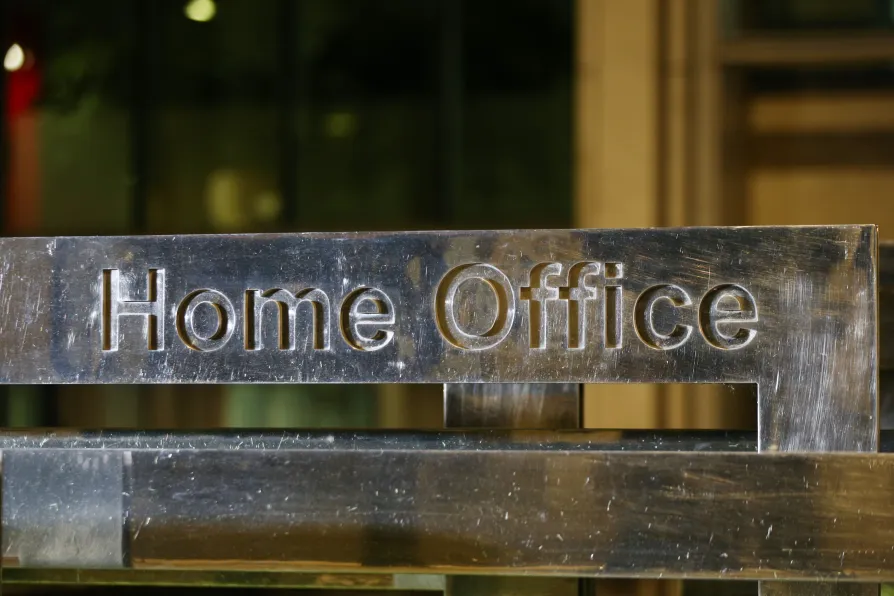 The sign outside the Home Office in Westminster, London






CAMPAIGNERS have slammed the government over plans to use “dangerous and discriminatory” AI facial scanning to guess the age of unaccompanied children seeking asylum.
The Home Office announced today that it had awarded a £322,000 contract to Harlow-based IT firm Akhter Computers to provide “an algorithm that can accurately predict the age of a subject.”
Many young people seeking asylum arrive in Britain without “verifiable identity documents,” but age remains a material factor in how some asylum claims are assessed with under-18s more likely to remain.
Ministers are now hell-bent on cutting the numbers seeking refuge by turning to controversial AI technology for help.
Lauding the development, Border Security minister Alex Norris said: “For too long, adult migrants making false age claims have exploited the system and diverted vital support away from children at risk.
“That is why we are rolling out AI technology to put a stop to this, ensuring those who game the system are identified, detained and removed without delay, and those who deserve support and protection are given it.”
Seema Syeda, of the Joint Council for the Welfare of Immigrants, gave a damning assessment of move.
“It’s horrifying that the government is treating children seeking safety with suspicion and scanning them with pseudoscientific AI to try and estimate their ages,” she said.
“The use of this fake tech is dangerous and discriminatory.
“We’ve seen the traumatic effects of police facial recognition misidentifying black and brown people as suspects of crime, and the use of similar tools at the border will only have the same result.
“Public money should be used to staff hospitals, improve public services and address rising costs of living, not on cruel and inhumane border controls that only serve to enrich private companies.”
Urging the government to rethink and not resort to “shortcuts” like AI, the British Association of Social Workers (BASW) warned that mistakes in age estimates, which determine the type of accommodation provided, “can lead to major safeguarding risks.”
BASW chief executive Sam Baron said: “Social workers are best placed to determine age as they take a ‘whole picture’ approach, whereas these other methods put forward by the government do not.
“A 16-year-old from Syria and an 18-year-old from Syria can look the same to AI, yet a social worker can consider their background and their life so far to identify maturity and the best likelihood of their correct age.”
Outlining exactly what is at stake in such assessments, Jean, a member of Young Outspoken Survivors, Freedom from Torture’s new youth activism group, said: “When I reached the UK in 2012, I had just escaped torture.
“I was 16, terrified, exhausted and alone. But I was treated as an adult and the harm of that has stayed with me ever since.
“Many of us flee war zones as children without documents or lose everything along the way, but that doesn’t make us liars, and it certainly doesn’t mean we’re adults.
“Wrong age assessments by the Home Office push children into homelessness, exploitation or worse.
“Refugee children deserve the same protection as all other children — which means the government needs to believe us and not mislabel us.
“It must not hand over to algorithms the power to make decisions about who we are.
“AI won’t understand our trauma or how fear and survival can change a young person’s appearance. Software can’t identify a scared 16-year-old aged by suffering.
“Behind every age disputed refugee is a child who has survived the unimaginable. We deserve safety, dignity and the chance to grow up free from harm.”
The award of contract comes as the government’s policy to intern people seeking asylum on former army barracks while their claims are processed was thrown into doubt on Thursday after a successful legal challenge in the High Court from Freedom from Torture and the Helen Bamber Foundation.
Agreeing with their argument that the health of victims of torture and trafficking were being put in danger by being forced to share rooms, Mr Justice Sweeting pointed to “long-standing, consistent evidence of the serious risks of harm.”
He added: “These failures amount to a serious breach of [the home secretary’s] public law duties, rendering the impugned policy changes unlawful.”
Hailing the judgment as a “vital and resounding victory,” Freedom from Torture associate director Natasha Tsangarides said: “The judgment makes clear that the government acted unlawfully in changing its policy.
“We have seen the consequences of those changes: survivors of torture have been placed in harm’s way.”
Helen Bamber Foundation director Kamena Dorling added: “The decision to force more vulnerable people into large accommodation sites and shared hotel rooms was a political choice that ignored the evidence from those working with refugees every day.”
Facing the choice of reverting to old policy of finding a fresh approach, the Home Office said it would “carefully consider” the judgment, adding: “Lessons have been learned from large sites acquired under the previous government.
“Strict checks are in place to maintain high health and safety standards in asylum accommodation, and those who genuinely require additional support receive it.”
