
 Latest editorial
APURBA CHATTERJEE explains how British artists in India used the “picturesque” to reshape colonial landscapes and celebrate imperial power


Hew Locke, The Procession
CHRISTINE LINDEY recommends a feast for the senses with a social message at Tate Britain – and running till October
PAUL DONOVAN welcomes a revival of Reginald Rose’s classic play that reminds us of the fundamental need for trials with juries
SIMON PARSONS applauds an exceptional performance of Wesker’s little-known play, by the same actor for whom it was written 45 years ago
ANDY HEDGECOCK and MARIA DUARTE review Late Fame, The Death of Robin Hood, Leviticus, and Gail Daughtry and the Celebrity Sex Pass
ANGUS REID recommends a uniquely accomplished documentary collage that contemplates our relation to the natural world
GORDON PARSONS enjoys Kant’s ‘mind-boggling’ theory of human reality: that we create the reality we experience





HEW LOCKE is among the rare artists like Goya and Picasso who succeed in confronting harsh political and social injustices by visually seducing the viewer. He explains: “What I try to do in my work is mix ideas of attraction and ideas of discomfort — colourful and attractive, but strangely, scarily at the same time.”
The Procession is Tate Britain’s annual commission, and Locke seized this well funded opportunity to produce his large installation which fills the grandiose Duveen Gallery on the ground floor with almost 150 variously dressed life-size figures, some of whom ride life-size horses.
A small group of men are dressed in sober black suits and white shirts with one adorned with a dignitary’s gold chains and medals. Most figures wear flamboyantly coloured textiles some printed with images of Guyanan tropical mansions in various states of repair and roofed with rusting corrugated iron, which invite thoughts of the rhythmic beat of tropical rainfall.

Similar stories
MIRANDA RICHMOND relishes the gloriously liberated art of Roy Oxlade, and traces his method back to the thinking of David Bomberg, his acknowledged teacher
JAN WOOLF invigilates images that meditate on Palestine, and the people who witness them
SIMON PARSONS applauds an artist who rescues and rehumanises stories of women, the victims of violence, from a feminist perspective
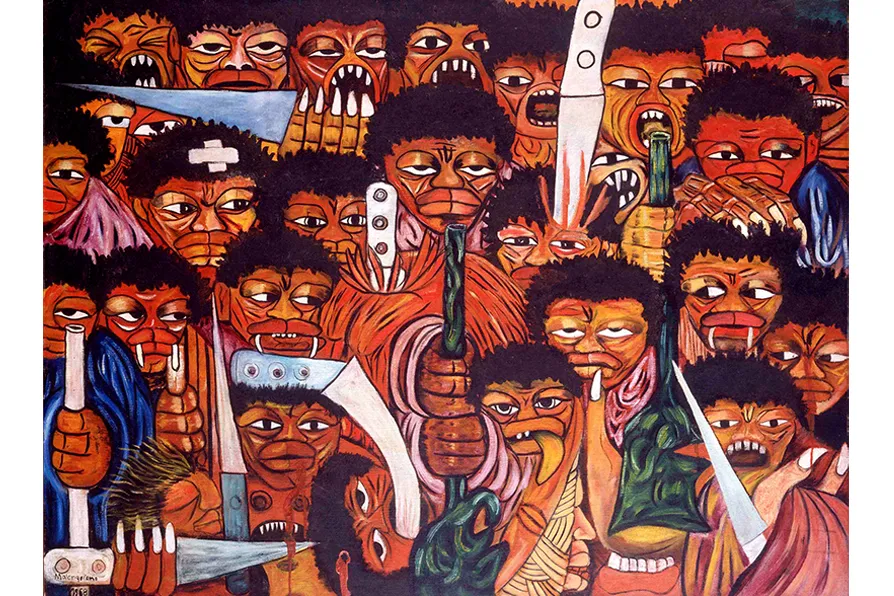
JOHN GREEN welcomes a remarkable study of Mozambique’s most renowned contemporary artist