

 Latest editorial

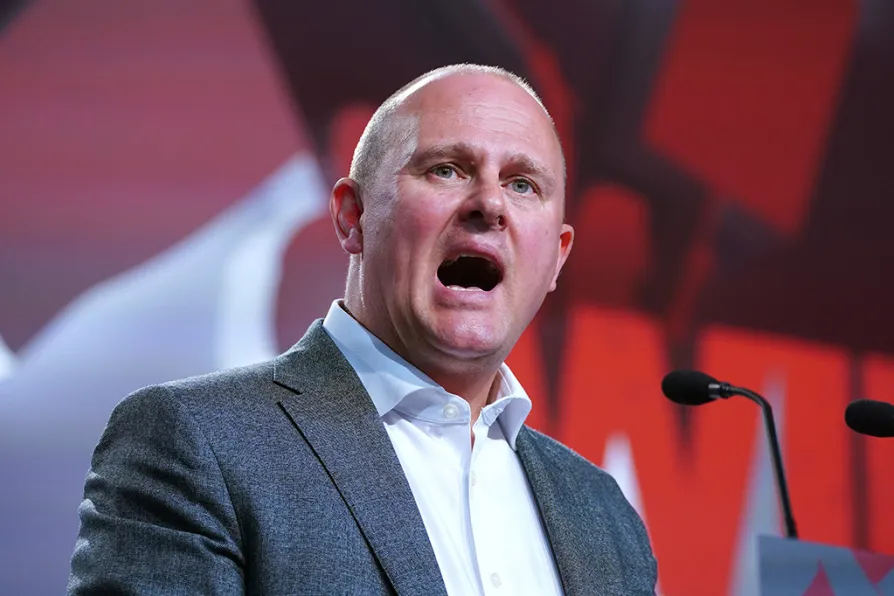 Go further, faster: Paul Nowak





HOUSEHOLDS must not bear the brunt of US President Donald Trump’s illegal war, campaigners warned today, as energy bills are set to rise by 13 per cent.
Ofgem’s new price cap from July 1 will see the typical household face an annual energy cost of £1,862 — up £221 on current levels, or £18 a month.
The regulator said higher wholesale gas prices, “driven by ongoing conflict in the Middle East,” were behind the increase.
Energy costs have soared since the US and Israel began their war on Iran and the subsequent blocking of the Strait of Hormuz.
Calls have mounted for the government to set out action to support the most vulnerable with bills, but Chancellor Rachel Reeves has refused any immediate energy measures in her cost-of-living plan.
TUC general secretary Paul Nowak said the government must “go further and faster to protect households from punishing energy price rises in the coming months.”
“Households must not bear the brunt of costs from Trump’s illegal war,” he said.
“Painful energy price rises are coming down the track — and working people are already feeling the pinch with fuel costs rising because of Trumpflation.
“The longer this war goes on, the greater the threat to working people.”
End Fuel Poverty Coalition co-ordinator Simon Francis said the energy industry had posted more than £3 billion in profits from British operations in the first three months of 2026, warning that “any chance households had to reduce energy debts or build up reserves before the winter heating season will be wiped out.”
“Behind every energy price rise are households whose direct debits are about to rise, families whose energy debt is harder to clear, and pensioners whose summer is already overshadowed by the winter ahead,” he said.
Mr Francis also raised concerns that forecasts suggesting the October cap could remain at a similar level would leave “millions of households facing an extremely difficult year ahead if nothing changes.”
“This summer will also bring its own pressures,” he warned.
“With the vast majority of existing homes at risk of overheating in extreme heat events, and the poorest neighbourhoods seven times more likely to be vulnerable, households will need to run fans and cooling equipment exactly when their bills are rising.
“The government cannot wait until September to act.”
Uplift deputy director Robert Palmer said: “People are fed up with an energy system that sees oil and gas companies rake in billions in profits, while the rest of us are saddled with higher bills.
“Politicians need to learn the lesson of the last five years — that the only way to insulate ourselves from these risks is by doubling down on renewables and helping more households and businesses make the switch to clean electricity. This is just common sense in today’s world.”
Energy Secretary Ed Miliband said that the government’s “number one priority” was easing the burden on households, adding: “The way to get bills down for good is to go further and faster with this government’s drive for clean homegrown power.”
But Fuel Poverty Action campaigner Stu Bretherton said: “Today’s price hikes show that yet again the government has failed to protect us from energy sector profiteering.”
The group has launched a campaign to demand that the cheaper production costs of renewable energy be passed on to consumers, with a protest outside the Department of Energy on July 1.
Eva Watkinson of Debt Justice called it a “scandal” that the cap was rising while energy companies continued to post enormous profits, saying the government must “immediately act to write off debts that have built up during the cost-of-living crisis.”
Green MP Hannah Spencer demanded immediate government intervention, telling Ms Reeves to freeze the cap before bills go up.
“And if she’s wondering how to pay for it, there are some people doing very well out of this crisis,” she said.
“The government should start by taxing 100 per cent of the huge windfall profits oil and gas giants have made since the start of the illegal war on Iran.”
