Committee for the Defence of the Iranian People’s Rights general secretary GAWAIN LITTLE discusses the impact of the US-Israeli war on the Iranian people and economy


 Latest editorial

The EU single market is incompatible with Labour’s manifesto
EU single market membership frustrates any ability to create coherent, integrated, nationalised industries and utilities based on democratically agreed national needs, write JONATHAN WHITE and ALEX GORDON
Capitalism has extracted itself from crisis before, argues PRABHAT PATNAIK – but through methods no longer available. So it is turning to authoritarianism, militarism and neocolonialism
The five young men killed in the A66 crash were responsible for a devastating tragedy — but the crash should force us to ask difficult questions about wider society, argues RENATA MEDEIROS MIRRA
Britain funds the policing of black culture 16 times better than the culture itself. The Diamond Jubilee is the moment to end that, argues CLAUDIA WEBBE
Despite Andy Burnham’s declaration defending the continued partition of the island, all major international and internal trends are converging to make Irish reunification inevitable
Humans are part of the ‘animal kingdom’ – and of nature in general – but also distinct from it and labour (work) is part of what makes us unique, declared Engels. His insights 150 years ago into how our species came to be and how we differ from the rest of nature, are as important today as they were then, says the MARX MEMORIAL LIBRARY





IN the debate around Labour’s position on Brexit, siren voices on the left assert the single market — sometimes called the EU internal market — does not prevent governments creating nationalised industries and utilities.
For example, when French President Emmanuel Macron recently announced a temporary renationalisation of the “STX France” shipyard in Saint-Nazaire, blocking Italian firm Fincantieri’s takeover of France’s military infrastructure for warship and aircraft carrier construction, some opponents of Brexit hailed the move as evidence that the EU is neutral on the question of nationalisation versus private ownership of industry.
However, French Economy Minister Bruno Le Maire went to great lengths to make clear the intervention to protect French strategic naval interests was “a temporary decision, to give us time for better negotiations and a good agreement.”

Similar stories

The question is not simply how much we spend on defence, but what we understand defence and security to mean, says SIMON BRIGNELL
Can Andy Burnham’s programme deliver a productive economy – or merely a softer version of capitalism, asks VINCE MILLS
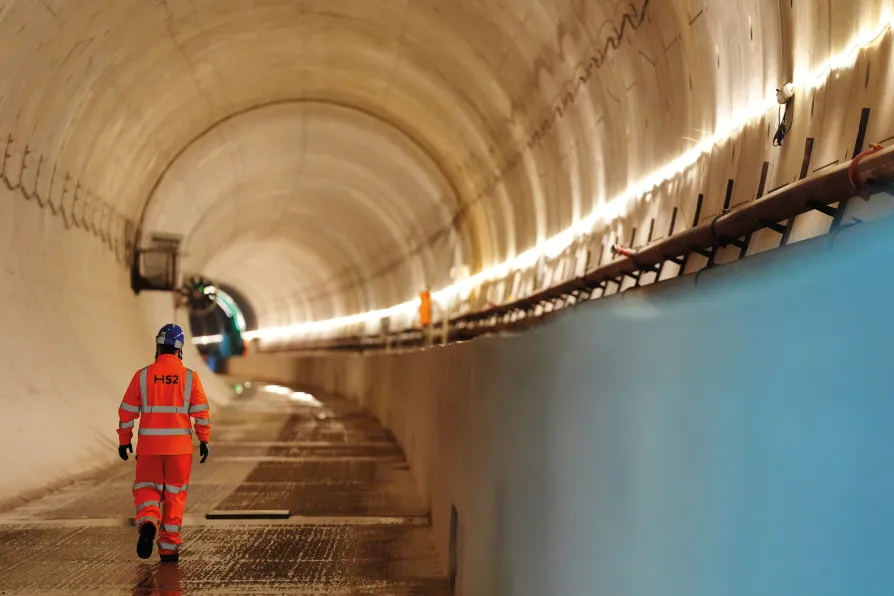
The HS2 debacle exposes what happens when public infrastructure is handed to private contractors – especially when set against China’s state-led high-speed rail success, says CARLOS MARTINEZ