

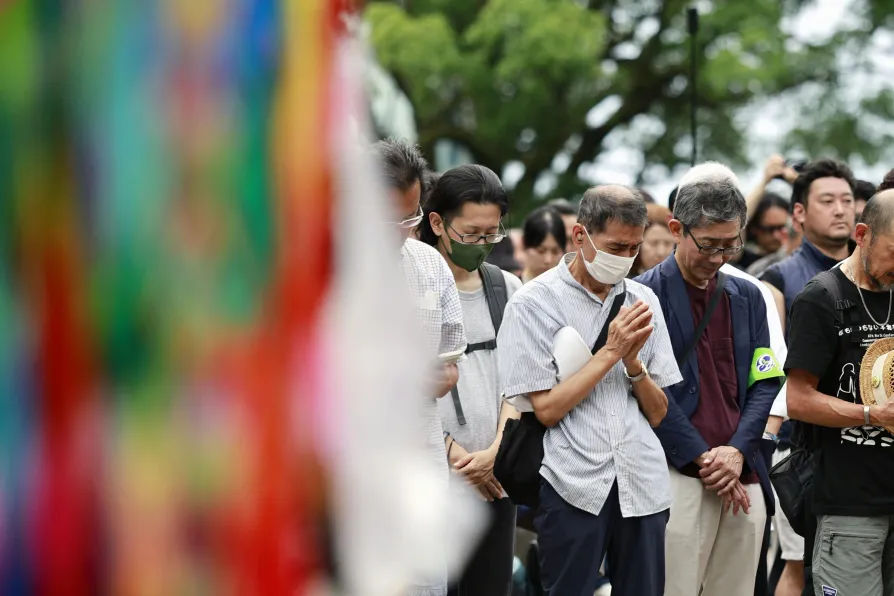
 People observe a minute of silence during a ceremony to mark the 81st anniversary of the U.S. atomic bombing at the Atomic Bomb Hypocenter Park in Nagasaki





NAGASAKI marked the 81st anniversary of the US atomic bombing on Sunday, as the mayor called nuclear weapons “absolute evil” and criticised growing support for nuclear deterrence.
The anniversary coincided with Japanese Prime Minister Sanae Takaichi’s government revising the country’s defence policy to bolster military offensive capability.
Ms Takaichi, who supports nuclear deterrence, has faced speculation over whether she may allow nuclear weapons into the country, breaking Japan’s third non-nuclear principle.
Mayor Shiro Suzuki said that while some countries argue the possession of nuclear weapons helps deter potential attackers, the atomic bombings of Hiroshima and Nagasaki had demonstrated that humans can cross the line.
“The theory of nuclear deterrence is extremely dangerous and fragile. Nuclear weapons are not a ‘necessary evil’ but an ‘absolute evil,’ and can never coexist with humanity,” he said.
“To all leaders of the nuclear states and nations relying on nuclear deterrence, you must face the reality that the more you rely on nuclear deterrence, the more you increase the risk of a nuclear war.”
The US attack on August 9 1945 killed 70,000 people by the end of that year, three days after the bombing of Hiroshima killed 140,000.
Japan surrendered six days later, ending the second world war.
Representatives from more than 90 countries attended Sunday’s ceremony at the Peace Park, observing a moment of silence at 11.02am, the exact time the bomb was dropped.
Mr Suzuki called on the Japanese government to uphold the country’s war-renouncing constitution, attend this year’s Treaty on the Prohibition of Nuclear Weapons review conference and maintain the three non-nuclear principles.
Ms Takaichi, who attended the ceremony, reiterated her “realistic and pragmatic approach” to achieving a world without nuclear weapons but remained ambiguous on the non-nuclear principles.
She did not mention the treaty, which Japan has refused to sign due to its reliance on the US nuclear umbrella, telling reporters her government would decide its approach “based on what’s most effective.”
Survivors, or hibakusha, have criticised the government’s stance as insincere, with growing concern over a possible easing of the non-nuclear principles prompting protests in Hiroshima and Nagasaki.
The number of survivors has fallen to 91,105, about a quarter of the original number, with their average age now exceeding 86.

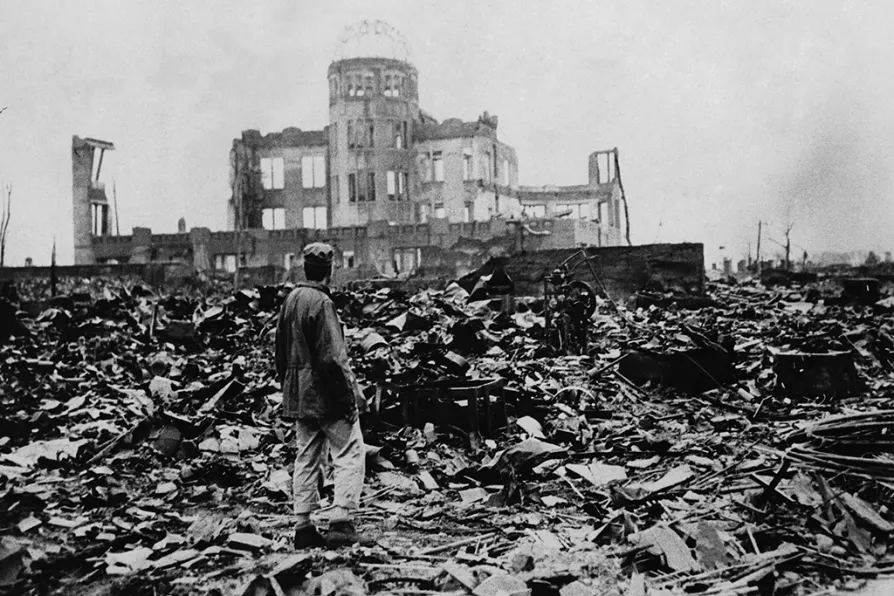
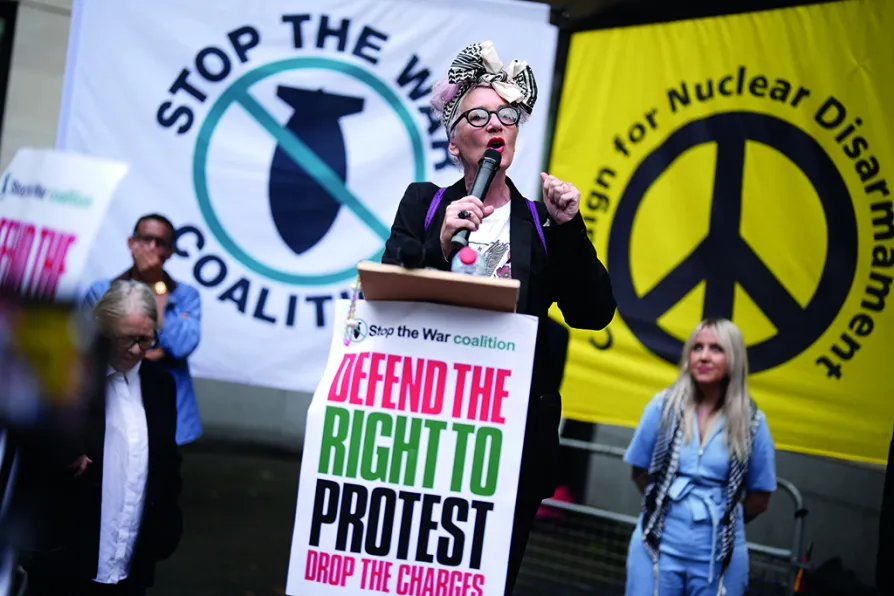
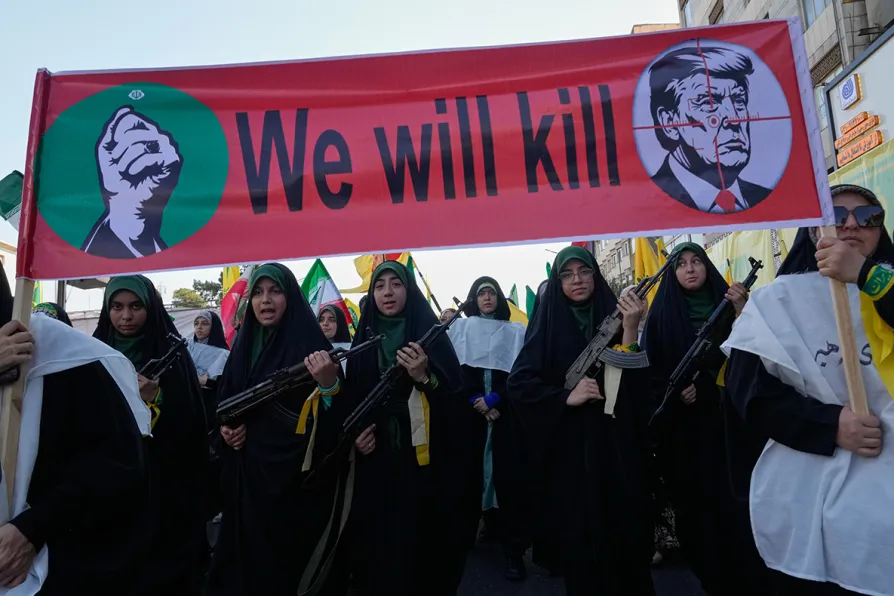
On Hiroshima Day, Campaign for Nuclear Disarmament general secretary SOPHIE BOLT explains why the danger of nuclear conflict is growing daily
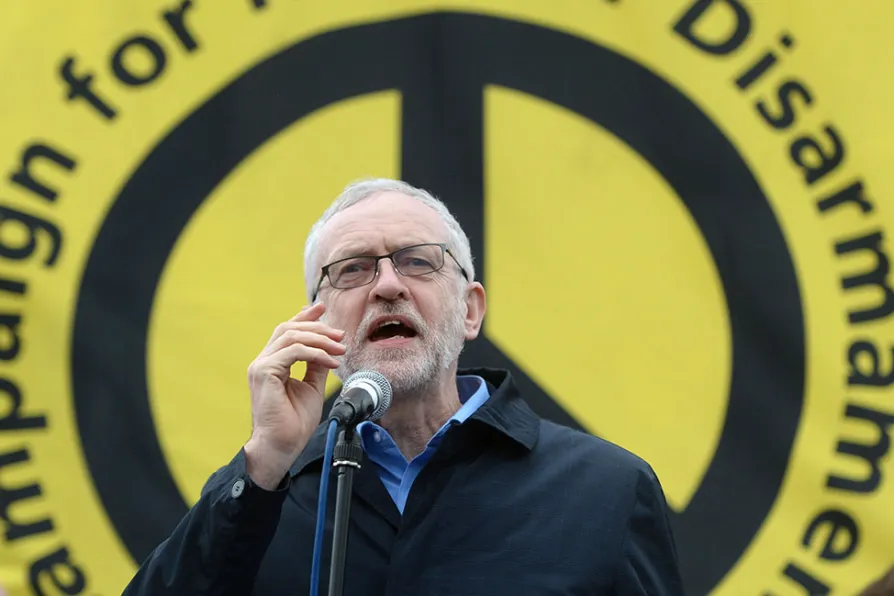
JEREMY CORBYN says we should never forget the horrific reality of nuclear weapons, or cease our efforts to rid the planet of them entirely
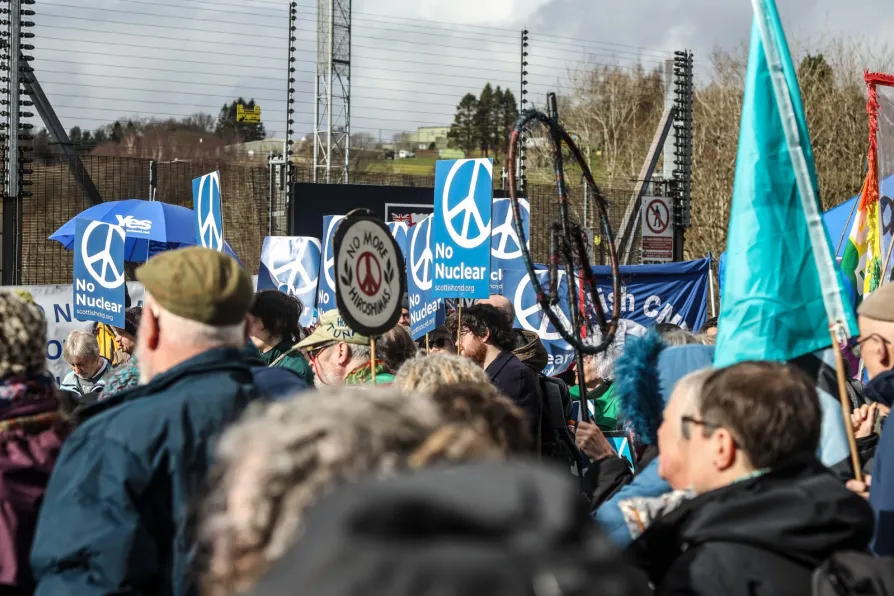
As we approach the grim anniversaries of Hiroshima and Nagasaki, SIMON BARROW sounds the alarm over the dangerous and murderous direction our government is heading