Cuban trade union federation CTC leader OSNAY MIGUEL COLINA speaks to Ben Chacko about life and work under a crippling US siege


 Latest editorial
At CND we believe in investing in saving lives, not destroying them
SOPHIE BOLT argues that spending more on military will harm rather than benefit Britain by diverting vital resources away from essential public services
 STOP FUNDING WAR: A family stands on ruins of their home after a Russian air guided bomb hit their private house in Zaporizhzhia, Ukraine

A part of the British empire’s network of slavery, today the Caribbean island of Nevis faces a new form of exploitation in the form of crypto-colonialism, CLAUDIA WEBBE writes
A new book by Victoria Holmes illuminates the many hidden histories of the oppression experienced by Gypsy/Roma/Traveller community, writes ROGER McKENZIE
Even the oligarchs of the artificial intelligence industries are warning that their creations have the capacity for the ultimate destruction of the planet and its population. ANDREW MURRAY suggests that there might just be other solutions
The Labour government must deliver on its commitment to bring back privatised services into the public sector. This not only saves money but also creates accountability and generates wider social benefits, argues ANDY MCDONALD MP
Public ownership of Great British Railways has enormous potential to improve our railway network, but that can’t happen unless jobs, employee rights and union recognition is at the heart of the transition, argues MARYAM ESLAMDOUST
Challenges from the unscrupulous misuse of AI to steal actors’ voice and physical likenesses is being met with a firm union response, writes LYNDA ROOKE





AS ANDY BURNHAM takes on the role of new Prime Minister on Monday, he needs to understand that continuing Starmer’s warmongering agenda — even if it is dressed up as “reindustrialisation” — will be a disaster.
It will drive the country closer towards nuclear war, drag the population even further into poverty and devastate our vital public services. Instead, we need political solutions to the conflicts we face and investment that will create genuine, sustainable growth and prosperity.
Burnham argues that militarism will be a boon to British jobs and British workers. Yet this totally flies in the face of economic research and the lived reality for communities dominated by arms companies.
The government’s own data shows that military spending is one of the least jobs-rich areas of the economy, falling far behind transport, health, education and social care.
Burnham has supported outgoing Prime Minister Keir Starmer’s Defence Investment Plan, which justifies spending another £15 billion on war and nuclear weapons. It will be paid for by nearly £7bn worth of cuts to vital public services, with another £5bn planned in the autumn.
Yet new research by the Transition Security Project has now shown that the defence investment plan will result in a net loss of at least 10,000 jobs. This is precisely because military spending is being increased by making cuts to these critical public services.
Their research also shows that if cuts are used in the same way to fund the extra £5bn in the autumn, these job losses would rise to 20,000.
The evidence is also staring us in the face. Places like Barrow-in-Furness in Cumbria, which is dominated by the British Aerospace shipyard that has been making nuclear submarines for decades, has some of the highest levels of social deprivation in the country.
So, far from being an engine for reindustrialisation, this deadly “war-readiness” agenda will only devastate communities further. This is in a context where wages have been flatlining for nearly 30 years, while costs for rent, food and energy have rocketed. Our public services are crumbling and we’re on the brink of yet another cost-of-living crisis.
Raising awareness about this stark reality of these jobs losses and exposing this “defence dividend” myth is absolutely critical — as it is a key plank of the new Burnham government’s attempt to force public opinion to back the war drive.
While the Ministry of Defence and the arms industry is lobbying for even more money — backed by MPs lining up to support them — in real terms military spending is now actually higher than during the cold war, and the Stockholm International Peace Research Institute shows that Britain’s military spending has already increased by 32 per cent since 2016. And Britain’s spending on nuclear weapons is now the third highest in the world, ahead of Russia.
In fact, the Defence Investment Plan sets out nearly £300bn of military spending over the next four years. Alongside £5bn for drone technology, over £8bn for fighter jets and £11bn to increase weapons stockpiles. On top of this, £64bn will be spent on nuclear weapons — more than double every other area of military procurement.
This is to fund the ongoing replacement of Britain’s nuclear-armed submarines and develop a new nuclear warhead. It is also to buy 12 nuclear-capable F35A fighter jets from Trump, so that Britain can launch new US nuclear weapons stationed at Nato bases across Europe — and here at RAF Lakenheath in Suffolk.
The Ministry of Defence argues that this is just a fraction of what Britain needs if it is to prepare for a war to prevent a war with Russia. But, of course, in reality, this strategy of record levels of military spending, plans for rearmament and warmongering is only prolonging the devastating war in Ukraine and increasing the risks of a nuclear confrontation between nuclear-armed Russia and Nato.
Now hundreds of long-range drone and missile attacks are taking place every day by both Russia and Ukraine. The UN has stated that June was one of the deadliest months for Ukrainian civilian causalities since the start of conflict. Meanwhile hundreds of thousands of men in Ukraine and Russia are trying to flee conscription or are deserting.
In reality, war is the enemy of working people. As well as the devastating death tolls, it destroys our lives through poverty and social deprivation. As the incredible anti-war summit in London in June showed, the movement against war and austerity is growing, with huge protests and strike action taking place across Europe. Trade unions are a critical driving force of this opposition.
Now more than ever, we need to galvanise the strong public support that exists for a total change in political direction — for a halt to this deadly war drive and nuclear threats — and to rebuild our public services.
Redirecting £300bn into transport, health, education, climate action and state-supported defence diversification is the engine for sustainable growth and jobs — and it will enable Britain to seriously tackle the real security threats we face from the looming global recession and devastating climate breakdown.
Sophie Bolt is general secretary of CND.

Similar stories
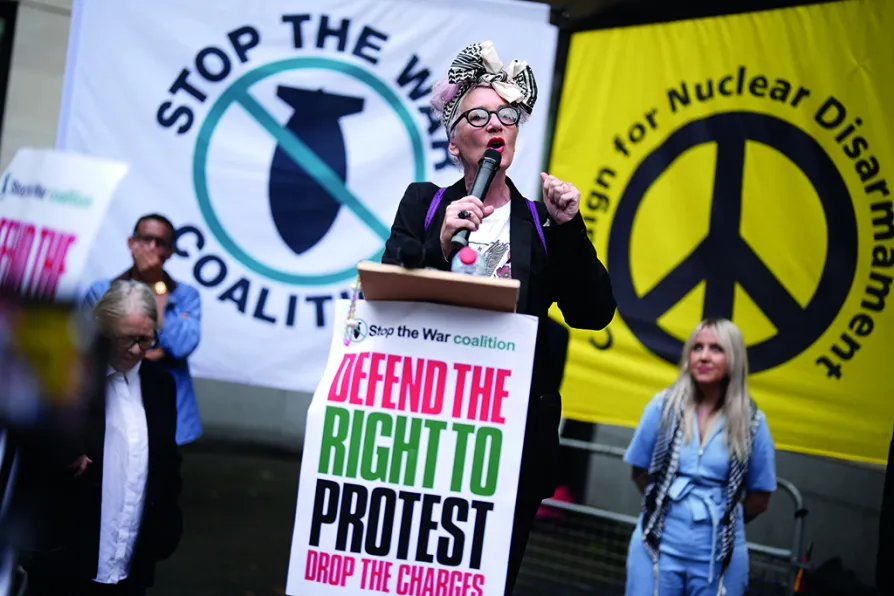
On Hiroshima Day, Campaign for Nuclear Disarmament general secretary SOPHIE BOLT explains why the danger of nuclear conflict is growing daily

We need a government that invests in saving lives not destroying them, argues SOPHIE BOLT
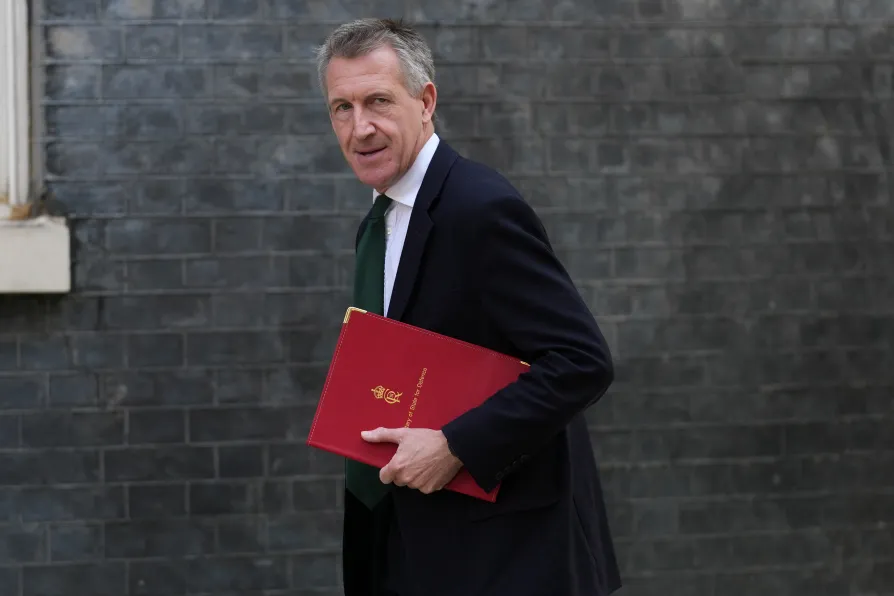

Government's plan means ‘extra cash for war and overseas interventions, but less for schools and hospitals,’ Unison general secretary Andrea Egan warns