

 Latest editorial
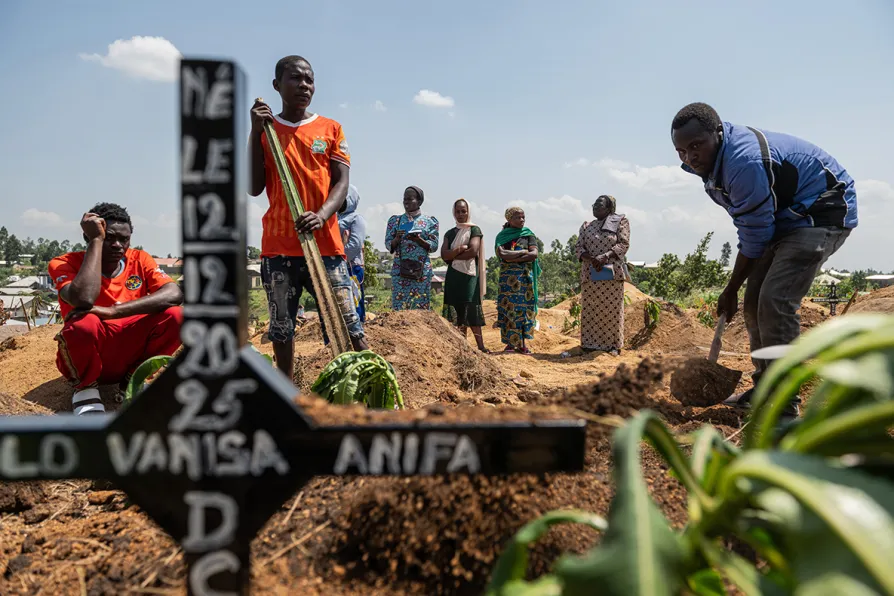 Relatives of Vanisa Anifa, a six-month-old orphaned girl who died of Ebola, attend her burial, in Bunia, Congo, June 19, 2026






THE crisis caused by the outbreak of the Ebola virus in the Democratic Republic of Congo has deepened further .
Cases of the deadly disease in eastern DRC have reached 1,003, including 254 deaths, officials said late on Sunday.
A total of 100 people have recovered in the outbreak concentrated in the Ituri province since it was declared on May 15, the DRC’s Ministry of Health said. At least 365 patients are in hospitals or in isolation, it said.
The Ebola outbreak caused by the rare Bundibugyo virus, which has no vaccines or treatment, was the worst ever in its first month.
Officials admit there could be far more cases they still don’t know about and that the peak of the outbreak is still ahead.
Officials also are yet to identify the outbreak’s patient zero and still need to trace more than 35,000 people who have come in contact with infected individuals as of last week, authorities said.
That’s partly because eastern Congo is also battling ongoing violence from rebels.
More than a month into the outbreak, officials believe the disease continues to outpace response efforts and no-one knows its true scale.
Dr Jean Kaseya, the director-general of the Africa Centres for Disease Control and Prevention, said: “If you want to control an outbreak, especially Ebola outbreak, you must know the index case.
“We don’t have confidence in when this outbreak started.”
Meanwhile the impact of the outbreak continues to spread as borders between the DRC and its neighbours have been cut off.
Since authorities announced a confirmed Ebola case in Goma on May 16, the Petite Barriere border crossing, used by up to 30,000 people a day, has been closed, cutting off a vital trade route for thousands of people whose livelihoods depend on moving between Goma and the Rwandan town of Gisenyi.
Last month, the director-general of the World Health Organisation reiterated that the agency does not recommend closing borders during Ebola outbreaks, arguing that such measures are ineffective and can cause significant harm.
But Murielle Ihora, who survives in the informal economy by selling tomatoes, said: “On May 17, with my two baskets, I was getting ready to cross into Rwanda to buy some tomatoes to resell here in Goma. On my arrival, I was told that the crossing had been suspended by the Rwandan authorities.”
She is now forced to travel miles to neighbouring villages to source her goods.
