
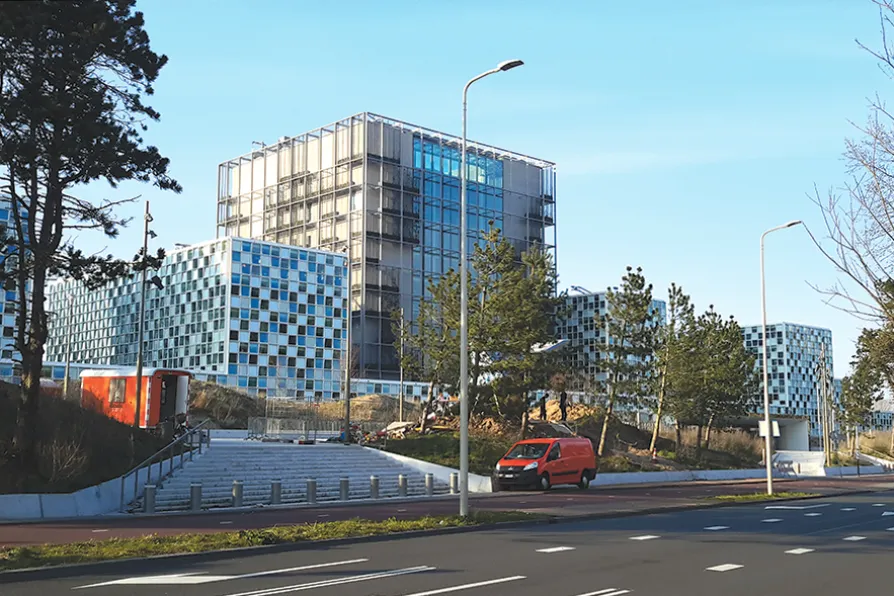
The US is hell-bent on dismantling the International Criminal Court as part of its assault on global legal systems, but others also have valid reasons to seek its demise. BEN CHACKO provides the analysis


The Welsh echoes of a modern by-election
In Ashton-in-Makerfield, historical migration patterns and industrial heritage sit alongside a heated electoral battle for the future of British politics, says MEIC BIRTWISTLE
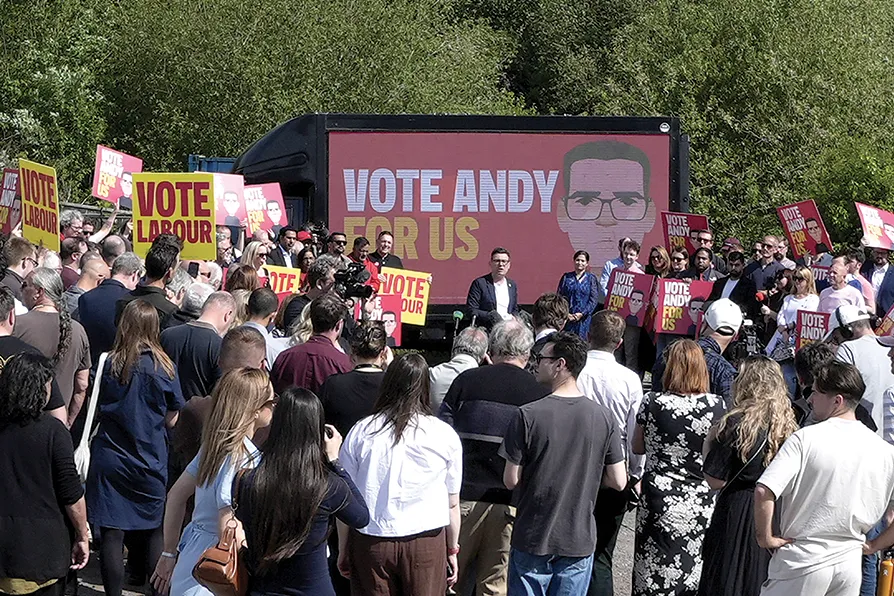
 TOUCH AND GO: Andy Burnham speaks to supporters at the launch of his campaign at Stubshaw Cross Community and Sports Club in Ashton-in-Makerfield on May 22 2026
A small Palestinian village is under attack from illegal settlers and the Israeli state to forcibly extend their illegal settlements. It is a template for the future, writes RAMZY BAROUD
The fawning obituaries have painted a flattering portrait of Rod Liddle. STEPHEN ARNELL offers a rather less reverential view of the man and his legacy
Sovereignty and the rule of law are under threat from Trump’s attacks on Lula’s administration just as they have been across Latin America, argue CARLOS MARTINEZ and SARA VIVACQUA
Glasgow will remember the martyrs of the 1787 strike this weekend in speech and song, their spirit is sorely needed today, writes JIM LISTER





ON BOLTON ROAD in Ashton-in-Makerfield you’ll find Andy Burnham’s campaign headquarters. It sits in what used to be called “Little Wales” when this town was a centre for coalmining, with North Walians flocking here. So it was indeed a fitting place for Welsh Labour activists to gather to give support to Burnham’s election bid.
This area has always been multicultural, despite the narratives of parties of the populist and far right.
And to stress the point, a stone’s throw from Labour HQ was Carmel, “Addoldy Anenwadol Cymreig 1891” (a non-denominational Welsh place of worship) now closed for some decades.
Sad then to see opposite this former centre of Welsh working-class religion and culture a Reform placard. A few yards up the Bolton Road an old carpet warehouse announced itself to be another Welsh chapel — Weslyan this time — and across the street, high in a window, this time, a Restore poster.
However, back at base there were a myriad of Andy Burnham placards ready for distribution. There is clearly a poster battle being fought — mostly between Labour and Reform — with placards often cheek by jowl. These political standards mark out the battle lines between the two parties.
Back at base former Welsh first minister Mark Drakeford, preparing to address the troops, told the Morning Star: “We understand what it is to be far from where power and wealth is concentrated and critical decisions taken, that is in a small corner of south-east England. And we understand that having power in our hands allows us to make decisions so as to try and resolve those inequalities. And Andy Burnham is a fantastic representative of people working to do that.”
However, Drakeford was keen to stress: “We are not here to tell people what to do but to share experiences. As we in the Labour movement share common values.”
The Welsh, inspired, were suitably dispatched to an area of the Makerfield constituency called Bryn — which is the Welsh word for hill and probably dates to the Welsh Dark Age presence.
So we were on home turf here in so many ways, though sadly few residents were themselves at home on this sunny day to experience our canvassing efforts. Polls currently suggest a close contest, a conclusion borne out by our own poster counts.
Walking back later down Bolton Road, I was accosted by a man alerted by my notebook, and possibly the “Vote Andy” sticker, as to me being here for the by-election.
“I’m a trade unionist. Worked in the glass industry at St Helens,” he said. I like Andy Burnham. But you’ll not persuade me … you’re too late, my postal votes gone in. Labour failed us and especially on immigration. I’ve voted for the “sexist plumber.”
These Lancashire pavements are for the Welsh already politically significant. Makerfield gave us a great socialist hero. Tom Jones or rather “Twm Sbaen,” was born here, into that Welsh-speaking mining community, attending these very chapels.
Later in Wrexham as a miner he was in the rescue party at the 1934 Gresford pit disaster. And subsequently joined the International Brigade where he was wounded and captured in the Ebro fighting of 1938. He was, until 1940, in a fascist prison, being the last British prisoner of war released by Franco. Becoming a trade union official, he led the Welsh TGWU and was co-founder of the Wales TUC. An internationalist Ashton boy.
I walked by the old Cross Keys pub, plastered in “Andy For Us” posters. The “Cwtch Cafe” (Cwtch is Welsh for a hug) had the shutters down, but other outlets with various national cuisines were available.
In a pub at the bottom of Bolton Road Welsh canvassers, of various nationalities, were snatching a swift meal — English beer, Indian curries or Jewish-originated fish and chips.
On the wall was a tiled mural with an image of a knight but a larger one of a collier. It was titled “Ashton Legend.” And indeed this by election will surely be legendary for Ashton and Britain as a whole.
