MAYER WAKEFIELD is entertained but let down by an audacious production that, sadly, doesn't ring true


 Latest editorial
A Bristolian genius of the keys
CHRIS SEARLE recommends a work of love and deep admiration for a great musician
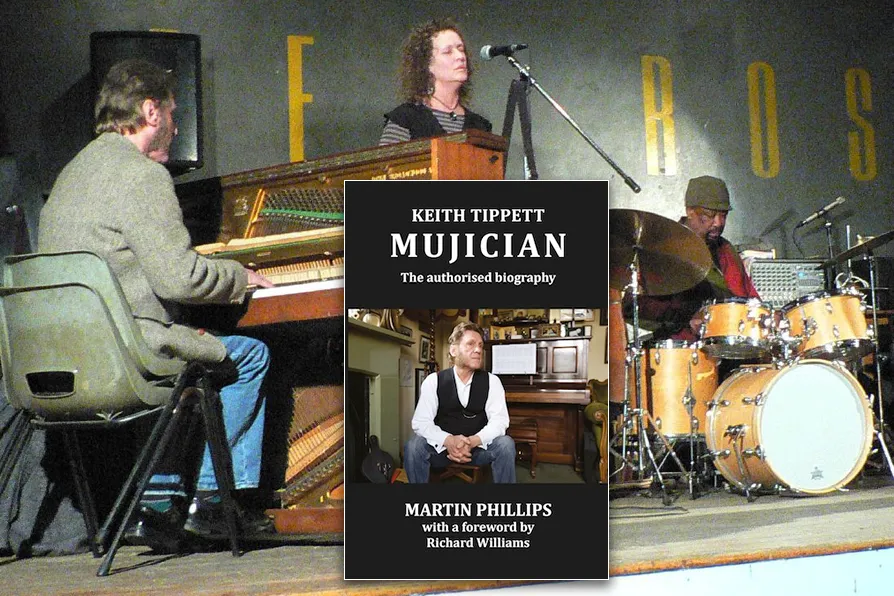 Keith & Julie Tippetts with Louis Moholo, 2007 [Pic: Andy Newcombe/CC]
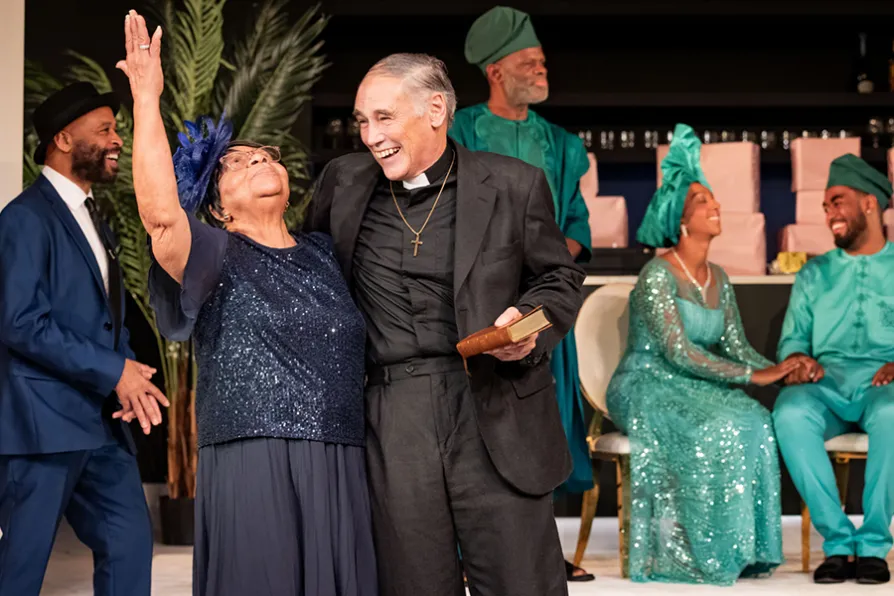
MARY CONWAY is disappointed by drama that, despite accomplished performances, cannot overcome an unfocused script
New releases from Sam Carter, Spell Songs and Les Thomas
KEN COCKBURN traces the one original language – that of the Yamnaya pastoral nomads – from which all European and Indian languages derive
PAUL DONOVAN is fascinated by the debunking of the iconic British war hero
ALEX HALL recommends a searing panorama of our global predicament





Keith Tippett: Mujician
Martin Phillips, Jazz in Britain, £25
KEITH TIPPETT was a piano polymath, a Bristolian genius of the keys from a council estate reckoned to be among the 10 per cent “most deprived” in Britain. He went to a local secondary modern (even though he passed the 11-plus but didn’t want to abandon his estate friends) and failed his O’Level Music. But as Martin Phillips tells us in this compelling and powerfully written biography: “Very few jazz musicians excel across so many aspects of their art: soloist, duettist, small, big and enormous band leader, totally free improviser, writer of highly composed works. There are even fewer who combine all of the above with a natural ability to teach their craft.”
Yet this was the irreplaceable Tippett, who died in 2020 during the pandemic. Phillips, who knew him closely and ever since he heard the astonishing Septober Energy played in Coventry in 1971 by Tippett’s 50-piece ensemble, loved him for his music and his life of “creating, not curating” — and for the generosity of spirit behind the words which signify Septober Energy’s finale: “Unite for every nation/Unite all the land/Unite for liberation/Unite for freedom of man.”
Having been weaned on the early 60s “trad fad” with Acker Bilk and Kenny Ball, he started his band at 15, called the “KT Trad Lads.” In 1967 he moved to London, got a job in a carpet warehouse and became fascinated with new horizons in music after meeting saxophonist Elton Dean, trombonist Nick Evans and cornetist Marc Charig at the Barry Summer Jazz School. Their first albums together, You Are Here… I Am There and Dedicated To You, But You Weren’t Listening marked their music as “Something new. This wasn’t American,” and with Tippett on the fringes of jazz-pop given his time with King Crimson (even miming on Top of the Pops), he burgeoned with a power to create anew and move beyond category.
Phillips’s narrative moves swiftly and scoops up the readers’ fascination: Tippett’s union and marriage with vocalist Julie Driscoll and the creation of their “Couple in Spirit” duetting; his development as a brilliant piano soloist and his first, 1978, solo album The Unlonely Raindancer; and the formation of the quartet Mujician (the word invented by the Tippett’s daughter Inca, when her teacher asked her about her father’s profession), perhaps the most momentous of European jazz quartets with bassist Paul Rogers, drummer Tony Levin and saxophonist Paul Dunmall, whose seven albums are a pinnacle of jazz achievement with their three basic commissions: “Turn up. Sound Check. Play.”
Tippett’s music was ever orientated to the future and his founding in Bristol of Seedbed Orchestra and The Rare Music Club gave his outrageous creative energy to young musicians. I remember one of his last London performances at Cafe Oto, when he arrived with an astonishing teenage violinist, Theo May, who played with prodigious power in a trio with Keith and Julie. “What freshness!” exclaimed Tippett through the microphone at the performance end.
Phillips describes in detail how his artistry was so much more appreciated throughout Europe where he so often toured, particularly to Italy, and how his protean musicianship took him across the world, especially South Africa after the end of Apartheid, following his years of playing with anti-Apartheid musical rebels in London like drummer Louis Moholo-Moholo, trumpeter Mongezi Feza and bassist Harry Miller. And the performance too of his sonic narrative The Monk Watches the Eagle in Norwich Cathedral, recalling his boyhood years as a chorister.
Phillips’s biography is a work of love and deep admiration for a great musician, but it also expresses an intimate understanding of Tippett’s artistry and pedagogical commitment. It includes a photograph of them both walking along the riverside in Budapest. The author had set up a cultural exchange in the Hungarian city of Pecs between young Hungarian and Devonian musicians, with Tippett’s teaching as its focus. Music and education were entwined in Tippett’s life, and as Phillips tells us, he has left much for those who follow.
Tippett’s influence is manifold and rare across many soundscapes, but in all his pursuits he pledged to his listeners: “May music never become just another way of making money! — with the key word ‘just’!” I won’t forget how he unexpectedly telephoned me to thank me for the Morning Star review I wrote of the rerelease of The Unlonely Raindancer in 2019.
He was full of warmth and brotherliness, a feeling I still sense beneath his every recorded note.

Similar stories
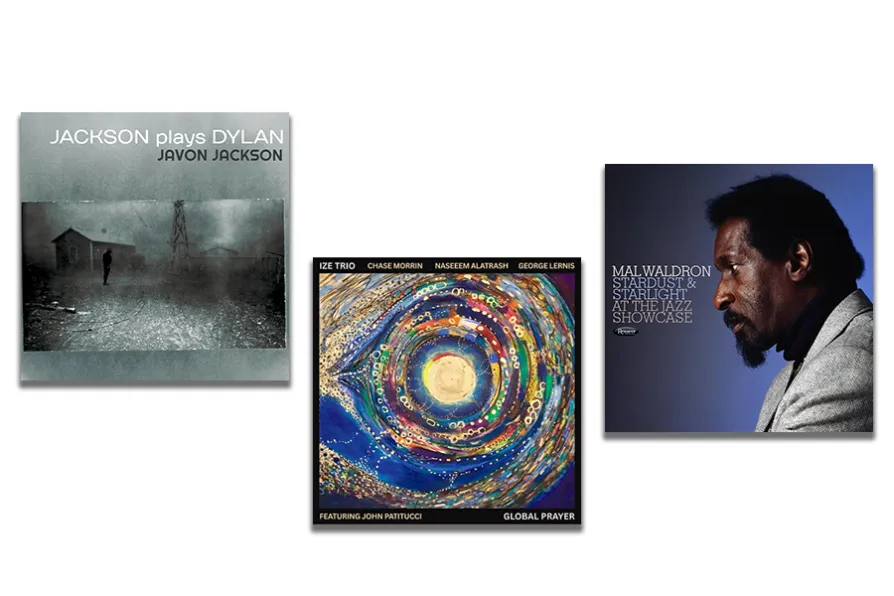
New releases from Javon Jackson, IZE Trio, and Mal Waldron Trio

CHRIS SEARLE waxes lyrical over Alan Skidmore’s tenor-tonic, Jeremy Pelt, and the Yusef Lateef Quartet

CHRIS SEARLE urges you to listen to two new albums by the US Indian pianist VIJAY IYER

CHRIS SEARLE recommends a new album featuring Pat Thomas and Ahmed, and marvels at the tempestuous power of a live performance