


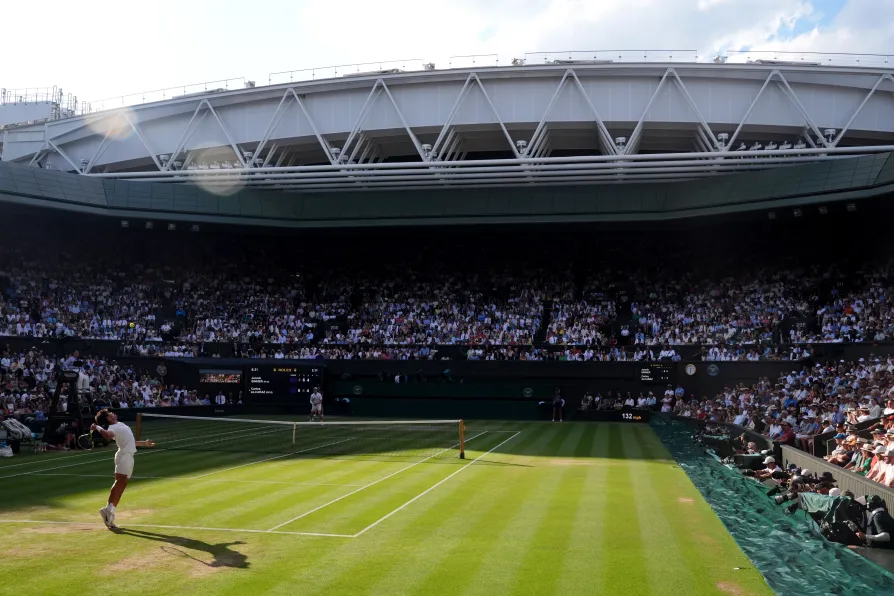
 A general view of centre court during the Gentlemen's Singles Final between Carlos Alcaraz and Jannik Sinner on day fourteen of the 2025 Wimbledon Championships at the All England Lawn Tennis and Croquet Club, London, July 13, 2025






WIMBLEDON organisers are keen to avoid player protests at the tournament seen at the French Open two weeks ago.
Amid an ongoing dispute between a group of leading players and the grand slam tournaments, most of the world’s top stars limited their pre-event media activities to 15 minutes each.
That symbolised what the players say is the approximately 15 per cent of revenue the French Open pays out in prize money — well short of the 22 per cent they believe the tournaments should be moving towards.
Wimbledon prize money for this year’s championships will be revealed at a press conference next Thursday, under what is expected to be a lot of scrutiny.
Prize money at Roland Garros increased 9.5 per cent year on year but that compared unfavourably to a 20 per cent rise at last year’s US Open and 16 per cent at the Australian Open in January.
Last year, Wimbledon paid £53.5 million in prize money, a 7 per cent rise on 2024, but it only equated to less than 13 per cent of revenue.
To hit the 16 per cent demanded by the players for this year, Wimbledon would need to up prize money to around £70m.
That kind of rise appears unlikely in one go but organisers are optimistic that the players will be content enough with prize money levels to stave off any kind of protest.
Wimbledon chief executive Sally Bolton met the players’ representative Larry Scott in Paris yesterday to discuss prize money and the players’ other demands, which include contributions to welfare programmes and a greater say in decision-making.
A Wimbledon spokesperson said: “We were pleased to have the opportunity to meet with the players’ representative at Roland Garros.
“Our discussions about the arrangements for this year’s Championships were positive. We look forward to continuing these discussions in further detail after the Championships.”
Scott, who was formerly chairman and chief executive of the WTA, also had a meeting with US Open chiefs having received a promise from the French Open that there will be concrete proposals on the issues at hand within the next month.
The players are understood to have been emboldened by the impact their protest – which mainly targeted broadcasters, a key source of income for the slams – had, potentially making action at Wimbledon more likely.
The group of players, which includes world number ones Aryna Sabalenka and Jannik Sinner, first sent a letter to all the slams last spring, and they have become increasingly frustrated by what they deem a lack of engagement and respect.
