

 Latest editorial
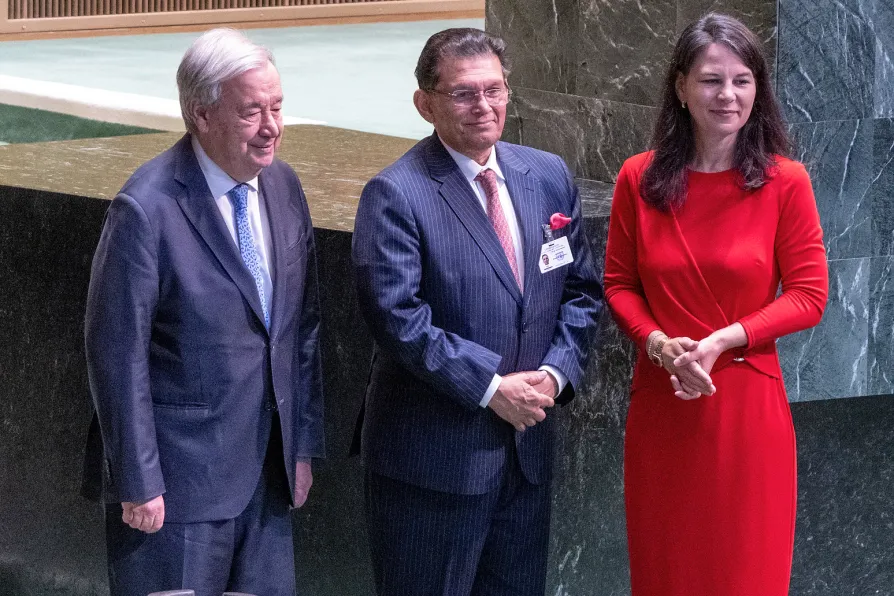 UN Secretary General Antonio Guterres (left) and 80th President of the United Nations General Assembly Annalena Baerbock (right) flank Bangladesh Foreign Minister Khalilur Rahman, newly elected President of the 81st UN General Assembly, June 2, 2026






BANGLADESH’S Foreign Minister Khalilur Rahman has won a hotly contested race to become the next president of the 193-member United Nations general assembly.
In a secret-ballot vote, Mr Rahman defeated Cyprus’s ambassador Andreas Kakouris 99-91, with three countries not voting. He will succeed Germany’s former foreign minister Annalena Baerbock, whose one-year term ends in September.
The presidency rotates by region and this year it was the Asia-Pacific region’s turn.
The general assembly is largely ceremonial. It is the UN body where countries large and small can speak, and is the scene of the only annual gathering of world leaders, each September.
UN secretary-general Antonio Guterres congratulated Mr Rahman, saying: “Your remarkable political and diplomatic experience are a guarantee of success not only to the general assembly but to the United Nations as a whole.”
Mr Rahman told diplomats assembled in the general assembly hall that its 81st session will open “at a historic crossroads” when “trust in our organisation is being tested on multiple fronts.”
Conflict and war are inflicting “untold suffering, development gains remain fragile and uncertain, and in some cases are regressing,” he said.
“Despite advancements in human rights, we witness a general backsliding of certain rights and freedoms across the world and shrinking humanitarian space.”
