

 Latest editorial
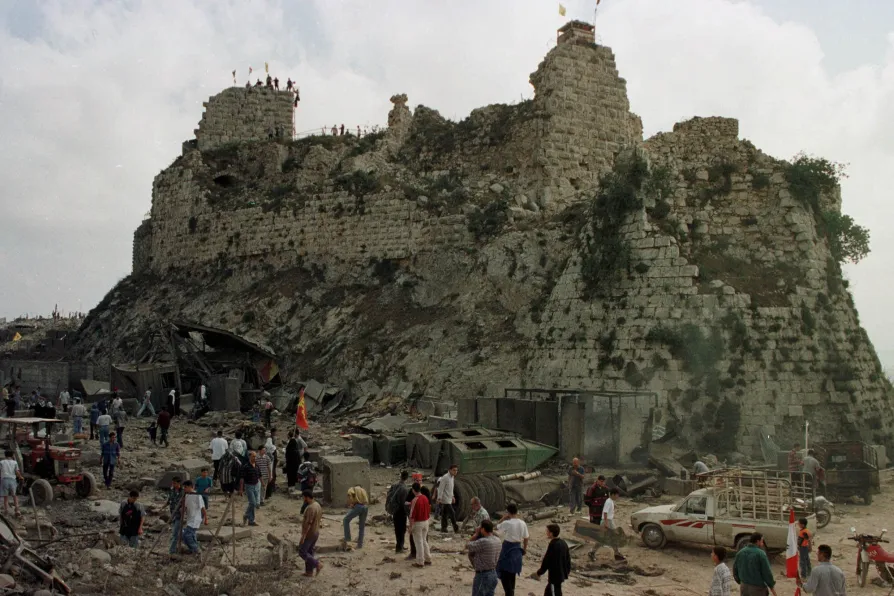 Villagers inspect the damage to Beaufort Castle, 10 kilometers (6 miles) northwest of the southern market town of Nabatiyeh, Lebanon, May 24, 2000





ISRAELI troops claimed today that they have captured a strategic mountain topped with a Crusader-built castle in southern Lebanon in their deepest incursion into the country in more than a quarter-century.
The capture of Beaufort Castle near the city of Nabatiyeh came after days of intense fighting in nearby villages where Israeli troops fought Hezbollah members in the rugged area.
This comes ahead of scheduled direct talks in Washington DC between Lebanon and Israel.
The Israeli push came despite a nominal ceasefire that has been in place since April 17.
The Israeli army’s Arabic spokesperson Avichay Adraee posted a photograph on X showing Israeli troops walking outside the castle. Israeli troops previously captured the castle in 1982 and held it until they withdrew from Lebanon in 2000.
The Israeli military said it launched an operation a few days ago in the Beaufort Ridge and the Suluki valley further south with the aim of dismantling Hezbollah infrastructure and removing “direct threats to Israeli civilians.”
The statement said the army is ready “to expand the operation if needed.”
In recent days, Israel has expanded the scope of its operations in Lebanon, warning all residents in the country’s southern region to leave and sending troops across the Litani river, which previously served as a de facto boundary.
Israeli troops have been advancing for days in villages close to Beaufort Castle after crossing the Litani river.
They are now about three miles from the city of Nabatiyeh, a major centre in southern Lebanon, and have called on all its residents to leave, as well as the residents of the coastal city of Tyre.
There was no immediate comment from Hezbollah or the Lebanese government on the Israeli push.
Hezbollah overnight claimed two attacks targeting Israeli troops and a Merkava tank in the south-western town of Bayada near the border.
In recent days, the group has said it has clashed with Israeli troops in several towns just north of the river near Nabatiyeh and the strategic castle.
The latest Israel-Hezbollah war began on March 2, when Hezbollah fired rockets into northern Israel two days after the US and Israel launched their illegal and unprovoked attack on Iran.
Israel says it intends to occupy southern Lebanon and, in the process, displace over 1 million people. Many experts have described the move as ethnic cleansing, which constitutes a crime against humanity under international law.
