MARIA DUARTE recommends a remarkable study of the friendship between a Palestinian and a Pakistani, broken by a hostile state


 Latest editorial

‘They play music. No BS. No-one else plays like them’
Chris Searle speaks to bassist PAUL ROGERS
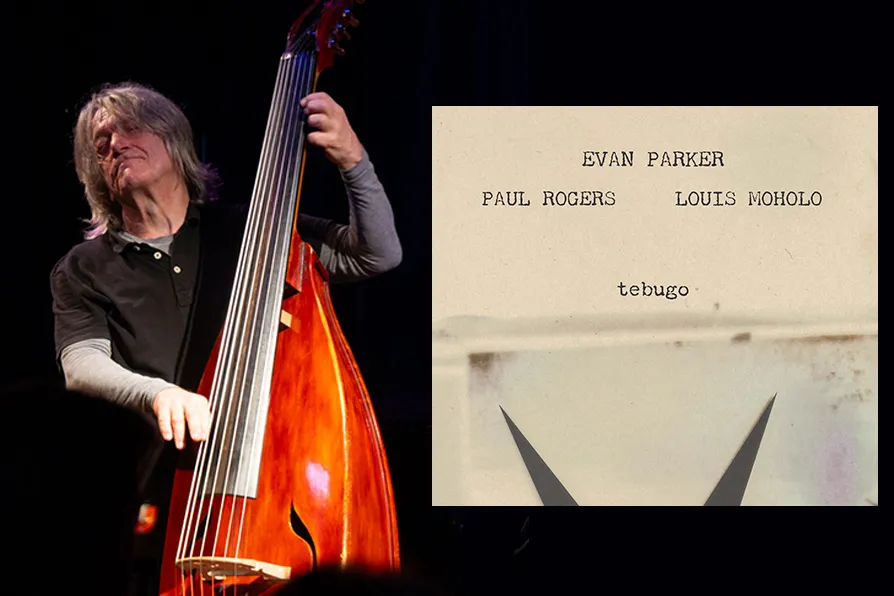 Paul Rogers [Pic: Pete Woodman]
MATTHEW HAWKINS rakes through un-fancy words and flair-free summaries to find who and what might be flamboyant
PETER MASON is exhilarated by an exciting, well-considered and historically minded tribute to the great Trinidadian instrument
Reducing historical lives to ‘male’ and ‘female’ roles, we lose the nuance of those lives and a clearer understanding of past societies, suggests CLAIRE ISABELLA GILMOUR
CHRIS SEARLE relishes the genius of pianist Alexander Hawkins, his many ensembles, and his new album





On September 5 1992, three nonpareil free musicians, Bristolian saxophonist Evan Parker, Cape Town drummer Louis Moholo-Moholo, and the bassist from Luton, Paul Rogers, played a spontaneous session at the old Vortex in Stoke Newington, north-east London.
Luckily for now-times listeners, music lover Andy Isham was there with his microphone and cassette recorder, and taped every note of this anything-but-routine trio tryst.
These were three musicians whose artistry had been provoked, developed and proven in very special previous ensembles: Moholo-Moholo in the South African exile band the Blue Notes, whose arrival on the British jazz scene fresh from their apartheid-stricken nation had startled and overcome all boundaries with their free, urgent and uplifting sound; Parker had broken all saxophone norms in a host of combinations since his free birthing in the 1960s revolutionary unit, The Spontaneous Music Ensemble, and Rogers had developed his unique bass undercurrents in the superfine quartet Mujician, with pianist Keith Tippett, saxophonist Paul Dunmall and drummer Tony Levin.
Each of the three long, improvised tracks on the album, the first named Ego, but, the second U-begot, and the third, after Louis’ sobriquet Tebugo, are storms of the trio’s collective brilliance, of their era and of all-times, caught hot and ready in their moment of creation in a small east London musical chamber.
I ask Rogers about his musical history and grasp of free music.
“I was born in 1956,” he says. “I didn’t come from a musical family, just a normal working-class family from the 1950s. My dad worked at Vauxhall car factory in Luton, but we moved to Chester in 1961 when Vauxhall moved to Ellesmere Port. My mum was a housewife. As a teenager, when I was 14, I was into Hendrix and Cream. I didn’t really like pop music. When I was 15 I heard free jazz and improvised music on the radio and that changed everything.
“My first instrument was a bass guitar and then a double bass a few years later. I started to teach myself when I was 14 … I’m self-taught. I left home and went to live in London when I was 15. I had no idea! When I was 19 I met alto saxophonist Mike Osborne and we started to play small pub gigs. That’s how it started. I had a four-string bass at first, then I got a five string. In 2002 I got a guy to make me a seven-string double bass with sympathetic strings.
“In 1978 I first played with Louis and shortly after with Evan. I was lucky to play with so many good musicians. The ’70s, ’80s and ’90s were great times for music in London. I think the most important thing I learned from all these great musicians was to have your own voice, find your own music. And how to resist all these racist MFs is to keep playing and be yourself.”
On the Tebugo album Parker plays like only Parker plays, like an inventive and conscientious farmer sowing seeds of notes that create boundless crops both for himself and his trio-mates, harvested together in superbly wrought and freedom-loving colloquy. Hear his pristine volleys and circular swirling phrases all through the album.
Rogers, playing a conventional four-stringed bass, far from plunking out an accompanying, walking beat, plays beautiful mazes of on-the-spot melody beneath Louis’ subtly multisonic drums, born in the freedom struggle of African peoples and a joy in his nation’s recent overcoming of apartheid.
A trio to dream of, yes, but one which is forever in the groove, inventing, conversing, creating earthly beauty in the permanent palaver of unity.
Such music at its apex, as on this record, is ultimately indescribable, unspeakable. Even its inventors and perpetrators find it difficult to find words to give a summation on it. That is why they play: they make their sounds as a sublime alternative to words.
When I ask Rogers to describe the sonic artistry of his trio-mates on the 1992 recording, he tells me: “I don’t know what to say, really. They are just powerful artists. They have individual sounds and everything they play, they play music. No BS. No-one else plays like them. Their music is always very deep. They have influenced many people.”
Perhaps such musical solidarity was expressed most movingly at the August 2025 memorial to Tebugo after his death last year, at London’s 100 Club where he had played so often. At the time, Parker was having problems with his embouchure, yet played on in loving tribute by drumming with his fingers up and down the saxophone valves. For whatever, whenever, the music and the work and struggle to create it must continue, as so potently exemplified in this album.
“We have to keep going!” declares Rogers.
Tebugo by Evan Parker, Paul Rogers and Louis Moholo, is released by Jazz in Britain Records.
