Supporters from both sides prepare to stand together against season ticket threats and exploitation, writes JAMES NALTON


 Latest editorial
Some European teams concerned they could lose money from playing at World Cup
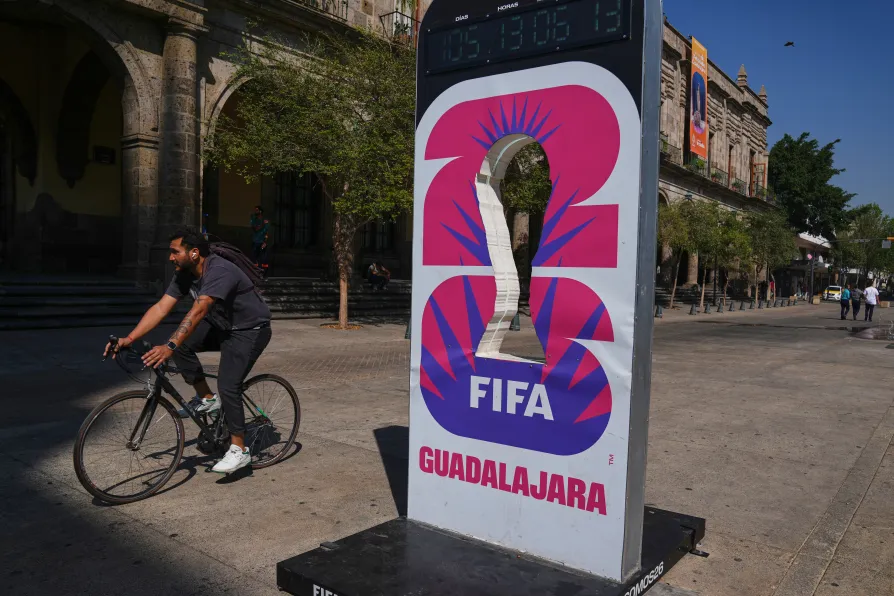 A cyclist rides past an installation promoting the FIFA World Cup 2026 in Guadalajara, Mexico, February 25, 2026

French federation withdraws support as pressure mounts on Fifa president





SOME European national teams are privately concerned they could lose money from playing at this summer’s World Cup, according to reports.
The tournament is the flagship event for football’s world governing body Fifa and the revenues generated from it help finance the work Fifa does in developing the sport around the globe.
Fifa approved record prize money of $727 million (£539m) in December for the finals in North America this summer, including $50m for the winning team.
However, a joint investigation by the the Press Association and The Guardian has found there is major concern among European FAs that costs will be significantly higher compared to Qatar four years ago.
There is also discontent that guarantees around tax — which were a bidding requirement for the 2026 host nations — have so far not been honoured by the United States.
One FA has worked out it will lose a considerable amount if its team goes out in the group stage or early in the knockout phase. Others expect to make significantly less than they did from playing at the tournament in Qatar in 2022.
Any funds these FAs generate from World Cup participation — once player bonuses have been honoured and operational costs covered — is reinvested in local programmes. So making a loss, or a reduced profit, could have serious negative consequences.
Teams receive $9m (£6.7m) for qualifying, and a further $1.5m towards preparation costs, which sources say was the same as in Qatar.
PA has also been told Fifa has reduced the daily allowance of $850 paid in Qatar for each member of a national team’s delegation to $600 a day for this summer’s tournament. That was estimated by one national FA as $500,000 less if their team stayed at the tournament for a month.
Travel costs will be higher because of the vast distances involved compared to Qatar. In addition, changes in exchange rates compared to four years ago mean prize money awarded in US dollars now translates to less in European currencies.
Teams also fear a “postcode lottery” on tax charges depending on where the draw takes them.
Co-hosts Canada and Mexico have already agreed tax exemptions for competing teams but that is still not the case in the US, where state taxes vary considerably. California, for instance, has a top rate of income tax of 13.3 per cent.
Associations say they have been left to seek their own tax advice, rather than being signposted to it by Fifa.
The high cost of World Cup tickets, which has been a well-publicised issue already for fans, is also affecting the associations which offer them to the families and friends of players.
Around nine or 10 European associations are understood to have discussed the issue of World Cup costs and taxes amongst themselves, both remotely and in person at the Uefa Congress in Brussels earlier this month, and have raised it informally with senior Fifa officials.
One European FA executive, speaking on condition of anonymity, said Fifa officials they had spoken to seemed “embarrassed” by the situation.
Fifa has been approached for comment.
None of the national associations contacted by the Press Association wished to comment on the matter.

Similar stories
A World Cup full of memorable moments was also marked by exclusion, exploitation and unprecedented political meddling, writes JAMES NALTON
England survived a thrilling Azteca encounter, but the stadium and its supporters created one of the tournament’s defining nights, writes JAMES NALTON
JAMES NALTON previews the Three Lions' round of 16 clash against the co-hosts in Mexico City