A new generation of right-wing politicians have shifted from promoting deregulation to championing anti-migrant politics warns SOLOMON HUGHES


 Latest editorial

What lies in store for Scotland?
Uninspiring politics, weak leaders and party infighting could leave Scottish voters out in the cold come May, warns LYNN HENDERSON
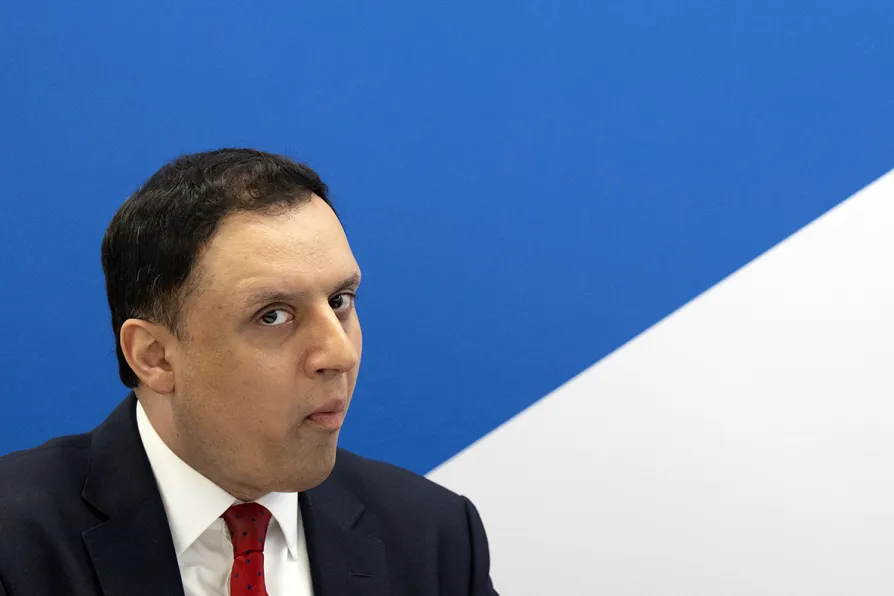 Scottish Labour leader Anas Sarwar during a press conference at the Golden Jubilee Conference Hotel, in Clydebank, on the future of primary care in Scotland, February 17, 2026
by the Greater Manchester Workers’ and Tenants’ Association
The US relationship with Israel has evolved into a strategic liability, argues RAMZY BAROUD
A champion motorcyclist, trade union organiser and communist, Clem Beckett went from Britain’s speedway tracks to the battlefields of Spain, where he gave his life resisting Franco’s forces at Jarama. GEOFF BOTTOMS pays tribute to this remarkable anti-fascist
The greatest threat to democracy may no longer come from political parties but from unelected tech oligarchs like Peter Thiel and his powerful Silicon Valley network, argues JOHN GREEN
Claiming to ease a fertiliser shortage, the Trump administration has suspended tariffs on Moroccan phosphate imports – deepening US support for the Morocco’s control over Sahrawi territory, writes LUKE ROTELLO





IN THIS increasingly uncertain political landscape, many eyes are looking over the horizon to the May elections in Scotland, and of course to Wales and some English councils.
Before the horizon appears, however, there is a very difficult terrain to navigate for all mainstream political parties. Neither is the path certain for the less mainstream political parties. With Reform polling highly, there is a great deal of nervousness in Wales that they may be the biggest party and take control the Senedd.
Same in some parts of English local government. In Scotland, despite the SNP dropping in the polls, it is likely that they will return enough elected members to return to power as the party of Scottish government. So, what is going on?
The 2024 Westminster general election saw the SNP reduce its seats from 48 to 9, under the first past the post electoral system in Scotland. Having been in control in devolved government nearly two decades, one would expect that the John Swinney’s time was up.
As a party, the SNP have lived on through splits and a break away, in the form of Alba, as well as political, financial and sexual scandals at the heart of their leadership. Still, “Honest John” survives within a minority government with 63 seats in Holyrood, and a chance at returning once again, as first minister, despite the polling.
The former coalition with the Scottish Greens collapsed and the minority government has plodded along on a vote-by-vote basis. With Reform now commanding 20 per cent of the polls against the SNP’s 35 per cent in constituency seats and 18 per cent against Labour’s 16 per cent in List seats, there is a distinct change in scenery taking place across Scotland that is entirely unprecedented.
Interestingly, the Ipsos poll that produced those figures on voting intentions also reported that the most important issue for Scots voters was NHS at 57 per cent, followed by the cost-of-living crisis at 41 per cent. The fact that immigration only counted for 30 per cent in this poll may in part be to the fact that this power is reserved to Westminster, or that Reform and the far right are not penetrating the psyche of voters as deeply as us progressives feared. However, 80 per cent of Reform voters listed immigration as their top priority.
What remains of the Scottish Labour left are urging internal party members to support left candidates — Clark, Mochan and Watson for List placings, arguing that “we cannot afford to let the SNP continue with its incompetence, erosion of public services, reluctance to address inequality and the absolute absence of an industrial strategy.”
While three Labour Left List MSPs alone will not be a force to challenge anyone, they do correctly argue that if Reform gain the Opposition party place, then “we are set for a fierce right-wing onslaught, not just in Parliament but in the streets, where right-wing thugs will feel emboldened to make their presence felt.” Given that many communities have already experienced this hostile presence, this is indeed a frightening prospect.
The attempt by Anas Sarwar to distance himself, and therefore Scottish Labour from Keir Starmer backfired terribly when Scottish Labour MPs distanced themselves from this claim, and the bandwagon that Anas had been seeking to jump on appeared abandoned down a cull de sac.
The Scottish Greens, with the third highest polling, support at 18 per cent do not appear to have a joined-up approach, and of course like SNP and Labour do not present a class analysis in their messaging. General progressive slogans such as “Stand Up to Trump,” “Protect Scotland’s waters,” “Cap football prices” and “Abolish the monarchy” sound as if they have been lifted off a student union debating society playbill rather than a serious political party seeking to represent constituents in the Scottish Parliament.
Alba, founded by the late Alex Salmond and polling only 2 per cent, has announced it is deregistering for the Scottish Parliament elections. I don’t see anyone crying over that.
As for Your Party, I am just saddened to see the differences and divides playing out among comrades on the left, in both the UK Corbyn v Sultana camps and within the Scottish arm.
So where does that leave us? The mainstream social democratic blandness of the SNP’s outlook remains masked by a romanticised culture vision of an Independent Scotland being just over the horizon rather than over the hills and far away.
The vanilla Scottish Labour timidity to navigate a class analysis and the silly student politics of the Greens and factional fighting among the progressive left, lead me bereft of how to exercise my vote in the 2026 Scottish Parliament elections. I know I am not alone.
Lynn Henderson is senior national officer for the Public and Commercial Services Union
