

 Latest editorial
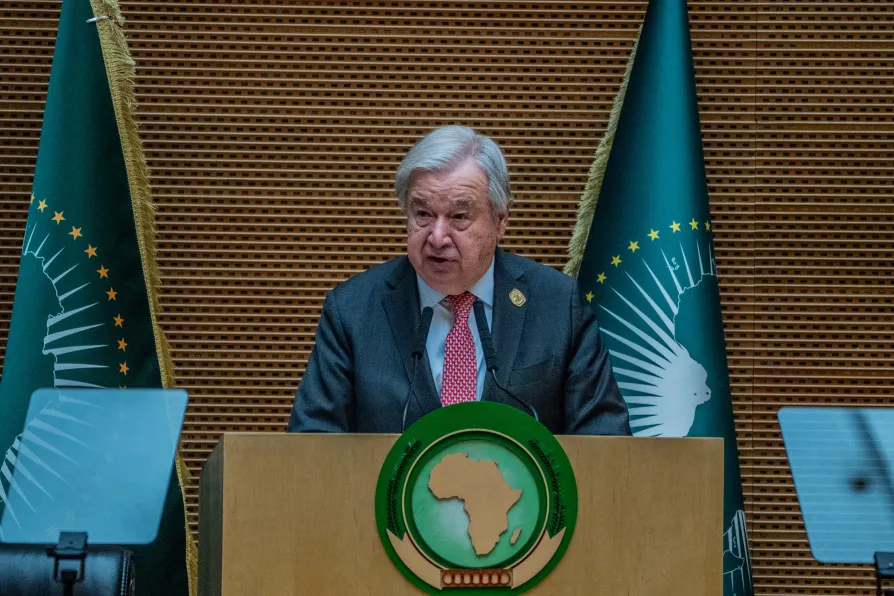 U.N. Secretary-General Antonio Guterres delivers a speech during the annual African Union Summit at the Addis International Convention Center in Addis Ababa, Ethiopia, February 14, 2026





A RENEWED push to complete decolonisation has been urged by United Nations secretary-general Antonio Guterres.
In remarks delivered by his chef de cabinet Courtenay Rattray, Mr Guterres told the 2026 session of the Special Committee on Decolonisation on Monday that decolonisation had been a core objective of the UN’s “since its earliest days.”
“This organisation was created as a place where nations could meet as equals, not as rulers and ruled,” he said.
But Mr Guterres added: “The legacy of colonialism has left profound scars through deeply rooted mechanisms of economic exploitation, as well as in the form of racism, inequality and persistent exclusion from the decision-making bodies.”
The C24 was established by the UN general assembly in 1961 to monitor progress towards the granting of independence to territories that had not yet attained “a full measure of self-government.”
Its mandate stems from the landmark Declaration on the Granting of Independence to Colonial Countries and Peoples, made the year before.
Since 1945, more than 80 former colonies comprising some 750 million people have gained independence. But 17 non-self-governing territories, with a combined population of nearly two million people, remain on the UN list.
They range from Western Sahara in Africa to small island territories in the Caribbean Sea and Pacific Ocean.
