


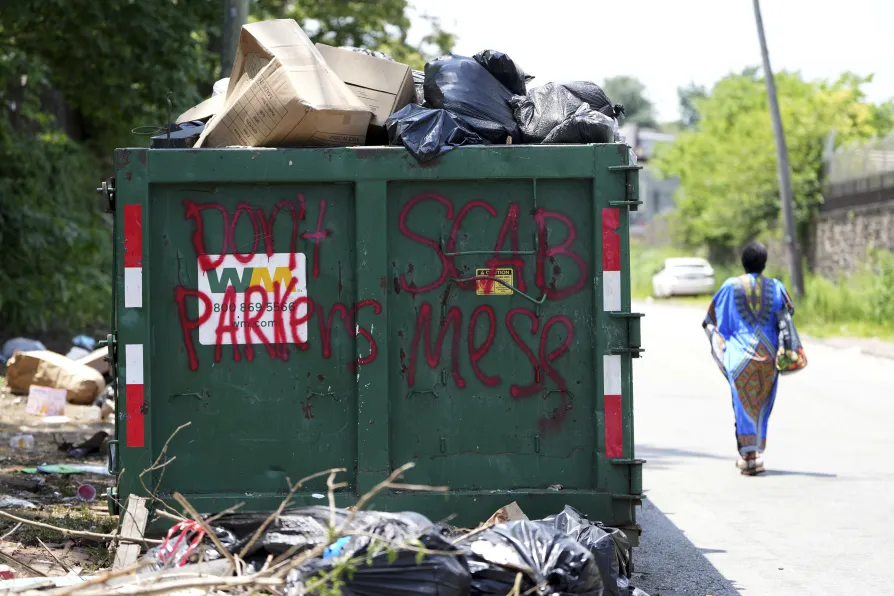
 A woman walks past a garbage collection site, July 9, 2025, in Philadelphia






A UNION representing thousands of local authority workers in Philadelphia has reached a deal with the city’s government to end a strike that halted residential rubbish collections and affected other services for more than a week.
Nearly 10,000 blue-collar workers who are members of district council 33 of the American Federation of State, County and Municipal Employees walked out on July 1, seeking better pay and benefits after negotiations with the city authorities broke down.
The tentative agreement gives workers a 3 per cent pay rise in each of the next three years.
Half of the members will receive an additional 2 per cent increase through the addition of a new level to the pay scale, Mayor Cherelle Parker said on Wednesday, and most members will qualify by the end of the contract.
Residential rubbish collection will resume on Monday, according to Ms Parker, who asked for “grace” as swimming pools, libraries, leisure centres and other services return back to normal.
“This is a very significant investment in our employees, while at the same time ensuring that we as a city are living by our means,” she told a news conference.
District council 33 is the largest of four major union branches representing city workers. Its membership includes emergency call handlers, refuse collectors, water department workers and many others.
Union members must still ratify the agreement.
The possible settlement was announced early on the ninth day of the strike, a period that included the July 4 holiday weekend.
Some of the 60 drop-off centres that the city had designated for residential waste were overflowing. Most libraries and some swimming pools across the city were closed and leisure centres had reduced hours.
“We did the best we could with the circumstances we had in front of us,” union president Greg Boulware told reporters on Wednesday morning.

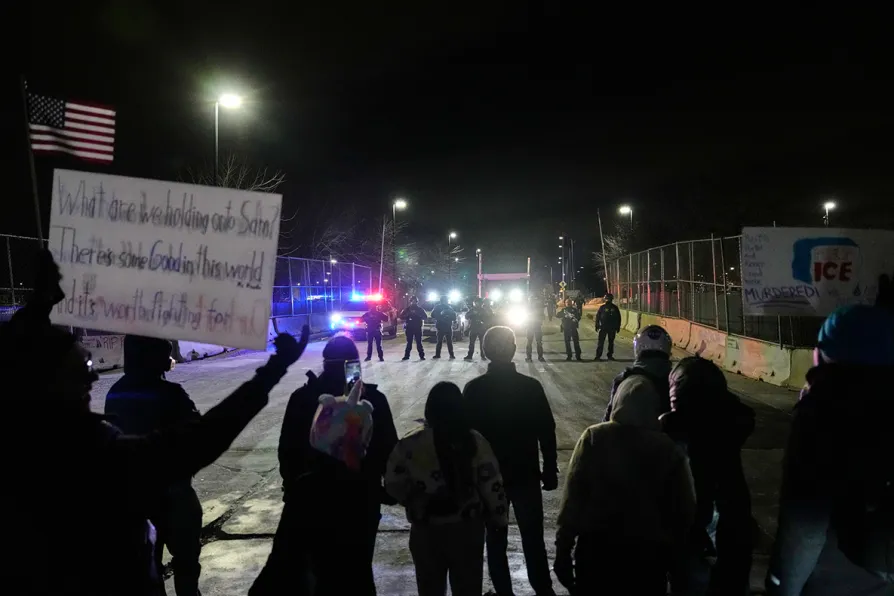
Trade unions and community groups are mobilising to push back against Trump’s racist raids after new revelations of spying on legal protesters. MARK GRUENBERG reports from the US state of Minnesota

JACK DAVIDSON explains the motivation behind the UCU strike action at the University of Sheffield