MARIA DUARTE recommends a remarkable study of the friendship between a Palestinian and a Pakistani, broken by a hostile state


 Latest editorial

The trans experience in the UK
ALEX HALL treads warily through a messy, dialectical struggle fought in the mundane machinery of driving licences, criminal law, and birth registries
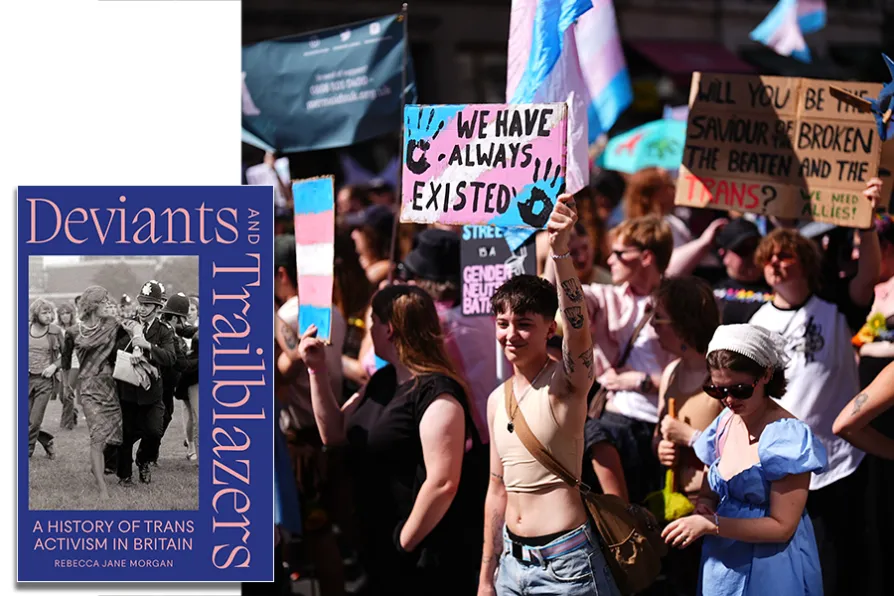 People take part in the London Trans+ Pride march in central London, July 25, 2026.
MATTHEW HAWKINS rakes through un-fancy words and flair-free summaries to find who and what might be flamboyant
PETER MASON is exhilarated by an exciting, well-considered and historically minded tribute to the great Trinidadian instrument
Reducing historical lives to ‘male’ and ‘female’ roles, we lose the nuance of those lives and a clearer understanding of past societies, suggests CLAIRE ISABELLA GILMOUR
CHRIS SEARLE relishes the genius of pianist Alexander Hawkins, his many ensembles, and his new album





Deviants and Trailblazers: A History of Trans Activism in Britain
Rebecca Jane Morgan, Pluto Press, £19.99
IN 1944, Michael Dillon, a trans man working as a garage mechanic in Bristol during the height of the German bombing campaigns, had his birth certificate corrected.
The process was a Statutory Declaration (still the means by which a name can be changed) which set forth the true facts. This required accompanying declarations from a doctor, who would assert that the “sex by observation at birth was contradicted by other medical and social facts.”
Thus, in April of that year the birth certificate was updated by the Superintendent Registrar: “In entry no 54, col 2, for [old name] read Laurence Michael and in col 3 for ‘girl’ read ‘boy’.” Government departments had been dealing with such cases, quietly and pragmatically, for some time. Not everyone fits into statutory categories and this affects relationships with the state, partners, and society at large.
This change provided considerable comfort to Dillon, who wrote that “Whichever way I turned I had seemed to be hemmed in by birth certificates, identity cards, driving licenses and my mail as it was addressed to me.”
This regime was undone by a 1963 celebrity marriage. April Ashley, a trans woman, model, and socialite, married Arthur Corbett, a minor lord, with his knowledge of her status. The marriage broke down and the ensuing legal case set in law that Ashley was a man, that the determination of this was biological, and that the marriage was expunged.
The Corbett judgement closed the doors of correcting birth certificate errors and made the matter one of biological determination.
This history details both the actions and the arguments which have followed this legal change, primarily the discussions over the identification of gender. Birth certificates, as records of observations at birth, are central.
Identity politics is a flashpoint issue on the left. On the one hand, it is seen as a way of breaking class solidarity against class enemies. Sometimes it is posited as unscientific. Yet science itself develops: it is a consensus, and what was scientific fact in 1944 is not the same as it is in 2026. Conversely, is it right to force people into administrative categories into which they cannot, or will not, fit? What about the structure of administration itself?
Morgan’s philosophical underpinning is from Hegel: that if a person is to recognise the state, the state must also recognise the person; a disjunction between the two causes a fracture. She further notes that many trans activists were not simply about altering the existing legal structure in a bourgeois state. Such actions constituted reform rather than revolution, leaving other oppressions in situ. Nonetheless, the most successful strategies achieved reform, revolution remaining a goal too far.
The arguments and support organisations developed over time. Class was undoubtedly a factor. Early organisations sought relief for transvestites, while the word ‘transsexual’ itself was still developing its own meaning. Later campaigners questioned the very validity of gender itself, asking for an “X” in place of male or female.
Ultimately, the Gender Recognition Act allowed for later modifications of identity, and later marriage laws made gender (or sex) largely irrelevant to marriage.
The explosion of identity wars on the internet has not made things easier to understand. Minorities are easy targets onto which to pin societal problems, as every fascist understands, whether they are trans or migrants. Should definitions be fixed and stable, or flexible and context-specific?
Morgan shows that trans activism in Britain has never been a straight line from oppression to liberation, but rather a messy, dialectical struggle fought in the mundane machinery of driving licences, criminal law, and birth registries.
As Dillon’s doctor found in 1944, “medical and social facts” often fit imperfectly with medical and social bureaucracy. The debate, and the activism, is far from over.

Similar stories
ALEX HALL is fascinated by a lucid and historically convincing account of how rent has dominated capitalist economies from feudalism to modernity
RICHARD SHILLCOCK examines an enjoyable, but philosophically conventional book, and urges Marxists to employ their capacity to embrace the totality in any explanation
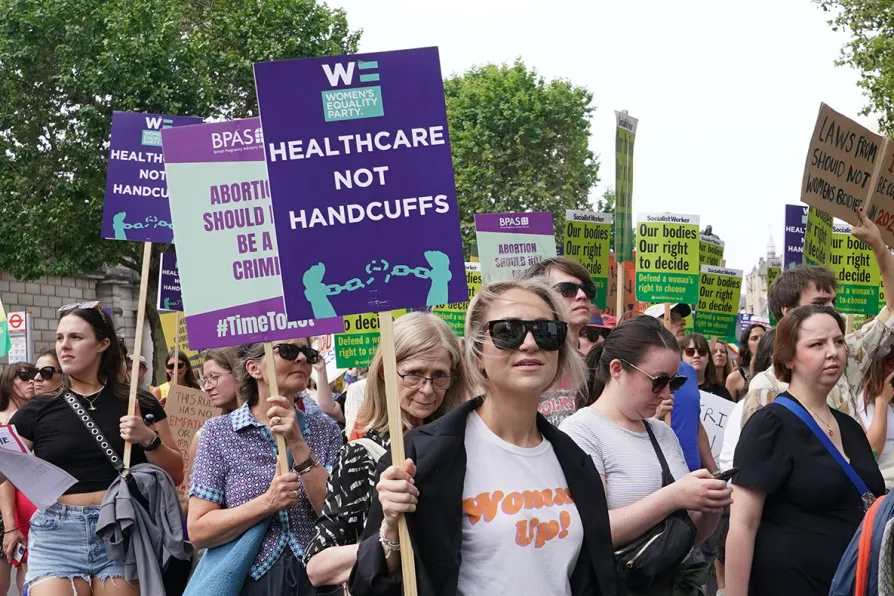
Professor MARY DAVIS argues that feminism has been hollowed out by liberal co-option – and only a revival of socialist, class-based politics can restore International Working Women’s Day’s original, radical purpose
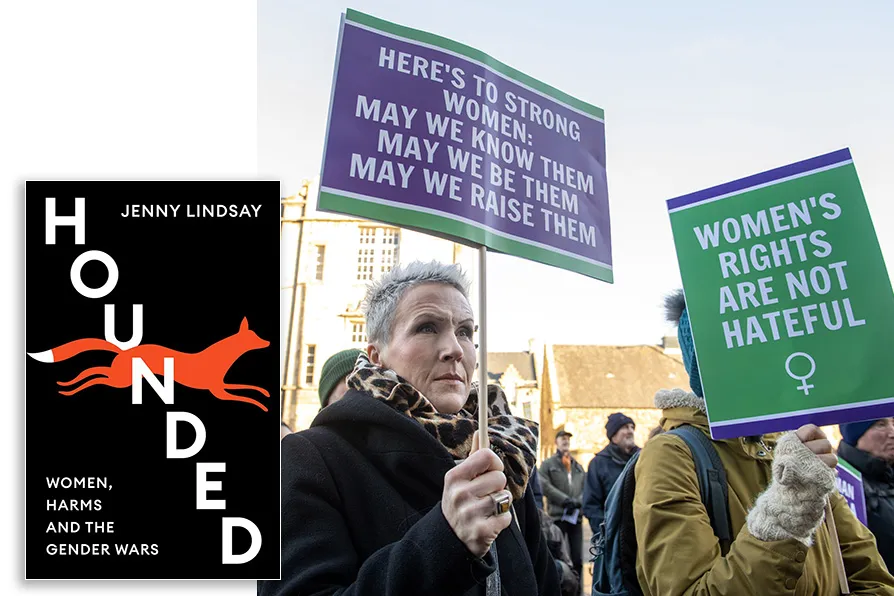
WILL PODMORE welcomes the case put by a feminist, disentangling the abusive rhetoric of the trans rights debate