MARIA DUARTE recommends a remarkable study of the friendship between a Palestinian and a Pakistani, broken by a hostile state


 Latest editorial

‘Taking arms against a sea of troubles’
ANGUS REID looks at two productions with equally noble aims and at how one succeeds admirably where the other fails utterly
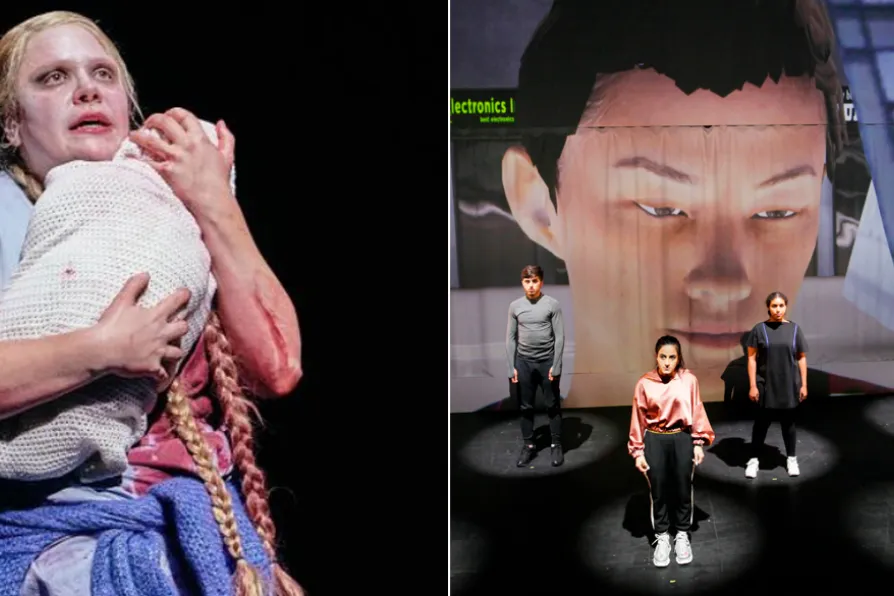 POLAR OPPOSITES: The Caucasian Chalk Circle and Futureland
[(L to R) www.berliner-ensemble.de / Ute Langkafel/www.gorki.dewww.gorki.de]
POLAR OPPOSITES: The Caucasian Chalk Circle and Futureland
[(L to R) www.berliner-ensemble.de / Ute Langkafel/www.gorki.dewww.gorki.de]
MATTHEW HAWKINS rakes through un-fancy words and flair-free summaries to find who and what might be flamboyant
PETER MASON is exhilarated by an exciting, well-considered and historically minded tribute to the great Trinidadian instrument
Reducing historical lives to ‘male’ and ‘female’ roles, we lose the nuance of those lives and a clearer understanding of past societies, suggests CLAIRE ISABELLA GILMOUR
CHRIS SEARLE relishes the genius of pianist Alexander Hawkins, his many ensembles, and his new album





AMONG the vestiges of old East Germany (GDR) that have survived to guard the flame of politically engaged art in Berlin, two theatres stand out: the Maxim Gorki Theatre that was the main conduit of Soviet theatre pre-1989, and Brecht’s doughty campaigner, the Berliner Ensemble.
Two current productions demonstrate both the strengths and the difficulties faced by theatre artists with a revolutionary agenda in contemporary Germany.
Futureland in the Gorki studio theatre assembles a cast of real asylum-seekers who may, or may not, qualify for the precious status of “child.” To be recognised as a child is significant because under German law no unaccompanied minor may be deported, and once recognised, that status entitles the family of the child to join them. But can they prove their date of birth without papers? Do they even know how old they are?
The cast of sympathetic and engaging young adults comes from Afghanistan, Syria, Somalia, Guinea and Bangladesh, and although the production presents itself as a semi-fictional sci-fi dystopia and little attempt is made to prove the authenticity of their stories, you accept that these kids are drawing on their own experiences and that Futureland is basically community outreach.

Similar stories
ANDY HEDGECOCK, MARIA DUARTE and ANGUS REID review Synthetic Sincerity, Our Hero, Balthazar, Heartstopper Forever, and A Year In London
MATTHEW HAWKINS checks out the centenary performance of Rambert Dance Company
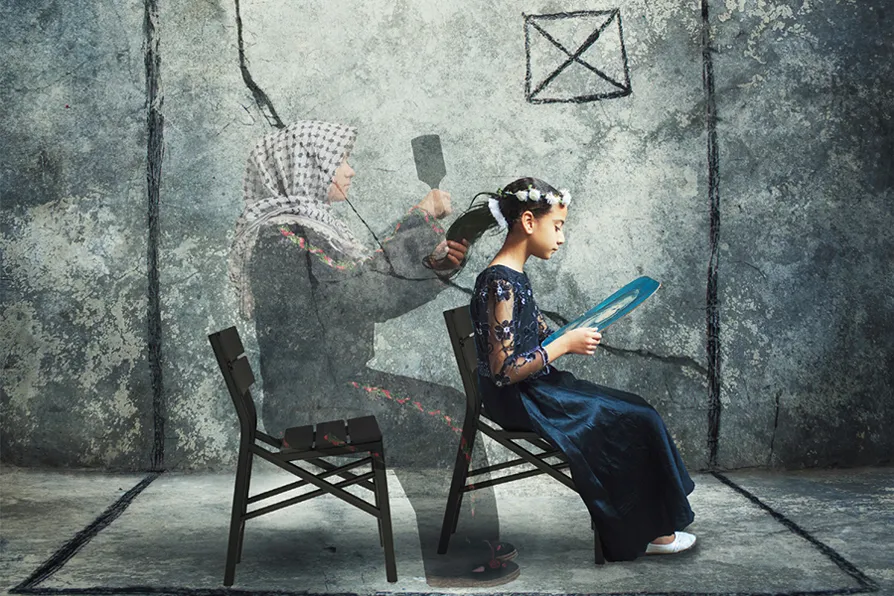
ANGUS REID applauds the potential of an ambitious show about Gaza, and encourages it to keep its nerve

GORDON PARSONS salutes the apt return of Brecht’s vaudevillian cartoon drama that retains the vitality of the boxing or the circus ring