


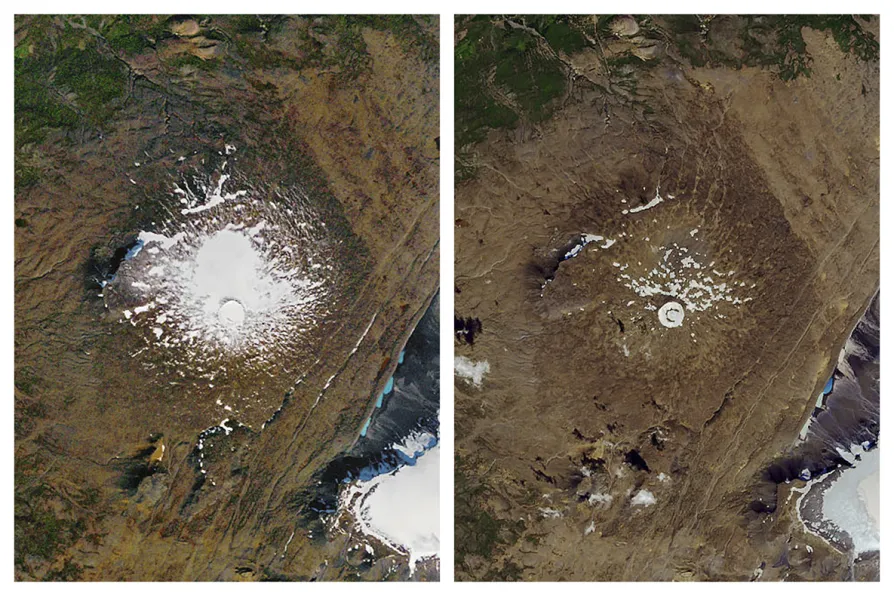
 This combination of September 14, 1986 (left), and August 1, 2019 shows the shrinking of the Okjokull glacier on the Ok volcano in west-central Iceland






THE world’s glaciers are disappearing faster than scientists thought, with two-thirds of them projected to melt out of existence by the end of the century at current climate change trends, according to a new study.
The study in Thursday’s journal Science examined all of the globe’s 215,000 land-based glaciers — not counting those on ice sheets in Greenland and Antarctica — in a more comprehensive way than past studies.
Projected ice loss by 2100 ranges from 38.7 trillion metric tons to 64.4 trillion tons, depending on how much the globe warms and how much coal, oil and gas is burned, the study said.


The future does not have to be climate chaos and social breakdown. MARC VANDEPITTE looks at the alternatives offered by the Global Justice Report, co-authored by Thomas Piketty

The recent heatwaves revealed how ill-prepared Britain remains for a hotter future – and how unequal the ability to cope with it has become, write ROX MIDDLETON, LIAM SHAW and MIRIAM GAUNTLETT

Extreme heat is now one of the defining public health challenges of a warming world, explains Prof IAN WILLIAMS
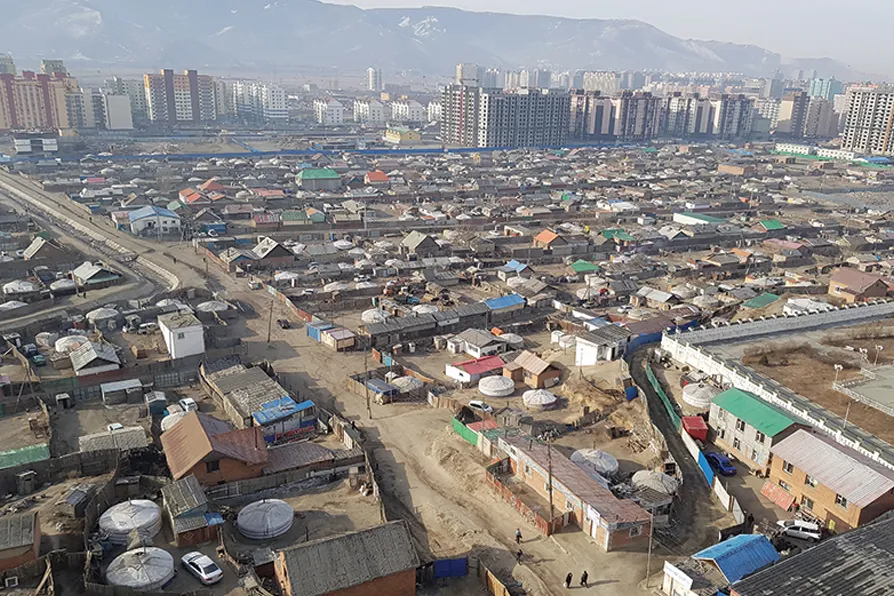
Coal-fired stoves in traditional homes are the primary source of extreme levels of air pollution in over-crowded Ulaanbaatar. As more people become climate-displaced, the situation is likely to worsen, write SCIENCE AND SOCIETY