State machinery was widely employed to secure favourable outcomes in India’s recent regional elections against three progressive regional governments who dared to challenge Narendra Modi, asserts VIJAY PRASHAD


 Latest editorial

What should we do about ‘degrowth’?
The ‘degrowth’ debate raises critical issues to which only a Marxist approach can provide answers, argues the Marx Memorial Library


It is too early to assume a US defeat in Iran — we must prepare for a long anti-war struggle, argues JOHN ROSS
ROGER McKENZIE says the ANC needs to respect South Africa’s Communists and their decision to stand independently at elections
KENNY MacASKILL remembers the woman who first translated The Communist Manifesto into English
The election offers a critical chance to shape the future of pay, care and community provision in Wales, says Unison’s JESS TURNER
As Scotland heads to the polls, the main parties offer variations on the same script, says MATT KERR





PART 1 of this answer argued that environmental destruction is driven by the fundamental contradiction in capitalism — between the forces and relations of production and its relentless drive for profit. Capitalism depends on continued growth, without which it would collapse. Non-exploitative capitalism is a contradiction in terms. There is not a single “human ecology” — every social system has its own ecological dynamic, and capitalism’s is a particularly destructive one.
Just as capitalism, as an economic system, depends on exploiting workers, so too does it depend on exploiting the resources — living and non-living — of our planet. That was something recognised by Marx and Engels with their concept of the “metabolic rift” between humans and nature.
Marx focused on agriculture, the depletion of soil nutrients and the pollution of waterways by run-off and human sewage. He was an early advocate of recycling. Today we recognise that the wider impacts of capitalism threaten the whole planet. As Barry Commoner, a Marxist ecologist and one of the founders of the modern environmental movement wrote a half-century ago (at the same time of the MIT computer models discussed in part 1 of this Q&A):

Similar stories

The selection, analysis and interpretation of historical ‘facts’ always takes place within a paradigm, a model of how the world works. That’s why history is always a battleground, declares the Marx Memorial Library

From summit to summit, imperialist companies and governments cut, delay or water down their commitments, warn the Communist Parties of Britain, France, Portugal and Spain and the Workers Party of Belgium in a joint statement on Cop30
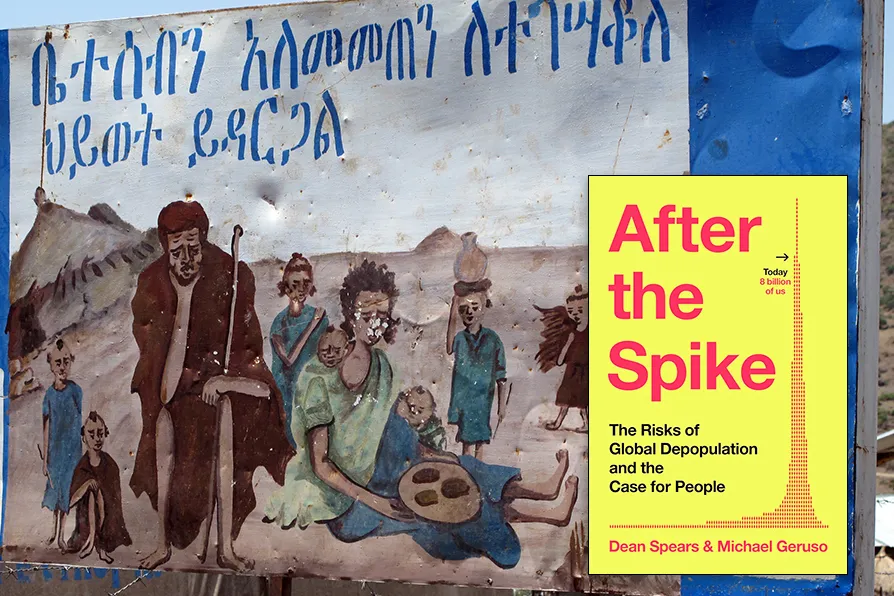
JOHN GREEN asks how can we take decisive action on population levels with a world leader who is a destructive ignoramus

From hunting rare pamphlets at book sales to online panels and courses on trade unionism and class politics, the MML continues connecting archive treasures with the movements fighting for a better world, writes director MEIRIAN JUMP