Growing instability in the US economy and financial markets could have serious consequences worldwide because of the central role of the US dollar and financial system, argues MICHAEL BURKE


 Latest editorial

Trump ends union rights for nearly one million in an openly political attack
Trump’s recent executive order ends union rights for a large number of federal workers, citing national security concerns after some unions vowed to oppose the massive cuts proposed by the new administration, writes PEOPLE’S DISPATCH
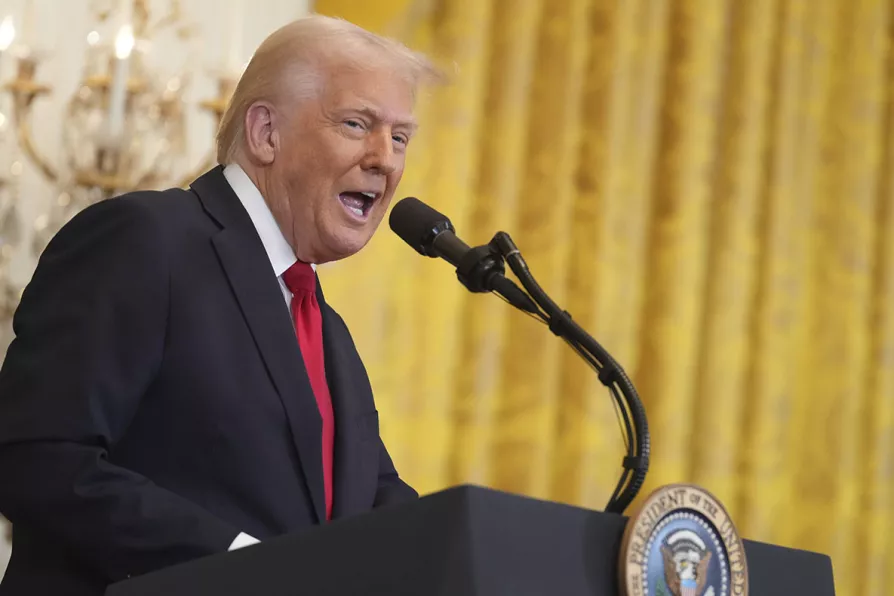 US President Donald Trump speaks at a reception celebrating Women's History Month in the East Room of the White House, March 26, 2025

Despite Andy Burnham’s declaration defending the continued partition of the island, all major international and internal trends are converging to make Irish reunification inevitable
The left needs a bold energy vision – because if it fails to provide one, others will shape the future in their own interests, argues ALAN SIMPSON
From Margate to Deal, mining memories are being kept alive. National co-ordinator for General Strike 100, HENRY FOWLER continued his nationwide tour of partner organisations in the Garden of England
Humans are part of the ‘animal kingdom’ – and of nature in general – but also distinct from it and labour (work) is part of what makes us unique, declared Engels. His insights 150 years ago into how our species came to be and how we differ from the rest of nature, are as important today as they were then, says the MARX MEMORIAL LIBRARY
Boxes of books, family photos and heirlooms, labour movement anniversaries, along with nostalgic memories of glorious childhood days on the Ayrshire coast still leave room for a wistful MATT KERR to hope for a better future





ON March 27, President Donald Trump signed an executive order ending collective bargaining for over one million federal workers, according to the American Federation of Government Employees (AFGE). Trump’s executive order cites national security concerns as the reasoning for such a major action.
The White House cites the Civil Service Reform Act of 1978 (CSRA) as giving the president authority to end collective bargaining at agencies with “national security missions.”
The CSRA has traditionally only applied to agencies such as the CIA, the FBI or the National Security Agency. But Trump’s order ends bargaining for employees at a far larger number of government agencies, including the Department of Defence, Department of Veterans Affairs, the National Science Foundation, the Coast Guard, the Department of Homeland Security, the Department of State, the Department of Energy, and many others. Notably, police and firefighters are excluded from this executive order, and may continue to bargain.

Similar stories
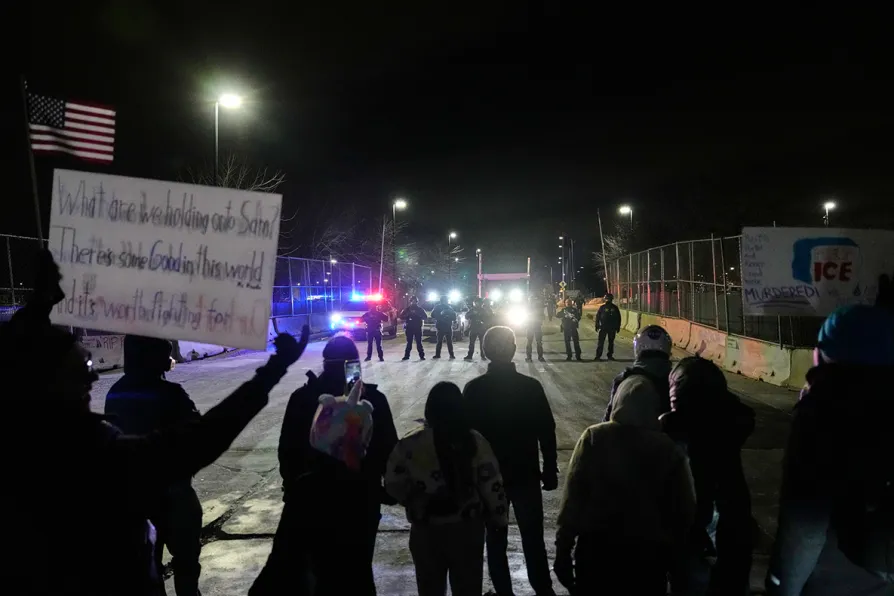
Trade unions and community groups are mobilising to push back against Trump’s racist raids after new revelations of spying on legal protesters. MARK GRUENBERG reports from the US state of Minnesota
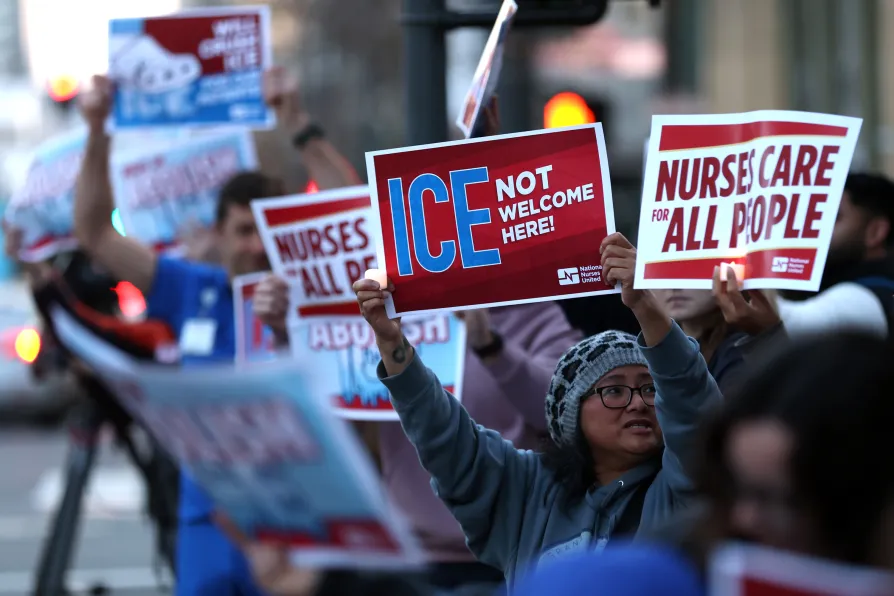
The fatal shooting of Alex Pretti, a registered nurse and union member, has sparked nationwide protests and renewed calls from National Nurses United to dismantle Ice and related agencies, says MARK GRUENBERG

Nigeria’s presidential spokesman grovels to the West in response to Washington intimidation, writes PAVAN KULKARNI
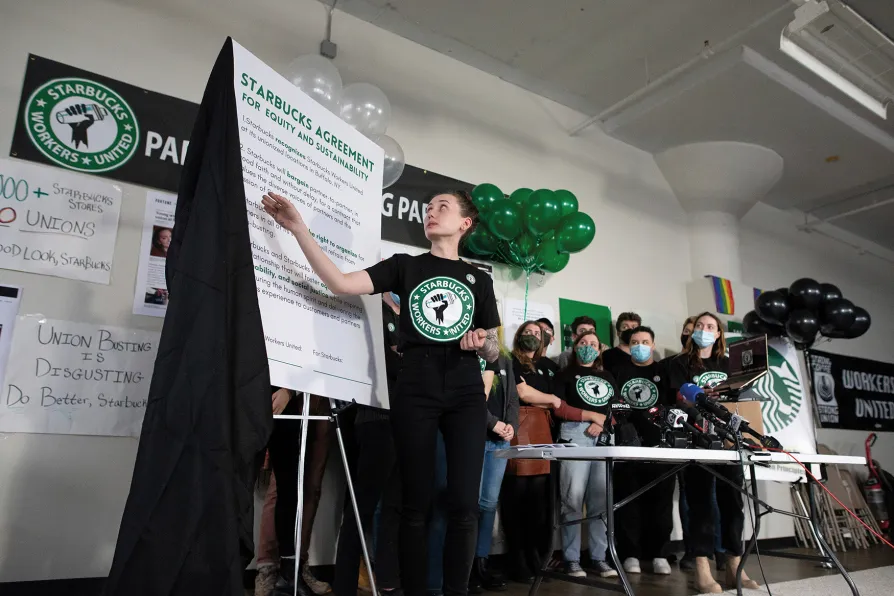
Organised workers at the notoriously anti-union global giant are scoring victory after victory, and now international bodies are pitching in to finally force this figurehead of corporate capitalism to give in to unionisation, writes EMILIO AVELAR