State machinery was widely employed to secure favourable outcomes in India’s recent regional elections against three progressive regional governments who dared to challenge Narendra Modi, asserts VIJAY PRASHAD


 Latest editorial

The state attack on people's democratic rights must be resisted
Ways of opposing the increasingly repressive measures from the British state against protesters will be discussed at the Arise Festival. BEN HAYES reports
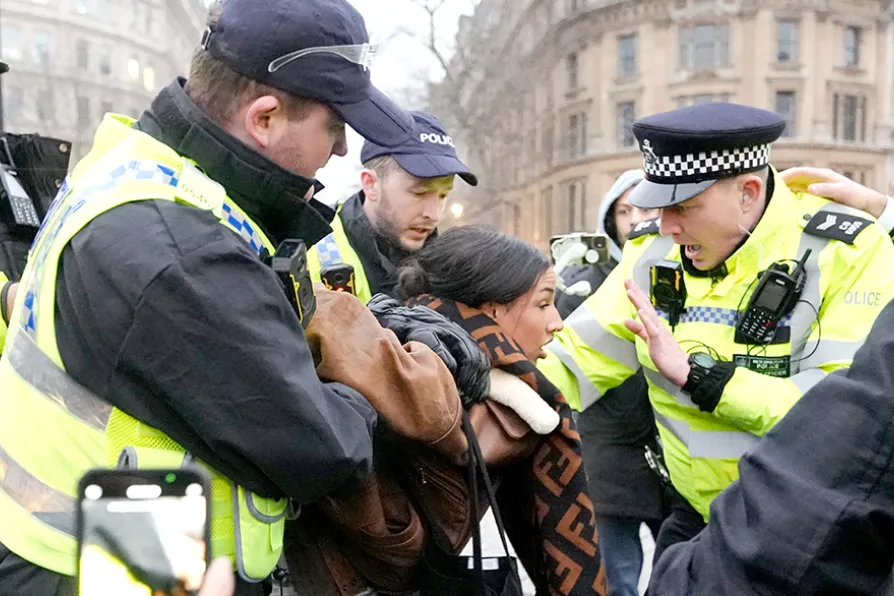 AGGRESSIVE INTERVENTION: Police officers detain a protester at the national march for Palestine in central London on January 18 2025

It is too early to assume a US defeat in Iran — we must prepare for a long anti-war struggle, argues JOHN ROSS
ROGER McKENZIE says the ANC needs to respect South Africa’s Communists and their decision to stand independently at elections
KENNY MacASKILL remembers the woman who first translated The Communist Manifesto into English
The election offers a critical chance to shape the future of pay, care and community provision in Wales, says Unison’s JESS TURNER
As Scotland heads to the polls, the main parties offer variations on the same script, says MATT KERR





THE recent arrest of anti-war, pro-Palestinian activists alongside a steady attempt to delegitimise protest should be a cause for concern for everyone on the left – and will be a key part of the discussion at Arise Festival’s forthcoming Socialism or Barbarism day school.
While the democratic rights we enjoy have been hard won, they have always come with limitations — we are, after all, still “subjects,” even today. As in the attack on, and subsequent arrest of, the Stop the War organiser Chris Nineham, these limitations are often imposed violently by police and security forces.
Engels explained how the state comes to be a force used by the capitalist class to put down resistance. In his important work The Origin of Family, Private Property, and the State, he wrote that in the development of human history “it became necessary to have a power, seemingly standing above society, that would alleviate class conflict and keep it within the bounds of ’order’; and this power, arisen out of society but placing itself above it, and alienating itself more and more from it, is the state.”
A survey of recent British history shows how this “power, arisen out of society but placing itself above it” has been deployed by the capitalist class against workers.
The roots of many of the restrictions we face today can be traced back to Thatcherism’s drive to reverse the limited but tangible gains made by the working class following WWII. The case of the Miners’ Strike offers a particularly stark illustration.
The offensive against the NUM utilised multiple tools of the state – not only physical force by the police, but a relentless targeting of the unions by intelligence services designed to leave it divided, demoralised and defeated — as documented in Seamus Milne’s The Enemy Within.
Thatcher’s war on resistance not only involved taking on workers industrially, but politically, too.
This period also saw the shutting down of the Greater London Council, which had not only implemented a bold policy agenda but given support to a variety of important causes for the left – including in relation to Ireland, where the clampdown on free speech extended to forcing broadcasters to engage in a form of reverse lip-syncing on footage of Gerry Adams speaking.
Like with many other Thatcher-era changes – while New Labour did make some improvements – it broadly accepted the direction of travel, with Tony Blair famously boasting of maintaining some of the strictest anti-union laws in Europe.
Blair’s tenure also saw the breaking of the FBU strike in 2003 and the introduction of the Prevent programme four years later.
A programme which ran across both these premierships used spies to infiltrate a range of organisations — not only left groups but campaigns on issues like anti-racism, the environment, peace (and even the Young Liberals).

Similar stories
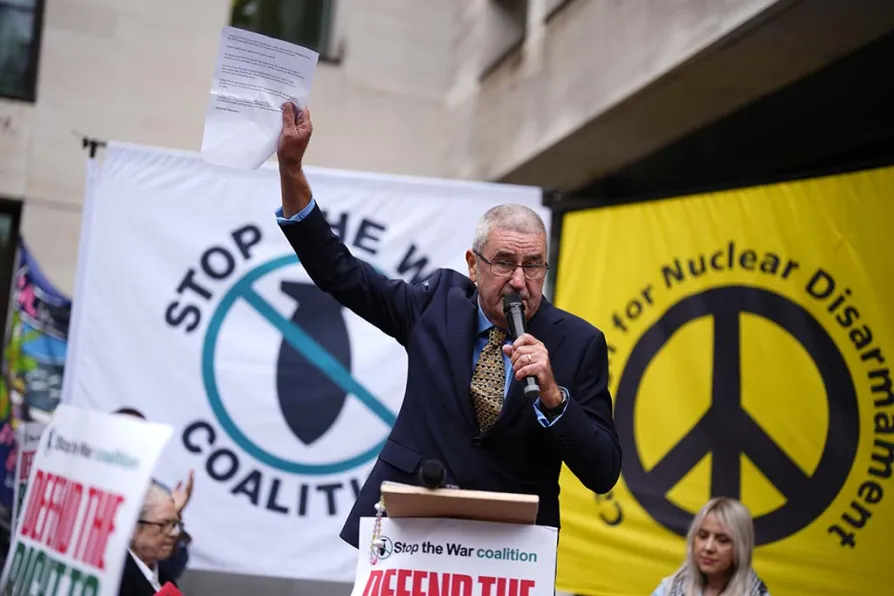
The Morning Star here publishes a speech that would have been given by Stop the War officer and longtime NEU and NUT activist Alex Kenny on the eve of the verdicts handed to Chris Nineham and Ben Jamal this week. He also explains why he couldn’t give it

Once again, our broad-based coalition outnumbered the anti-migrant protest in Faversham, but tackling the sentiment behind this wave of anger requires explaining the real reasons pushing millions into leaving their homelands, argues NICK WRIGHT
LAURA PIDCOCK and PAUL O’CONNELL introduces Rise, a political platform for working-class activism
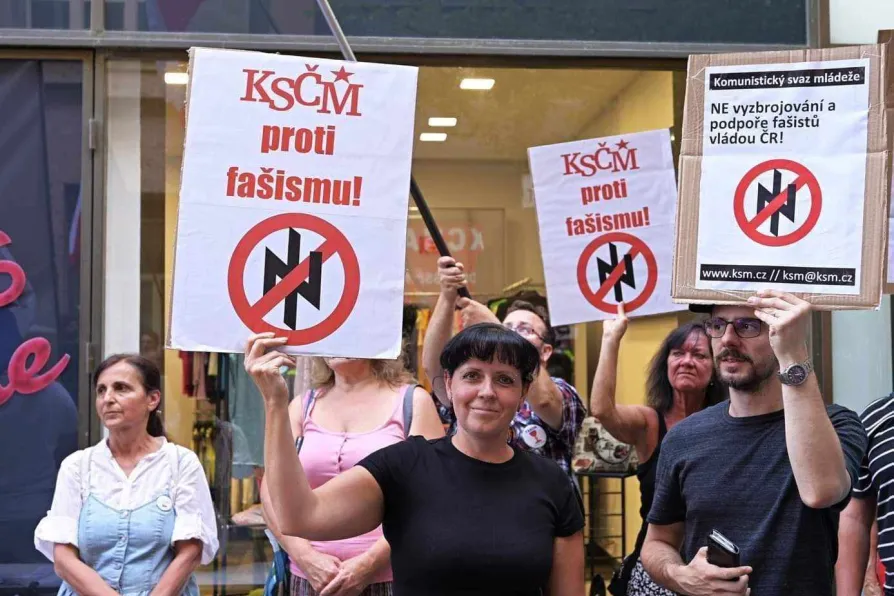
As the Communist Party of Bohemia and Moravia rebuilds support through anti-cuts campaigns, the government seeks to silence it before October’s parliamentary elections through liberal totalitarianism, reports JOHN CALLOW