

 Latest editorial
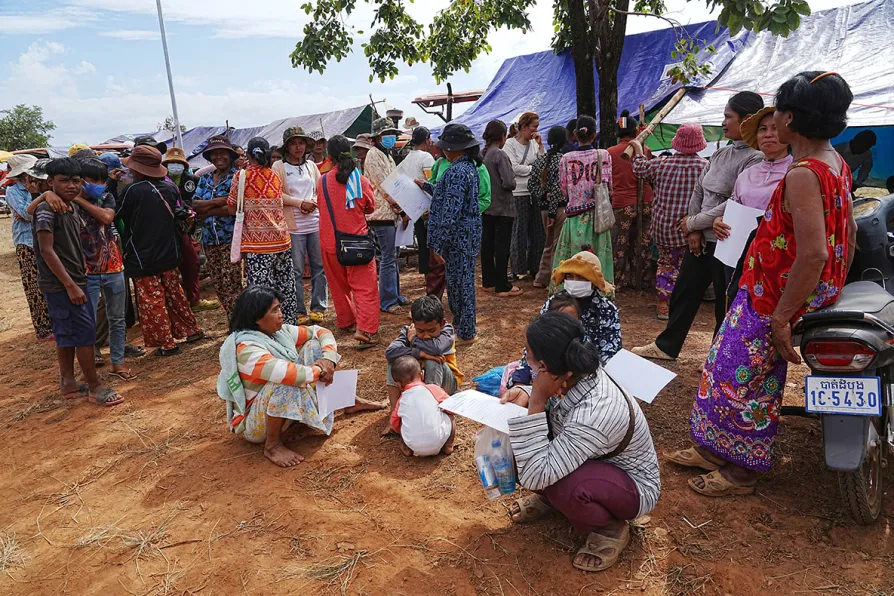 Evacuees wait for registration as they take refuge at Chonkal in Oddar Meanchey province, Cambodia, December 11, 2025, after fleeing from home following fighting between Thailand and Cambodia over territorial claims





THREE Thai civilians were killed as heavy combat continued along the country’s border with Cambodia, the Thai military said today.
The deaths were Thailand’s first civilian fatalities since fighting between the two neighbours resumed.
The latest large-scale fighting was set off by a skirmish on Sunday that wounded two Thai soldiers and derailed a ceasefire brokered by Malaysian Prime Minister Anwar Ibrahim over a longstanding border dispute.
The credit for the ceasefire was later claimed by United States President Donald Trump.
About two dozen people have been reported killed while hundreds of thousands have been displaced on both sides of the border and relocated to temporary shelters or moved to stay with relatives.
A Thai Army statement said that Cambodia on Wednesday night launched an attack with artillery and mortars against Thai positions, to which it replied with the same kinds of heavy weapons, causing damage including “the destruction of enemy trucks.”
Cambodia’s Fresh News online news site, which closely reflects government positions, said that artillery duels continued until today.
Despite the earlier deal to stop fighting, the two countries carried on a bitter propaganda war and minor cross-border violence continued.
Cambodia complained that Thailand did not return 18 soldiers it captured as the ceasefire was coming into effect, while Thailand protested after soldiers patrolling the frontier were wounded by land mines, which it alleges were newly laid by Cambodia.
Cambodia insisted that the mines were left over from its decades of civil war that ended in 1999.
Thai Prime Minister Anutin Charnvirakul has repeatedly vowed to continue fighting until Thailand’s sovereignty and security are assured.
In remarks on Wednesday, he did not seem to rule out negotiations with Cambodia.
Cambodia has said nine civilians have died, including a baby, and 46 others have been wounded.
The United Nations cultural agency, Unesco, on Wednesday expressed its “strong concern” over fighting in the vicinity of the Preah Vihear temple, which it has designated a World Heritage site.
“Unesco stands ready to provide the necessary technical assistance to ensure the protection of cultural property and implement any necessary safeguarding measures as soon as conditions allow,” it said.
The roots of the Thai-Cambodian border conflict lie in a history of enmity over competing territorial claims.
These claims largely stem from a 1907 map created while Cambodia was under French colonial rule, which Thailand maintains is inaccurate.
Tensions were exacerbated by a 1962 International Court of Justice ruling that awarded sovereignty to Cambodia, which still riles many Thais.
