Latest editorial
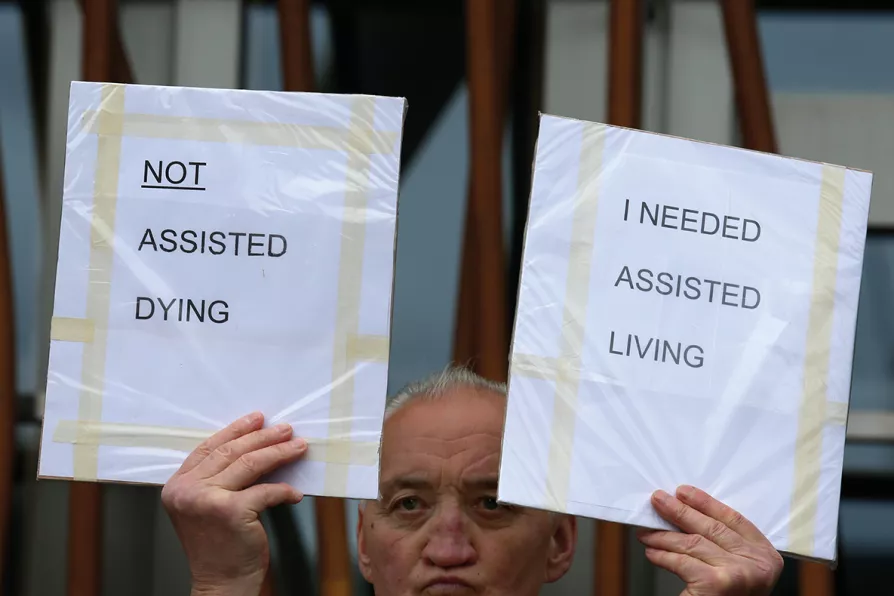 An objector to assisted suicide holds up placards outside the Scottish Parliament as MSPs debated the subject in 2015

Cabinet Office sets out plan for bringing services like cleaning and security back in-house





THE Scottish TUC agreed today to work with the disabled workers’ committee to determine the views of disabled trade unionists on assisted suicide.
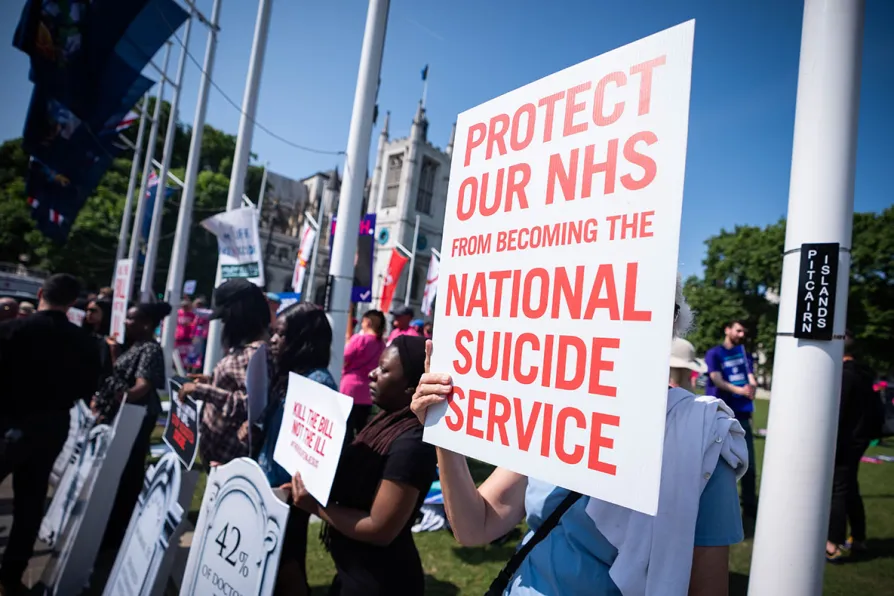
Laws are currently being debated in both the British and Scottish parliaments which would legalise assisted death.
Moving, Unison’s Mark Ferguson said trade unions could not be passive given members would be involved in implementing any new law.
“We need to create policy and procedures to safeguard them in their work,” he said, adding that even if both laws are defeated, the debate has opened up wider questions about the need to improve palliative care.
Ben Lunn of the Musicians’ Union said neither the British nor Scottish Bills included safeguards for autistic or neurodiverse people, while Keith Stoddart of Glasgow Trades Council warned that in the US state of Oregon, where assisted suicide is legal, patients approved for it had included teenagers with eating disorders.
Opposing, Marion Hersh of the UCU said the motion included “a view to achieving a Scottish policy position across affiliates,” and that this was impractical as there was no consensus.


Evidence to peers from medical leaders, patient safety officials and the children’s commissioner has intensified fears that the Bill’s safeguards are inadequate, writes ADAM JAMES POLLOCK
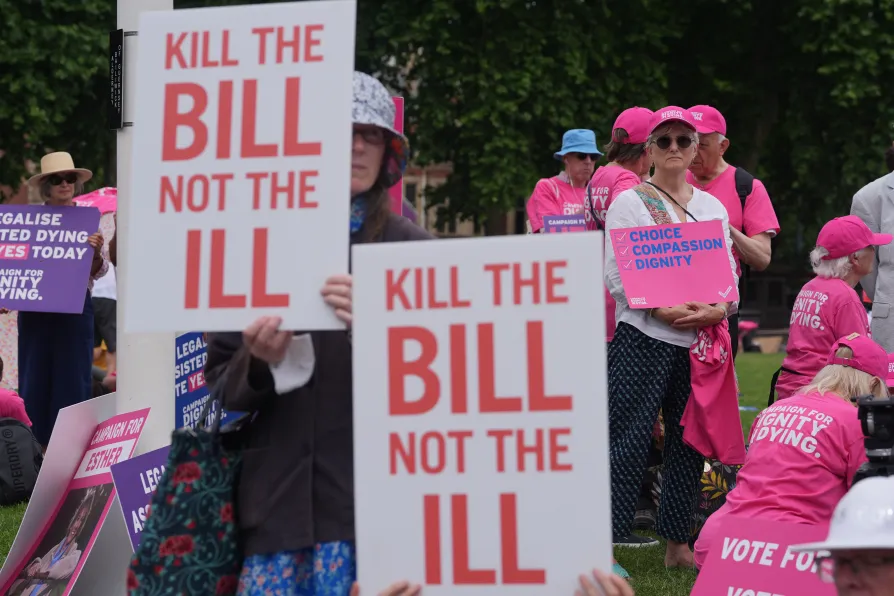
GEOFF BOTTOMS, who has worked in a palliative care hospice for 11 years, argues the postcode lottery for proper end-of-life care must be ended to give the terminally ill choice and agency