

 Latest editorial
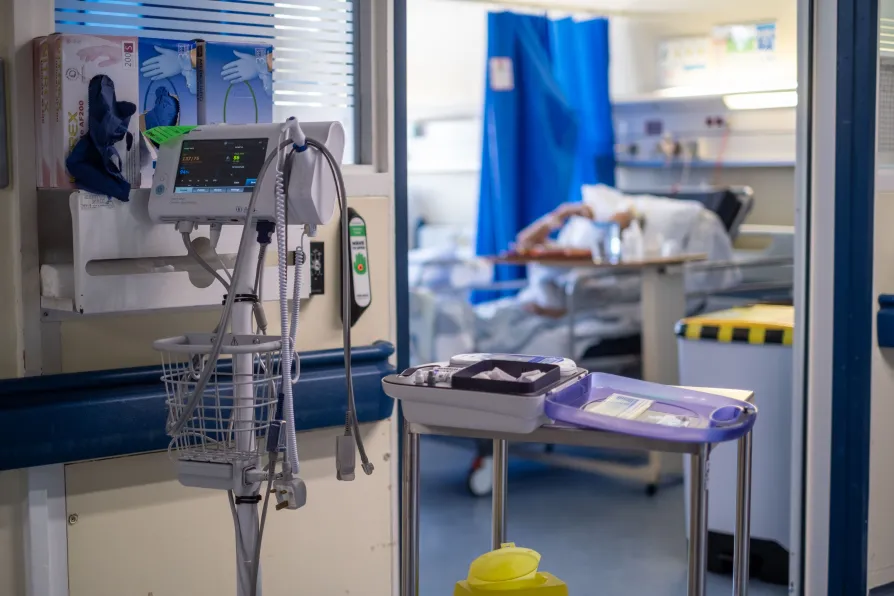 A general view of medical equipment on a NHS hospital ward at Ealing Hospital in London






RECORD NHS spending on private firms to analyse diagnostic scans is “spiralling out of control” amid soaring demand and a lack of in-house capacity, research shows.
NHS trusts and health boards gave £241 million to outsourced companies to interpret CT and MRI scans due to understaffed radiology departments last year.
This was £25m — or 12 per cent — higher than the £216m outsourcing bill a year earlier, double the £120m spent in 2021 and triple the £81m in 2018.
The Royal College of Radiologists (RCR), which collated the figures in its annual workforce census, also revealed serious concerns over the quality of private-sector reports, warning it “clearly does not represent value for money.”
Its survey found 86 per cent of radiology leaders were concerned that outsourcing results in lower quality, while nine in 10 were concerned that outsourced reports need double-checking by NHS clinical radiologists, adding to their teams’ heavy workloads.
A radiology clinical director told the RCR that outsourcing produced “many suboptimal reports needing second reads.”
Another said: “Outsourced reports have many disadvantages over in-house reports, but of particular note they are very expensive.”
A third said: “Huge spend on outsourcing — with the inevitable impact of increased need for scan reviews, extra unnecessary follow up imaging, reduced quality, and patient safety issues due to [outsourced companies’] lack of knowledge of local patient pathways.”
RCR president Dr Stephen Harden urged ministers and NHS chiefs to boost the radiology workforce by creating more training roles in the profession. There are currently 11 applicants for every training post.
“Increasing NHS reliance on outsourcing in radiology is not sustainable and the costs of this are spiralling out of control,” he said.
“In the short term, outsourcing can help to manage diagnostic backlogs, but it cannot be a long-term solution to workforce shortages.
“Clinical radiologists play an essential role in making most diagnoses, but rising demand for scans is outstripping our capacity.
“To ignore this call and continue to spend heavily on outsourcing would be short-sighted, would not be the best use of NHS funds and would not be in patients’ best interests.”
Dr Jacky Davis, consultant radiologist and a founder member of Keep Our NHS Public, told the Morning Star: “The millions spent on sending NHS work to the private sector would be much better spent on keeping the work in the NHS by increasing the number of NHS radiologists.
“Indeed some of the scans performed in the private sector need to be read again by NHS radiologists as the referring doctor has more confidence in the NHS radiologists who they know.
“A lot of these scans have to be read again because the clinicians don’t know the radiologist who’s done the report.
“If you’re a surgeon and you’re going to open somebody’s spine, you want to know the radiologist is somebody you can trust.
“That’s a very important aspect of why it’s so stupid to be sending this out to the private sector.”
She added that outsourced scan reports often conclude with the suggestion their findings are discussed “with your local team,” further adding to in-house staff’s workload.
Dr Davis also warned that there is a “rather accepting attitude” among non-radiology clinicians over the use of AI to interpret diagnostic scans.
The Centre for Health and the Public Interest think tank warned: “History shows that once the government hands these roles over to the private sector, they remain in private hands, taking income and revenue away from NHS hospitals and removing the opportunity to train the next generation of NHS staff.”
Sam Smith, of the medConfidential campaign group, pointed out tech bosses’ grossly overstated claims over the effectiveness of so-called “AI radiologists.”
He told the Star that former PM Rishi Sunak and ex-health secretary Wes Streeting’s “decisions effectively privatised radiology to outsourced humans, because the algorithms they were going to outsource it to still don’t work, but now it all costs more.”
The Department for Health and Social Care said: “We recognise the pressures facing radiology services, and that demand for diagnostic imaging has risen significantly in recent years.
“Despite this, the NHS carried out 30m diagnostic tests in the last year alone, and compared with the previous 12 months, 95,000 more patients were diagnosed with cancer or given the all-clear within 28 days.
“But we know there is more to do, which is why this government will publish a 10-year workforce plan to help deliver a transformed health service in England.
“This will make sure we have the right staff in the right places, with the right skills to care for patients, when they need it.”
