


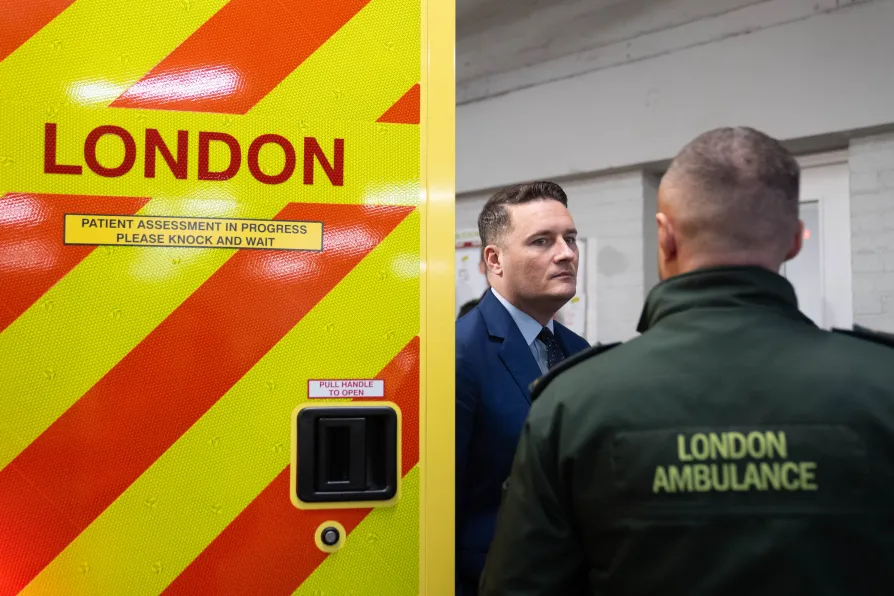
 Health Secretary Wes Streeting during a visit to Wimbledon Ambulance Station, south west London, to mark 500 new ambulances being deployed across England, December 18, 2025





A NEW fleet of more than 500 ambulances has been distributed across England at a cost of more than £75 million.
Officials today said that the “biggest upgrade to the NHS ambulance fleet in recent years” will help strengthen the front line response to health emergencies this winter.
Unison’s deputy head of health, Alan Lofthouse, said: “Updating the ambulance fleet is crucial. Staff need the best equipment to give patients the safe treatment they deserve.
“Proper investment in the NHS workforce is essential too, starting with a decent pay rise when it’s due in April.”
Last month, the union urged ministers to hold talks with health unions to prevent staff from falling below the legal minimum wage each year.
Without action, tens of thousands of employees on the lowest wage bands will once again drop beneath the statutory minimum level when it rises by 50p an hour to £12.71 from April, Unison warned.
Resident doctors are meanwhile balloting to extend their strike mandate after a five-day walkout over pay and conditions in the run-up to Christmas.
The double-crew ambulances, which are fitted with modern navigation technology and safety equipment, have been deployed ahead of schedule amid warnings that the NHS is under “extraordinary pressure.”
NHS England data published today showed that while the number of patients in hospital with flu is levelling off, 95 per cent of beds remain full.
Health leaders warned that the cold weather was likely to escalate the situation after the UK Health Security Agency (UKHSA) today issued amber warnings for every region of England until 10am next Tuesday.
The latest weekly snapshot of the performance of hospitals in England this winter has shown an improvement in the amount of time ambulances were queuing outside of hospitals.
But separate figures for November show the average response time for ambulances dealing with the most urgent incidents, defined as calls from people with life-threatening illnesses or injuries, was eight minutes and one second.
This is unchanged from October and is above the target standard response time of seven minutes.
Ambulances took an average of 32 minutes and 46 seconds last month to respond to emergency calls such as heart attacks, strokes and sepsis.
This is up very slightly from 32 minutes and 37 seconds in October.
