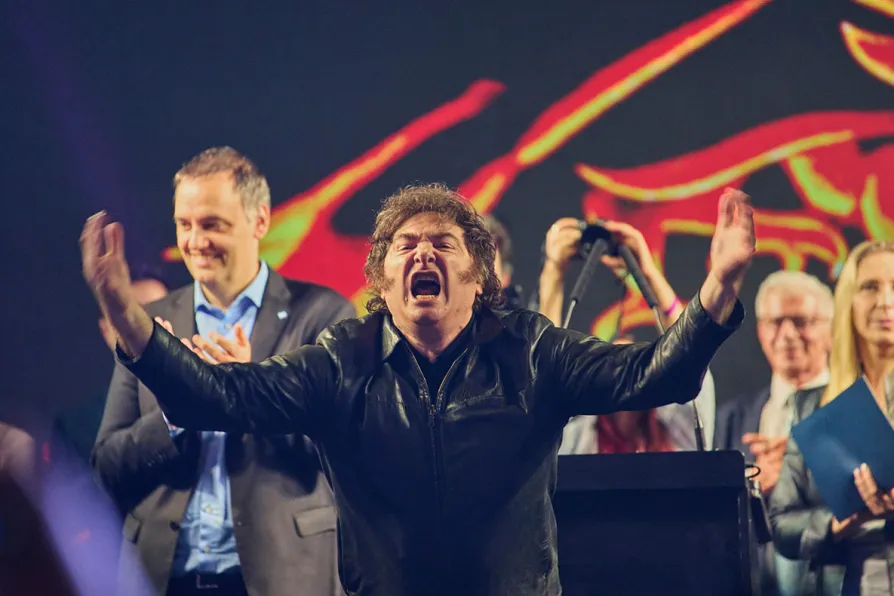
 Argentina's President Javier Milei greets supporters during the closing campaign rally for Manuel Adorni, a contender in the upcoming elections for the Buenos Aires city legislature, in Buenos Aires, Argentina, May 14, 2025





ARGENTINA’S far-right President Javier Milei has issued a decree curbing immigration to the South American nation.
Mr Milei’s abrupt measures and declaration that newcomers were bringing “chaos and abuse” to Argentina — a country built by millions of immigrants that has long prided itself on its openness — drew criticism from his political opponents and prompted comparisons to US President Donald Trump.
Mr Milei’s government welcomed those comparisons to its close US ally, with presidential spokesperson Manuel Adorni saying on Wednesday that it was “time to honour our history and make Argentina great again.”
The executive order tightens restrictions on citizenship, requiring immigrants to spend two uninterrupted years in Argentina or make a significant financial investment in the country to secure a passport.
Argentina’s most recent national census, from 2022, showed that the nation of 46 million had just 1.93 million foreign residents — the lowest share of immigrants since record-keeping began in 1869.
“Once again, politicising migration for electoral purposes and distorting reality,” Pablo Ceriani Cernadas, vice-president of a United Nations committee that protects the rights of migrants, wrote on social media.

Argentina’s World Cup campaign reignited a long-running sovereignty dispute and exposed the contradictions of Javier Milei’s government, writes BERT SCHOUWENBURG

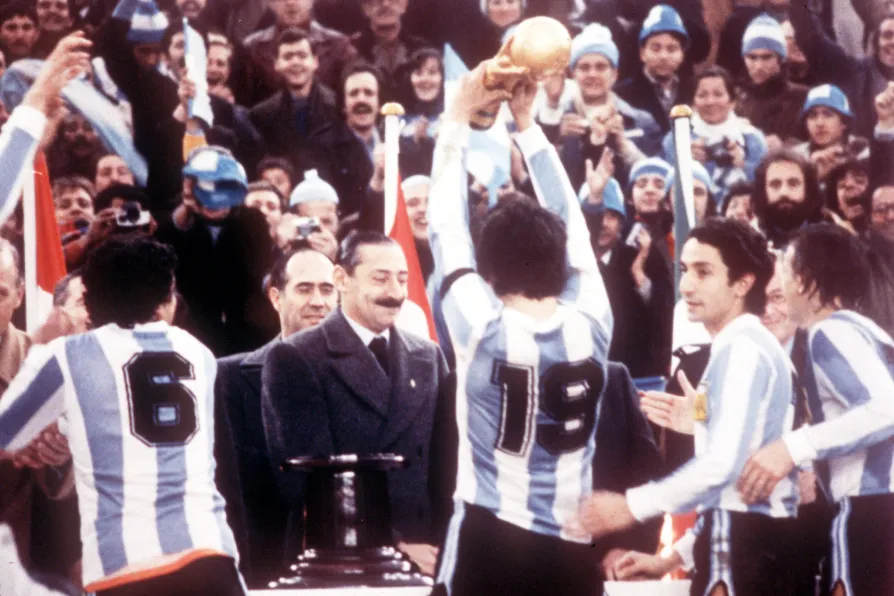
Football may not solve the working class’s problems, but it does matter — and politicians know it, writes BERT SHOUWENBURG