

 Latest editorial

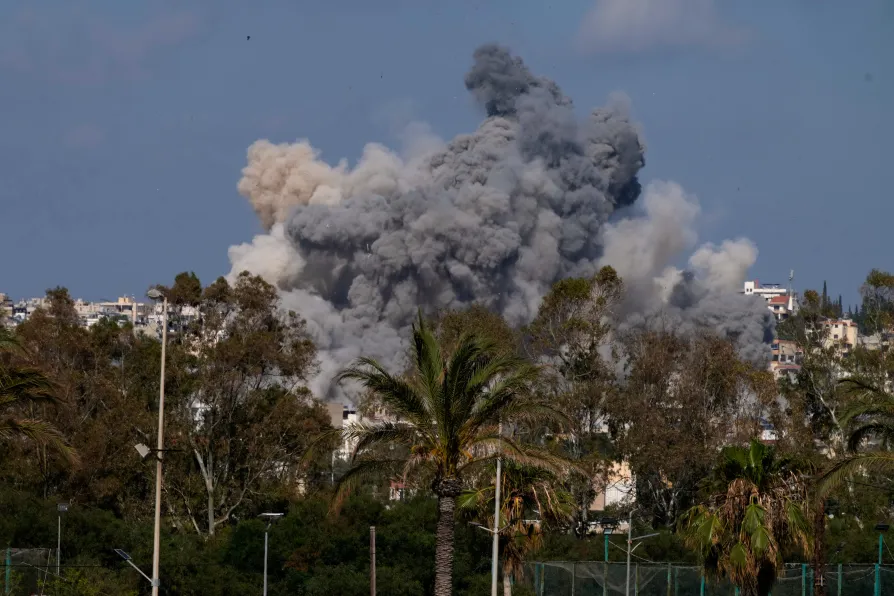 Smoke rises from an Israeli airstrike that hit Burj al-Shamali village near the southern port city of Tyre, Lebanon, June 2, 2026





ISRAEL continued to attack southern Lebanon today but did not target Beirut as had been feared.
This followed a US-brokered partial ceasefire agreement between Israel and the Hezbollah resistance group.
Lebanon said that, under an agreement announced by US President Donald Trump late on Monday, Israeli forces would not bomb the capital in exchange for Hezbollah not attacking Israel.
This came after Iran said Israeli action in Lebanon jeopardised talks on a deal to end the war with the US.
Israeli drone strikes on southern Lebanon on Tuesday killed 11 people, including a man along with his son and daughter, Lebanon’s National News Agency said.
Hezbollah said it had launched attacks against Israeli forces in southern Lebanon.
The exchange of attacks came a day after the United Nations secretary-general proposed three options to help end the conflict when the 8,100-member UN peacekeeping mission in southern Lebanon ends on December 31.
All of the options presented to the UN security council by secretary-general Antonio Guterres on Monday would continue UN military monitoring of the boundary between Israel and Lebanon, support Lebanese forces in deploying throughout the country and strengthen political efforts to end the fighting, which has persisted despite a supposed ceasefire.
UN peacekeepers have played a significant role in monitoring the security situation in southern Lebanon, a Hezbollah stronghold, for decades. Six of the peacekeepers have been killed in recent months.
In his letter to the security council, Mr Guterres said UN military monitoring of the UN-drawn boundary between Israel and Lebanon, known as the Blue Line, was “paramount.”
Under all options, he said, “a uniformed UN presence working to facilitate de-escalation, dialogue, liaison and co-ordination, and support for the Lebanese Armed Forces would be necessary.”
Mr Guterres proposed three options for the UN military force, ranging from 5,525 to 1,980 personnel, including some unarmed military observers.
