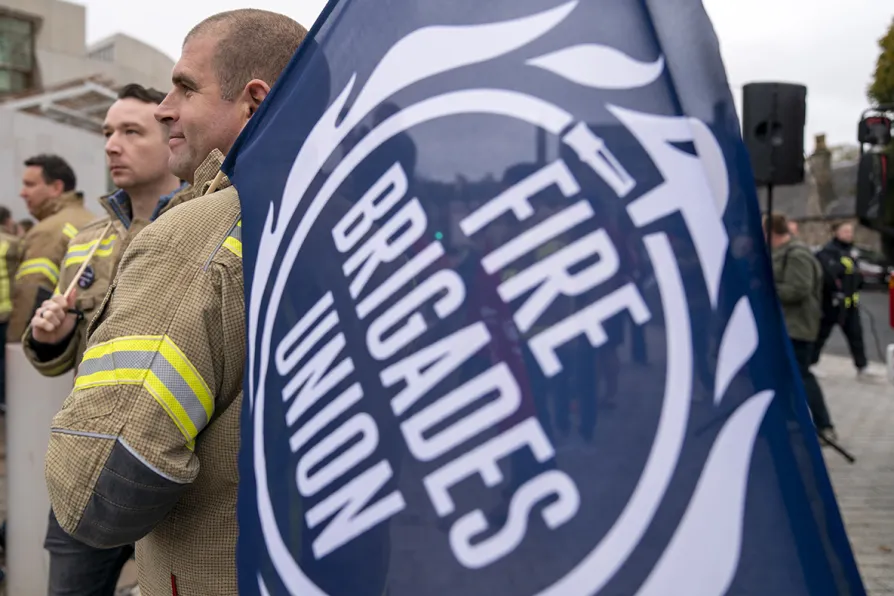
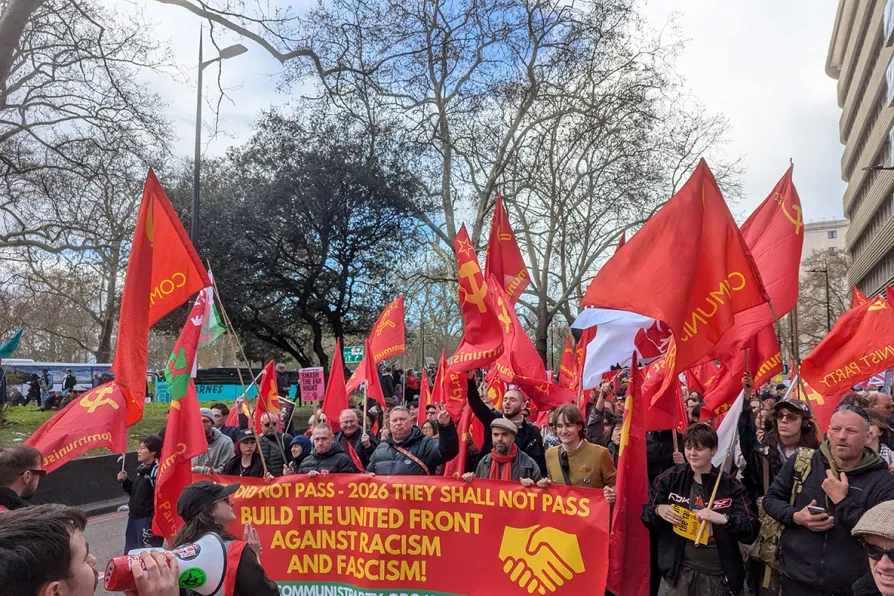
Working people across Britain are fighting back against austerity, war, repression and exploitation. The challenge now is to unite those struggles, says Communist Party of Britain assistant general secretary JOHNNIE HUNTER

From the cladding crisis to the climate emergency, frontline voices must shape fire policy
MATT WRACK outlines the FBU’s motion to the Labour Party conference, urging an overhaul of safety regulations, an end to privatisation, and preparation for the extreme weather events threatening public safety
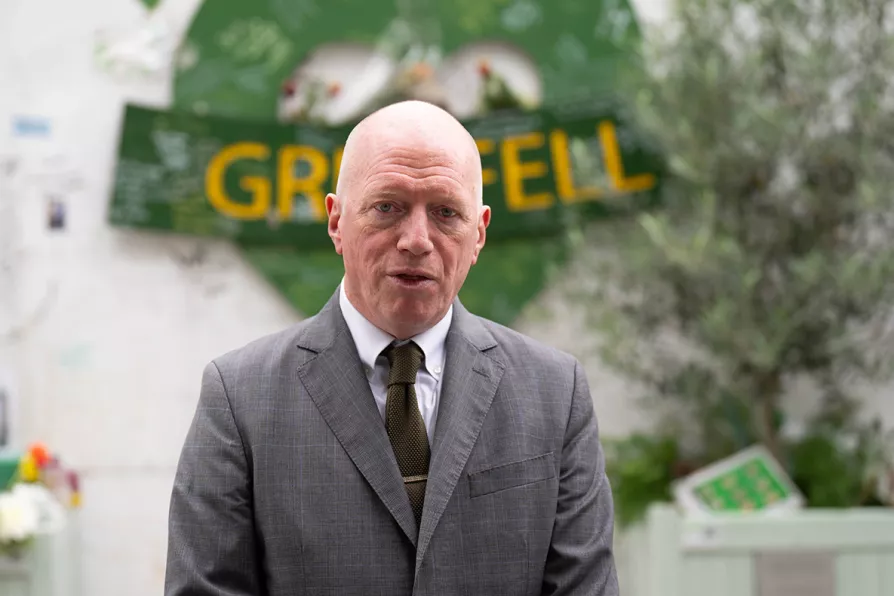
 Matt Wrack, General Secretary of the Fire Brigades Union, speaks to the media, next to the Grenfell Memorial Wall in west London, September 4, 2024
Train drivers’ union Aslef general secretary DAVE CALFE speaks to Ben Chacko about his hopes that Burnham’s devolution agenda will include the importance of the railway
DIANE ABBOTT provides an analysis of the reasons for EU and British voters’ dramatic swing to the right
Some of the review’s proposals could make the benefits system less cruel and dehumanising. But its vague plans for services and non-cash support revive the threat that disabled people will lose control over the money we need to survive, writes DYLAN MURPHY
Believe it or not, there was a time when the US government built beautiful homes for working‑class Americans to deal with a housing shortage, writes ERAN BEN-JOSEPH
MAT COWARD has heaps of good advice on recycling garden and household waste over the winter





SEVEN YEARS after the Grenfell Tower fire, and still lessons have not been learned. Survivors, the bereaved, and the community have yet to see justice served. Meanwhile, the conditions that led to the fire remain unchanged.
This year’s Labour Party conference commences in the aftermath of the final Grenfell Tower inquiry report. As trade unionists, it is our duty to fight for serious and meaningful action in memory of the 72 lives lost.
The night of June 14 2017 will never be forgotten by firefighters. Yet thousands of buildings are still wrapped in flammable cladding. We still face a crisis in building safety. Profit continues to be put before lives.
Decades of political decisions led to the disaster, gutting Britain’s fire safety regime.
Labour’s manifesto committed the incoming government to “take decisive action to improve building safety, including through regulation, to ensure we never again see a repeat of the Grenfell fire.”
To ensure a fire of this scale never happens again, the government must reverse the cuts, privatisation and deregulation that paved the way to tragedy.
We must unite as a movement to fight for a complete overhaul of the deregulatory agenda. Businesses have been allowed to self-regulate, prioritising shareholder profits at the expense of people’s safety.
This can be seen across all areas of decision-making relevant to the Grenfell Tower: from construction to risk assessment, failures in inspection and enforcement. Commercial interests and profit must be completely removed from any new system of regulation.
At the same time, political and democratic accountability have been stripped away. Local government and fire and rescue services have been hollowed out by cuts, while ministers have overseen a culture of complacency from the top down. Concerns of council and social housing tenants have been systematically ignored.
Many such warnings went unheeded before the Grenfell Tower fire, from the residents directly and from the Fire Brigades Union and other fire safety experts in response to other tower block fires.
For too long, working-class people have been treated as collateral by those in power. But where bosses seek to lock us out of the room, we must rally in numbers to deliver our demands.

Similar stories
This summer’s fire outbreaks highlighted once again the deadly cost of job, equipment and funding cuts to the fire service. Ten years after the Grenfell tragedy, serious lessons still need to be learned, says STEVE WRIGHT
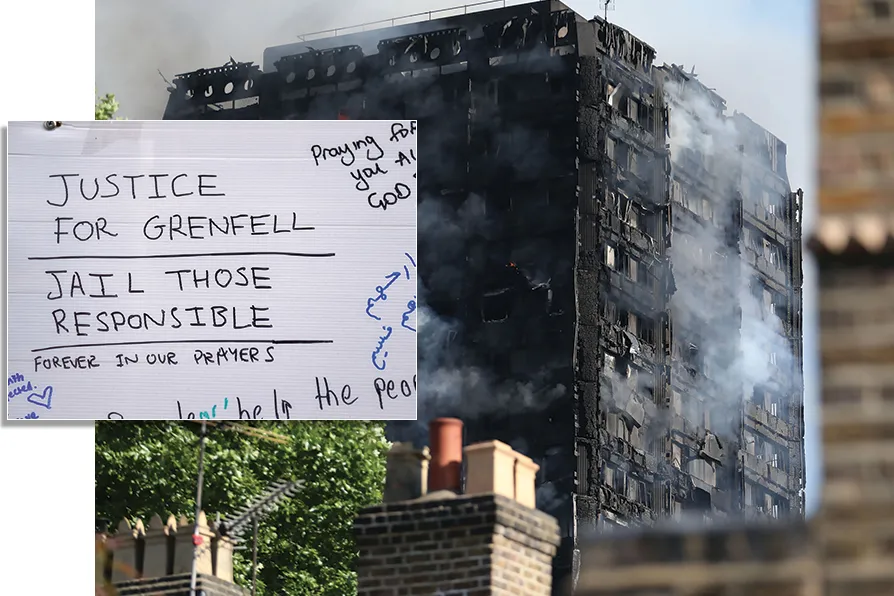
YVETTE WILLIAMS and JOE DELANEY dissect the institutional dawdling that rubbed salt into the Grenfell open wounds prolonging the agony of survivors
LUKE FLETCHER outlines Plaid Cymru bold plans for wide-ranging policy consultations with trade unions in Wales