
Washington’s inability to subjugate Iran is an example of how it is trying to preserve a regional order that no longer exists, argues RAMZY BAROUD


Working-class consciousness alive and on the rise in Cornwall
Although the Labour Party has shifted to the right, socialism is thriving down in the south-west. DAWN EVANS reports
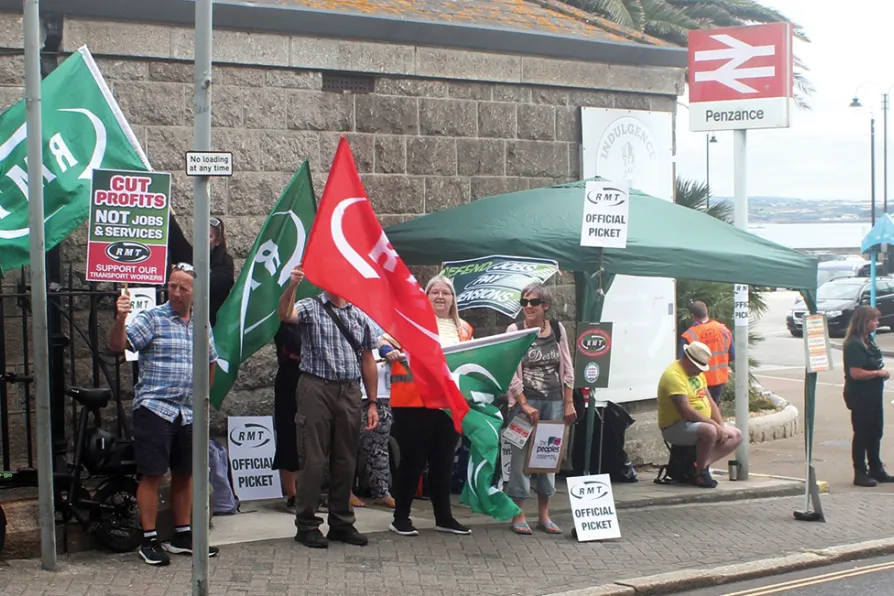
 GOING STRONG: A lively RMT picket in Penzance, west Cornwall
[Pic: Anthony Matthews]
GOING STRONG: A lively RMT picket in Penzance, west Cornwall
[Pic: Anthony Matthews]

US financial instability is exposing the limits of a dollar-dominated global economy — and giving the Global South a historic chance to build an alternative, says MURAD QURESHI
DOUG NICHOLLS says the parasitic finance markets must be challenged or another British government could be toppled
The late country singer’s Imagination Library has put hundreds of millions of books into children’s hands. We should build on that legacy by defending the libraries at the heart of our communities, says BRENDA AITCHISON
Deprivation is a fundamental factor in criminal behaviour that must be addressed but, KENNY MacASKILL argues, there needs to a major rethink in sentencing to tackle overcrowding
MML director MEIRIAN JUMP outlines the recently refreshed library’s busy autumn schedule that ranges from book sales, archival exploration, community work with online education and the ever popular site tours
TONY BURKE surveys the shifting political landscape and the challenges Labour needs to address if it is to prevail in the 2028 federal elections





CORNWALL does not have a strong history of organised, industrial militancy. In the 19th century the influence of Wesleyan Methodism became a dominant force in this tin mining region, and at a time when radical political movements and the strong growth of trade unionism was emerging in other mining communities throughout Britain, Cornish Methodism promoted an engagement with Liberal politics rather than trade unionism or socialism.
However, there were notable exceptions. William Lovett, a Cornish man from Newlyn, was the founding member of the radical working-class Chartist movement and the author of the movement’s influential document — the People’s Charter (1848).
And in 1840 Richard Spurr, a carpenter from Truro, was arrested while actively agitating for the cause of Chartism. Around the same period, it was reported in a Chartist publication that a meeting in Penzance of the Chartists movement had been so well attended that it caused serious alarm among the authorities. Despite these efforts, the Chartist movement failed to gain ground in Cornwall.

Similar stories
It may have become a traditional month for holidays, but episodes from early British labour movement history show that class struggle never takes time off, argues KEITH FLETT
KEITH FLETT looks at geographical roots of working-class activism in Britain

Labour movement history in Britain shows workers secured reforms through collective pressure and political representation, rather than being gifted from above, writes KEITH FLETT
The General Strike exposed the power of the working class — and the limits of its leadership, writes Dr DYLAN MURPHY