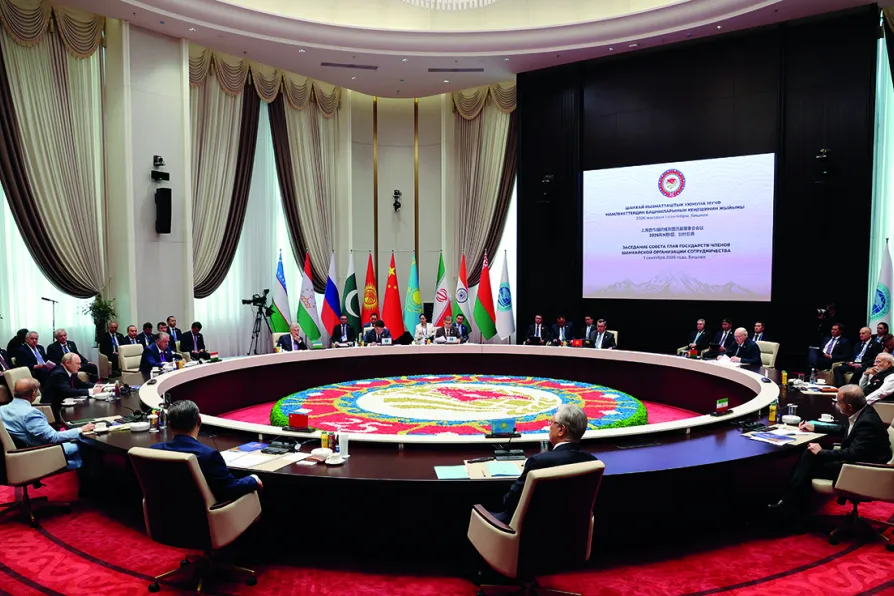
The 25th anniversary meeting of the Shanghai Co-operation Organisation in the Kyrgyz capital may offer a glimmer of hope that international relations do not need to be defined by endless confrontation, writes KENNY COYLE


 Latest editorial

Rebuild Britain: for socially responsible public finance
Reviewing a new pamphlet, FAWZI IBRAHIM asserts the need for public expenditure in which private finance is strictly regulated and constrained, allowing the Bank of England to fund government expenditure without the risk of inflation
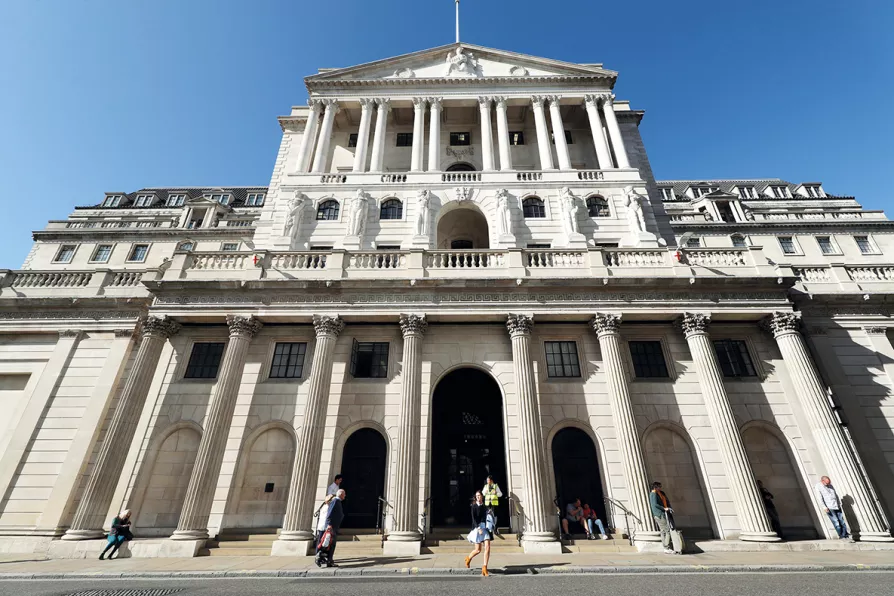 The Bank of England
The artist, who has just died, is embedded in the subconscious of the Palestinian people
The five young men killed in the A66 crash were responsible for a devastating tragedy — but the crash should force us to ask difficult questions about wider society, argues RENATA MEDEIROS MIRRA
Britain funds the policing of black culture 16 times better than the culture itself. The Diamond Jubilee is the moment to end that, argues CLAUDIA WEBBE
Despite Andy Burnham’s declaration defending the continued partition of the island, all major international and internal trends are converging to make Irish reunification inevitable
Humans are part of the ‘animal kingdom’ – and of nature in general – but also distinct from it and labour (work) is part of what makes us unique, declared Engels. His insights 150 years ago into how our species came to be and how we differ from the rest of nature, are as important today as they were then, says the MARX MEMORIAL LIBRARY
Committee for the Defence of the Iranian People’s Rights general secretary GAWAIN LITTLE discusses the impact of the US-Israeli war on the Iranian people and economy





HOW a government funds its expenditure is a question that all countries face. It is not confined to capitalist economies. It applies to Cuba as well as to Britain and the US.
Government expenditure invariably exceeds its income whether by design as a result of investment decisions, or due to natural disasters or war. Governments with a sovereign currency (and Britain is such a country, unlike those who are inside the EU) can simply print money to fund expenditure. However, that will lead to inflationary pressures on prices, at least in the short term, as general demand for resources increases.
Traditionally, governments have borrowed money from the private financial market through the issuance of bonds. Money is thus taken away from private finance into the hands of the government to spend.

Similar stories

The question is not simply how much we spend on defence, but what we understand defence and security to mean, says SIMON BRIGNELL

Only an ambitious programme of state-led investment can restore growth and improve living standards, argues MICHAEL BURKE

Years of underfunding are eroding Scotland’s local services and deepening inequality in communities, says VINCE MILLS
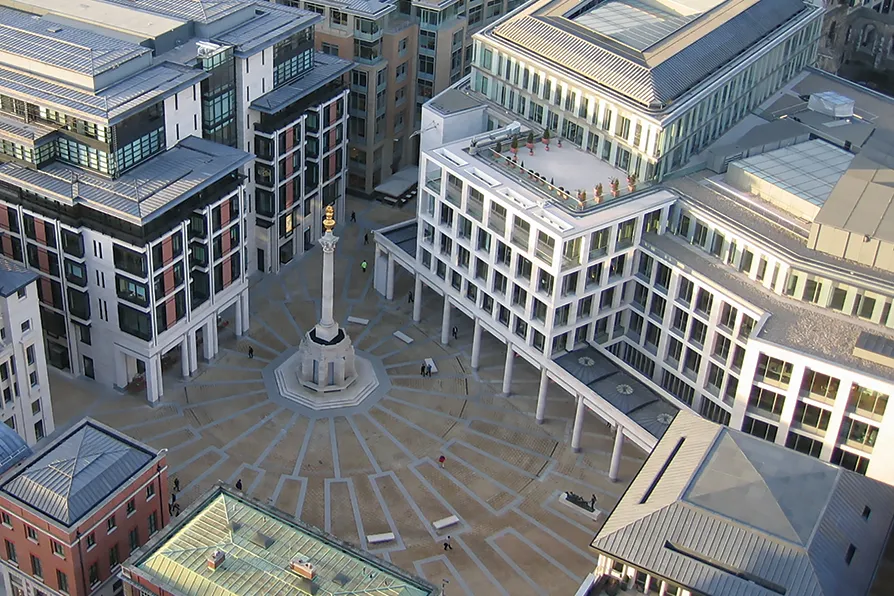
If the government really wanted to address public finances, improve living standards and begin economic recovery, it would increase its borrowing for investment, argues MICHAEL BURKE