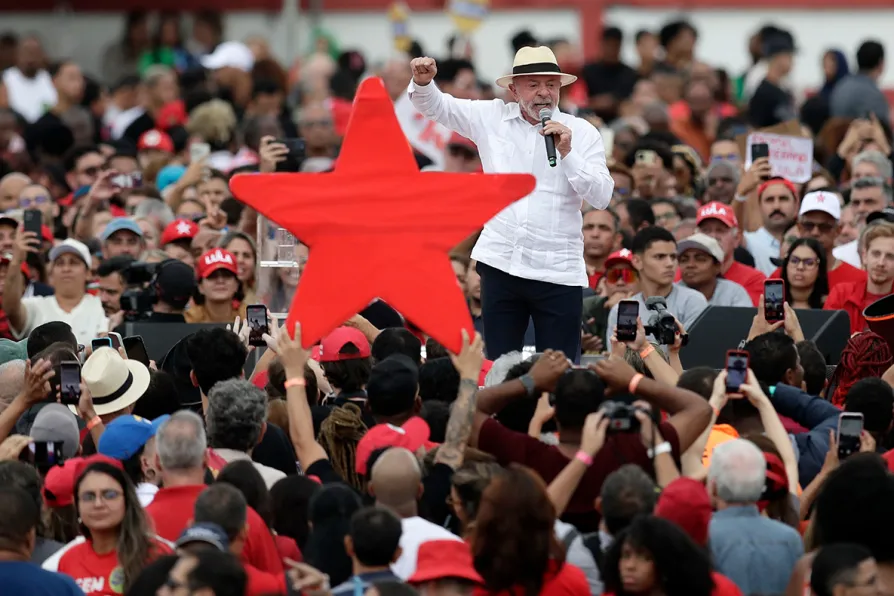
Sovereignty and the rule of law are under threat from Trump’s attacks on Lula’s administration just as they have been across Latin America, argue CARLOS MARTINEZ and SARA VIVACQUA


 Latest editorial

Let’s be clear about what fascism actually is
Nixon, Reagan, Trump — they were, and are, not fascists: misusing the term will cost the left dearly, writes ZOLTAN ZIGEDY
 The popular obsession with depicting Donald Trump as Adolf Hitler is far from accurate.
Glasgow will remember the martyrs of the 1787 strike this weekend in speech and song, their spirit is sorely needed today, writes JIM LISTER
ALEX BROWN explains how medieval Europe was plunged into sunless years, with widespread crop failures and devastating famines
Police crackdowns on Israeli peace demonstrators combined with court rulings and settler organisations are designed to strip Palestinian families of their homes and land. The Israeli state has tried to silence both Israelis and Palestinians who resist, according to Zo HaDerekh (This Is The Way) the Communist Party of Israel’s Hebrew-language weekly
Remembering a legendary trade unionist and inspirational leader
Communists in Australia, Britain and the US outlined a joint state agreement against their governments’ militarist provocations.





“FASCIST” and “Fascism” are frequently used words today that are both popular and slippery. The prevalence of the words in common parlance is indisputable, but regrettable for three reasons:
- There is no common, shared, ordinary meaning of “fascism”
- “Fascist” has often become merely an epithet, a term of abuse
- The use of the expressions has disengaged from their specific history and context
Today, commentators, both left and right, excoriate their targets with fascist-themed concatenations: “feminazis,” “islamofascists,” “neo-fascists,” “PC fascists,” etc.
And, of course, the dinner-table discussion of the liberal intelligentsia inevitably arrives at the burning question: “Is Trump a fascist?” If you Googled “Trump, fascism, fascist” on August 25, you would have gotten 9,150,000 results.

Similar stories

Internationalism is deeply embedded in socialist theory and practice. Examination illuminates its complexity asserts the Marx Memorial Library and Workers’ School

CJ ATKINS takes a closer look at Trump’s recent spate of red-baiting speeches and asks why the authoritarian president is running scared


ASSAF TALGAM talks to an Israeli Communist lawmaker about the need to use every tool of democratic and non-violent struggle; how Israeli society has changed since October 7 2023; and the persecution of the left in the parliamentary arena