
The UK Prime Minister may have the regal touch in northern England, but he’s been wrong-footed on the constitutional challenges posed by the Celtic Alliance of first ministers from Scotland, Wales and Northern Ireland, argues KENNY MacASKILL

Is capitalism cyclical?
As long as we permit capitalism to exist, there will be cycles of development and decay, of gains and losses for capitalists, and of successes and failures for the working class, explains the MARX MEMORIAL LIBRARY
 Regular crises typically happen every five or six years — it was this, Marx said, that proves the labour theory of value in the same way as the collapse of a badly built house proved the law of gravity.

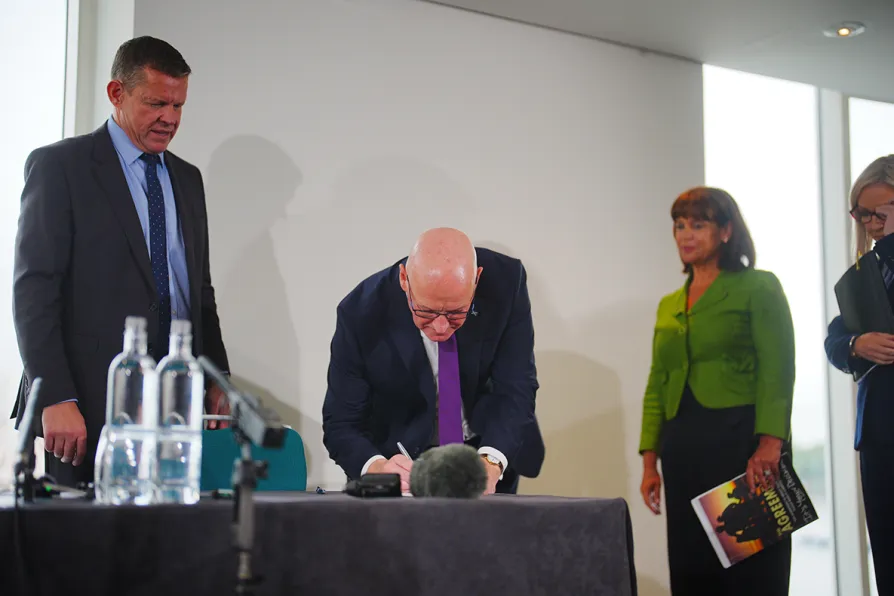
NEIRLAY ANDRADE, a member of the Communist Party of Venezuela’s political committee, outlines her party’s position on the crisis facing the country
A look at Taylor Wimpey’s accounts shows why Labour’s market-led housing strategy won’t deliver more, cheaper homes, as promised, says SOLOMON HUGHES
DAVID HORSLEY remembers the remarkable life and death of US black revolutionary George Jackson, whose politically passionate prison letters were published as Soledad Brother
Cuban trade union federation CTC leader OSNAY MIGUEL COLINA speaks to Ben Chacko about life and work under a crippling US siege
A part of the British empire’s network of slavery, today the Caribbean island of Nevis faces a new form of exploitation in the form of crypto-colonialism, CLAUDIA WEBBE writes
Challenges from the unscrupulous misuse of AI to steal actors’ voice and physical likenesses is being met with a firm union response, writes LYNDA ROOKE





DESPITE Gordon Brown’s boast to have ended “boom and bust” capitalism is — and has always been — cyclical. Periodic crises — cycles of growth and decay, of profit and loss for the owners of capital, of victories and defeats for the struggles of working people — are inherent in capitalism.
This was first recognised in the early 19th century by the French economic historian Jean Sismondi. Sismondi challenged earlier classical economists such as Adam Smith and David Ricardo who held that perfect competition would ensure smooth growth.
Sismondi, who coined the term “proletariat” to refer to the working class created under industrial capitalism, argued that cyclic mismatches of production and effective demand were caused by inequalities of income and wealth. He advocated modest state intervention to regulate working hours and progressive taxation to provide unemployment and sickness insurance and pensions. In England, his ideas were taken up by Robert Owen who argued for a form of paternalistic socialism.

Similar stories
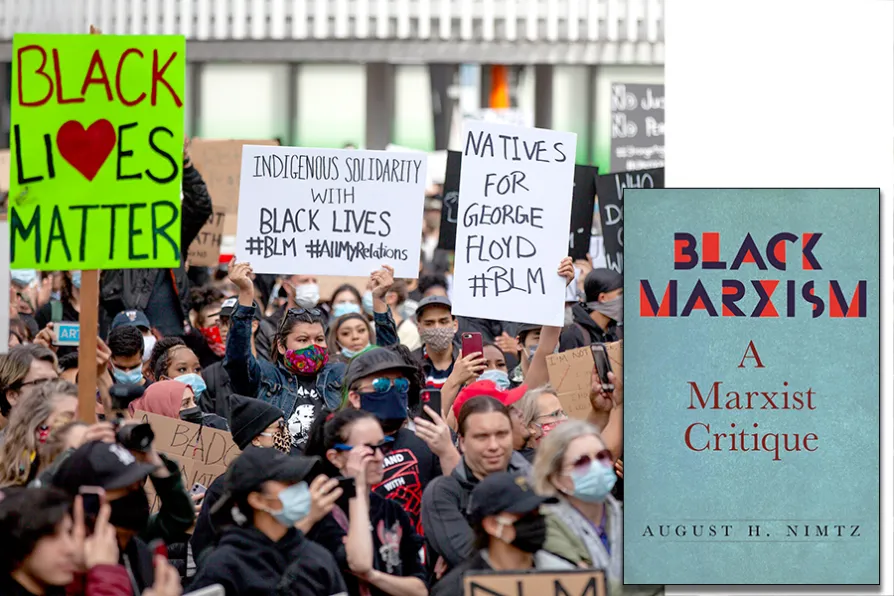
SETH SANDRONSKY recommends a Marxist critique of the ‘race-first’ views of the influential black US theorist Cedric Robinson

Dignity is important to all humans, argues the Marx Memorial Library and Workers’ School, but it does not come about automatically. In a less than perfect world, dignity can accompany suffering, but the collective dignity of working people is achieved through acting together to change the world.

Internationalism is deeply embedded in socialist theory and practice. Examination illuminates its complexity asserts the Marx Memorial Library and Workers’ School
If the government really wanted to address public finances, improve living standards and begin economic recovery, it would increase its borrowing for investment, argues MICHAEL BURKE