TUC president and POA leader STEVE GILLAN speaks to Ben Chacko on the eve of Congress 2026


 Latest editorial
The Cato Street 205th anniversary – an alternative tradition of protest
The legacy of an 1820 conspiracy in revenge for Peterloo resonates down the ages, argues KEITH FLETT
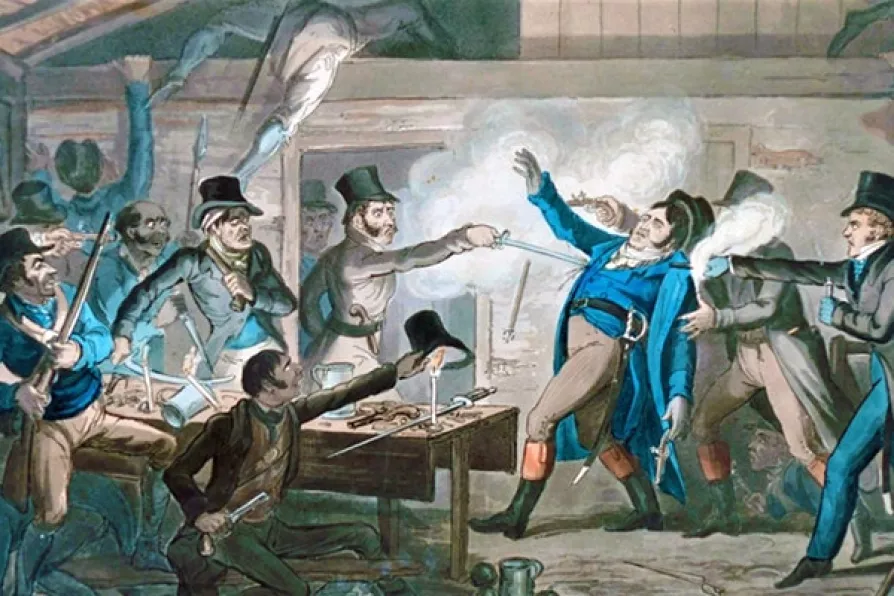 A cartoon depiction of the arrest of the Cato Street Conspirators

DOUG NICHOLLS welcomes a turning point at this year’s Congress, where many motions call for a co-ordinated plan to revive British industry, a perspective outlined in his new book
HOPE VIRGO of campaign Dump the Scales warns MPs voting today they should be alert to the threat legalised assisted death poses to people with eating disorders
The Together Alliance is hosting two summits, North and South, to build power and plan action against the scourge of racism peddled by the right. DANIEL KEBEDE urges mass participation
The drift toward militarisation in Europe is not inevitable, left-wing and peace movements can preserve sovereignty and prevent war, says DÁIRE HUGHES MP
Whatever differences exist among international sympathisers of the Bolivarian revolution about its current trajectory, they should unite against the imperialist power that is the source of an enforced retreat, argues ROGER D HARRIS
Trade unions need to step up and force a turn in the policies of the labour movement to effectively confront the far-right threat, argues NICK WRIGHT





IT IS 205 years since the Cato Street conspiracy was “uncovered” on February 23 1820 and the leaders duly despatched at the scaffold or to Australia.
It warrants a section in EP Thompson’s classic account of the Making of the English Working Class (1963) but until recently has been largely overlooked both by mainstream and left historians.
The conspirators, who, like others before them, had been infiltrated by government spies — a reminder that spycops are nothing new — planned to attack a “Cabinet dinner” in central London, murder the prime minister, home secretary etc and display their heads on poles.

Similar stories

JOHN CALLOW introduces the work of Geoffrey Trease, who placed ordinary people at the centre of his historical fiction for children, creating adventurous stories to inspire the possibilities of social change
KEITH FLETT looks at geographical roots of working-class activism in Britain
Inspired by a hit TV show, KEITH FLETT takes a look at the murky history of undercover class war
It’s not just the Starmer regime: the workers of Britain have always faced legal affronts on their right to assemble and dissent, and the Labour Party especially has meddled with our freedoms from its earliest days, writes KEITH FLETT