TUC president and POA leader STEVE GILLAN speaks to Ben Chacko on the eve of Congress 2026


 Latest editorial
Andy Burnham must show he is serious – by ending the managed decline of the country’s schools
NASUWT leader MATT WRACK says schools are crying out for serious investment — and there are other immediate changes a new prime minister could and should enact
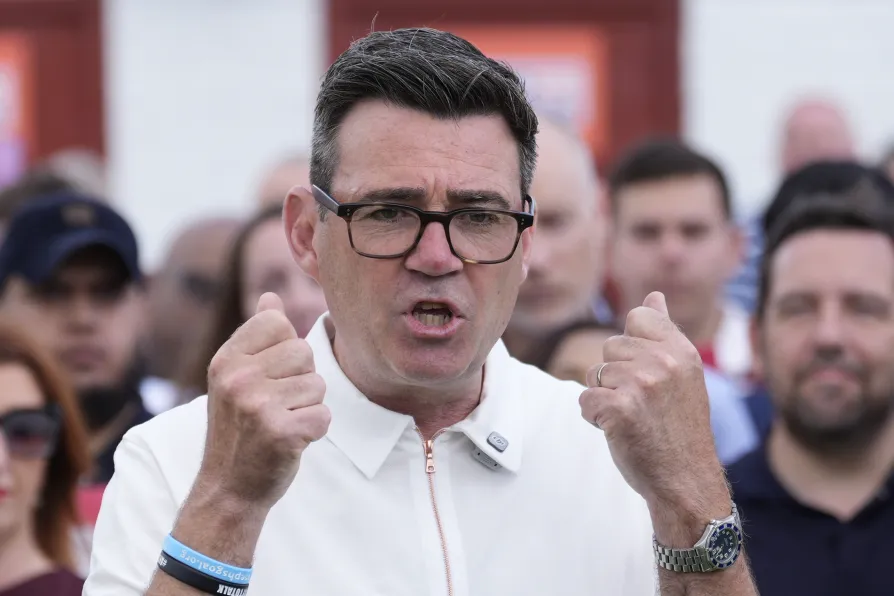 MUCH TO PROVE: Andy Burnham

DOUG NICHOLLS welcomes a turning point at this year’s Congress, where many motions call for a co-ordinated plan to revive British industry, a perspective outlined in his new book
HOPE VIRGO of campaign Dump the Scales warns MPs voting today they should be alert to the threat legalised assisted death poses to people with eating disorders
The Together Alliance is hosting two summits, North and South, to build power and plan action against the scourge of racism peddled by the right. DANIEL KEBEDE urges mass participation
The drift toward militarisation in Europe is not inevitable, left-wing and peace movements can preserve sovereignty and prevent war, says DÁIRE HUGHES MP
Whatever differences exist among international sympathisers of the Bolivarian revolution about its current trajectory, they should unite against the imperialist power that is the source of an enforced retreat, argues ROGER D HARRIS
Trade unions need to step up and force a turn in the policies of the labour movement to effectively confront the far-right threat, argues NICK WRIGHT





AT THE last general election, the British public voted overwhelmingly for change — real, tangible, and immediate change.
They did not elect a Labour government to merely manage the decline of our social fabric. They expected an administration that would repair our hollowed out public services and confront the cost-of-living crisis felt by millions.
If Andy Burnham becomes the next Prime Minister he has the chance to change that. His challenge is whether he actually delivers or is seen as more of the same.
He must show that a Labour government he leads can tackle grotesque levels of inequality, create jobs and offer hope to millions of people who expected change when Labour came to power.
And it is in education that the government’s commitment to that mandate given to it just under two years ago will be judged.
For more than a decade now, teachers, support staff, pupils, and their families have endured an ideological experiment defined by austerity, outsourcing, and privatisation. The physical infrastructure of our school estate is literally crumbling, while the workforce holding the entire system together has been pushed to breaking point.
The NASUWT’s Where Has All the Money Gone? report exposed the grim mechanics of this crisis. It showed how billions of pounds have been diverted away from front-line education into layers of private contractors, consultants, and bloated academy chief executive pay packets.
But where education is delivered and makes a real difference, classrooms are left without the basic resources children need and rely on teachers and parents to plug the gaps from their own pockets.
I believe the electorate wants an end to this marketised hollowing out of the state. If the new prime minister is serious about changing the life chances of children and young people they must recognise that you cannot build a fair and dignified education system on the cheap.
You cannot run schools on the exploited goodwill of unpaid labour, nor can you expect teachers to deliver excellence in buildings that boil in the summer and leak and freeze in the winter. Anything less than long-term, sustained capital investment is simply managing the decay of the status quo.
But money alone will not fix the structural failures. There are profound, transformative changes that will cost the Treasury next to nothing, yet would fundamentally improve the lives of teachers and their pupils.
First, we must restore national pay and conditions. The fragmentation of the school system through mass academisation has created a deeply unfair two-tier workforce. Teachers are doing the exact same jobs, under the same pressures, but can work on entirely different terms and conditions depending on the corporate structure of their employer.
A coherent, publicly accountable education service requires a single national entitlement that applies to every teacher in every state-funded school. This is not only fairer but it is the foundation of democratic accountability in public education.
The next priority must be to dismantle the toxic, broken pay progression system for teachers.
Formally linking pay to performance management has achieved nothing but the creation of an oppressive bureaucracy, deep staff resentment, and a culture of fear.
Restoring automatic pay progression would immediately boost retention, stem the tide of earlycareer departures, and restore the professional dignity that has been systematically stripped away.
Workload is consistently listed by teachers as one of the biggest drivers causing them to leave the profession. It must be tackled as a priority.
Teachers are drowning in endless data entry and administrative tasks that add nothing to a child’s learning.
Addressing this crisis does not require a vast funding package. What it does require is political will, a reduction in the oversurveillance of teachers, and meaningful, collaborative negotiation with trade unions — including a national workload agreement — as the NASUWT has long called for.
We must also confront the quiet catastrophe unfolding in our Special Educational Needs (SEND) provision.
The current system forces vulnerable children to wait months, sometimes years, for essential specialist assessments while classroom teachers are left stranded without resources. Every school must have immediate access to external specialist staff and emergency funding.
Ultimately the next Labour prime minister must confront the failed experiment of marketising the education of our children. The obsessive push to force every school into a multi-academy trust has consumed vast amounts of public money while delivering next to nothing for pupil outcomes.
We must rebuild an education service that is democratically accountable to local communities, parents, and families — not run in the interests of corporate academy chains, their chief executives and consultants.
The teaching profession has shown extraordinary patience and through their dedication has shielded our children from the worst impacts of state neglect.
But that reservoir of goodwill is empty. For Andy Burnham this is a moment to stand with working people, with our communities, with every child who deserves better than managed decline. Teachers have carried this system on their backs for too long.
If Labour truly believes in change, now is the time to prove it with action and not slogans.
Our schools cannot wait, our children cannot wait, and the labour movement will not wait.
Matt Wrack is general secretary of NASUWT. This article first appeared on the union’s website.
