


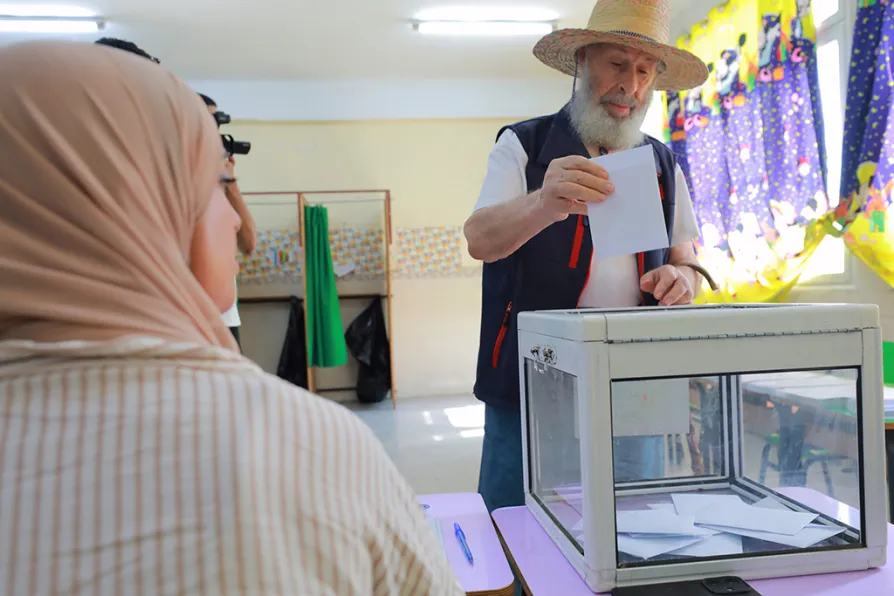
 A man votes in Algiers today
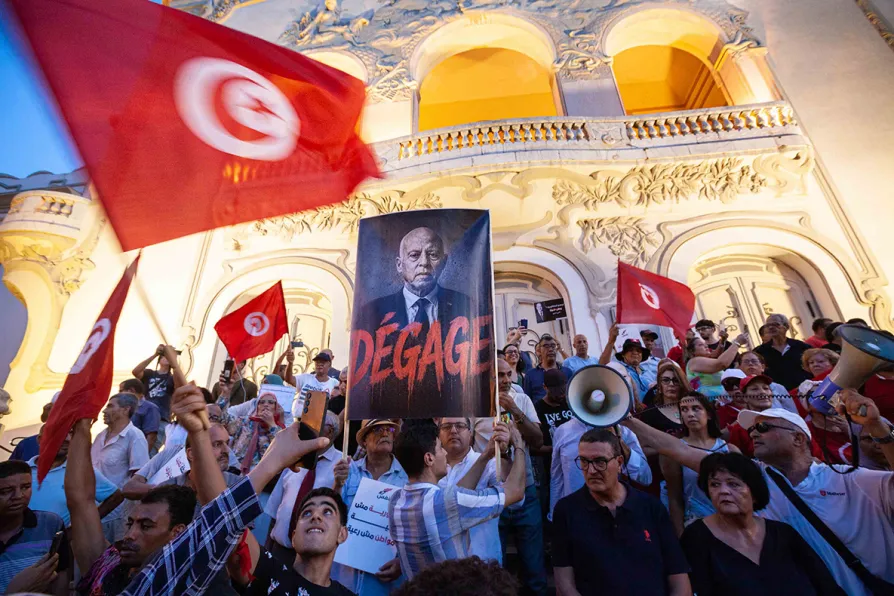





ALGERIANS voted today in parliamentary elections overshadowed by cost-of-living concerns and bans on candidates seen as challenging the government.
Nearly 25 million voters chose from 1,235 candidates for 407 seats in the lower house of parliament, though turnout was a major concern after voters largely snubbed campaign events.
The government declared a paid national holiday to encourage participation.
Some 269 candidates were barred from running, including former leaders and activists of the Hirak pro-democracy movement that helped topple long-serving President Abdelaziz Bouteflika in 2019.
The electoral authority said rejected candidates were banned because of “links to illicit financial networks” and “suspicious political activities.”
The outgoing pro-government majority held about 300 seats in the outgoing parliament, with the Islamist MSP party the second largest force with 64 seats.
The presidential majority urged broad turnout to strengthen Algeria in the face of geopolitical challenges, while the opposition Workers’ Party campaigned for increased pensions and wages and against mining reforms favouring foreign investors.
The Socialist Forces Front urged the release of political prisoners and freer media and told voters that boycotting the elections would only serve the government.

Latin America is being swept by a series of right-wing electoral victories. But behind that shift to the right lies less of an ideological conversion than anger, fear, insecurity, and a deep crisis of democracy, asserts MARC VANDEPITTE
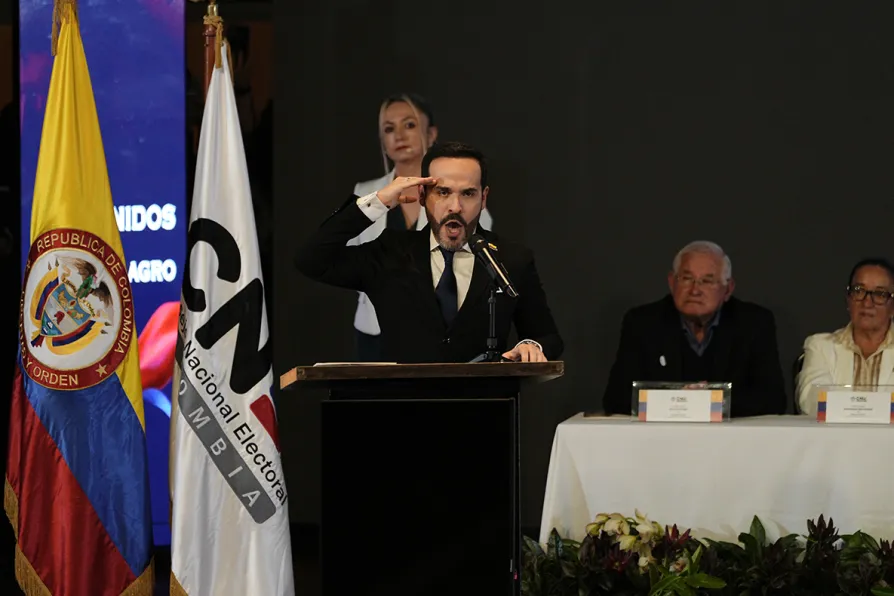
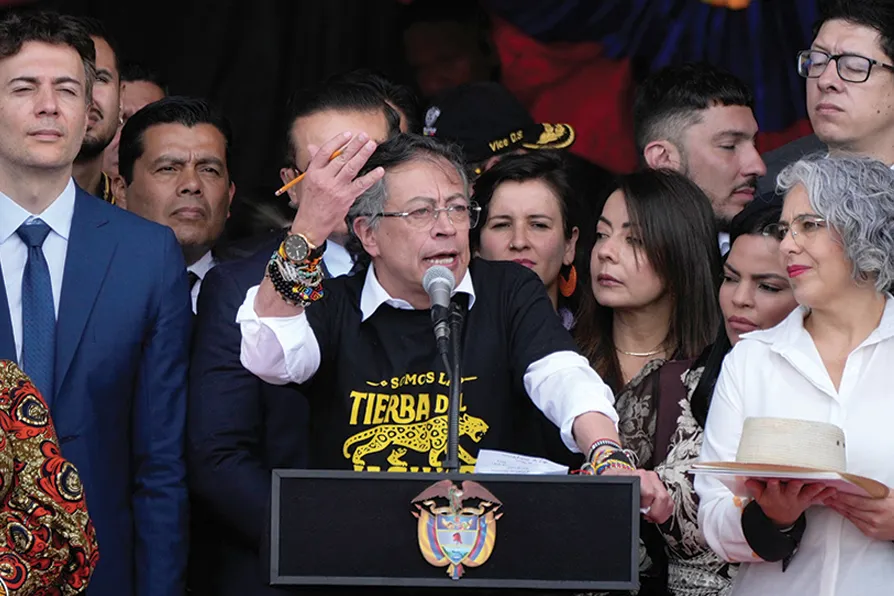
ENRIQUE SANTIAGO ROMERO says the Colombian far-right’s election victory is deeply suspect — and the United States has its fingerprints all over it
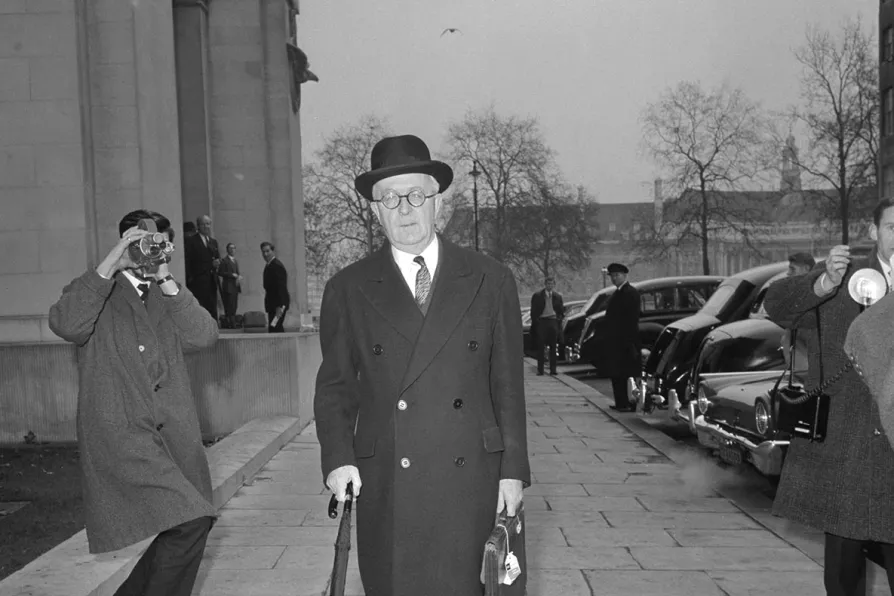
In part II of a serialisation of his new book, JOHN McINALLY explores how witch-hunting drives took hold in the Civil Service as the cold war emerged in the wake of WWII