
Washington’s inability to subjugate Iran is an example of how it is trying to preserve a regional order that no longer exists, argues RAMZY BAROUD


‘Solidarity and unity must be our watchwords’
The incoming general secretary of the General Federation of Trade Unions GAWAIN LITTLE looks at the tasks of the organisation in the current turbulent period
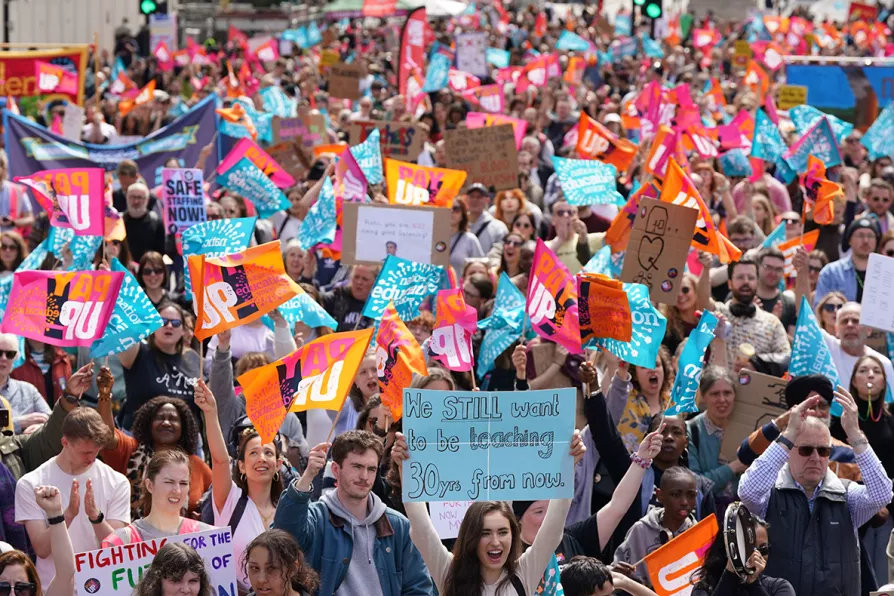
 People listen to Kevin Courtney, Joint General Secretary National Education Union (NEU) speaking at a rally in Westminster, London, as they stage walkouts across England in an ongoing dispute over pay, May 2, 2023

US financial instability is exposing the limits of a dollar-dominated global economy — and giving the Global South a historic chance to build an alternative, says MURAD QURESHI
DOUG NICHOLLS says the parasitic finance markets must be challenged or another British government could be toppled
The late country singer’s Imagination Library has put hundreds of millions of books into children’s hands. We should build on that legacy by defending the libraries at the heart of our communities, says BRENDA AITCHISON
Deprivation is a fundamental factor in criminal behaviour that must be addressed but, KENNY MacASKILL argues, there needs to a major rethink in sentencing to tackle overcrowding
MML director MEIRIAN JUMP outlines the recently refreshed library’s busy autumn schedule that ranges from book sales, archival exploration, community work with online education and the ever popular site tours
TONY BURKE surveys the shifting political landscape and the challenges Labour needs to address if it is to prevail in the 2028 federal elections





THE British trade union movement is at a crossroads. We face a cost of living crisis that has deep roots in more than 40 years of neoliberal economic reform and the systematic weaknesses in the national economy that have developed as a result.
The decline of Britain’s manufacturing base, the stripping out of skilled, well-paid jobs, and the decimation and privatisation of public services and utilities has left our economy vulnerable to short-term fluctuations, which can have a long-term impact on working people’s incomes.
This has been realised most recently in a crisis which has seen the value of pay plummet. The governor of the Bank of England, earning £575,000 a year, has called on workers to exercise pay restraint as the cost of daily necessities goes up by a staggering amount. Food inflation in the 12 months to March 2023 was running at 19.2 per cent with items like cucumbers up by 52 per cent. In this context, pay restraint is the last thing our economy, or working people, need.

Similar stories

We have the alternative economics, histories of our struggles and the confidence to change the world
General Federation of Trade Unions assistant general secretary HENRY FOWLER reports on the final day from the GFTU’s residential Summer School at the Workers’ Retreat, Quorn Grange Hotel

Assistant general secretary of the General Federation of Trade Unions HENRY FOWLER reports on day 1 from the GFTU’s residential Summer School at Quorn Grange Hotel

General Federation of Trade Unions president and bakers’ union general secretary, SARAH WOOLLEY, guides us through the GFTU’s Summer School happening this week at Quorn Grange Hotel
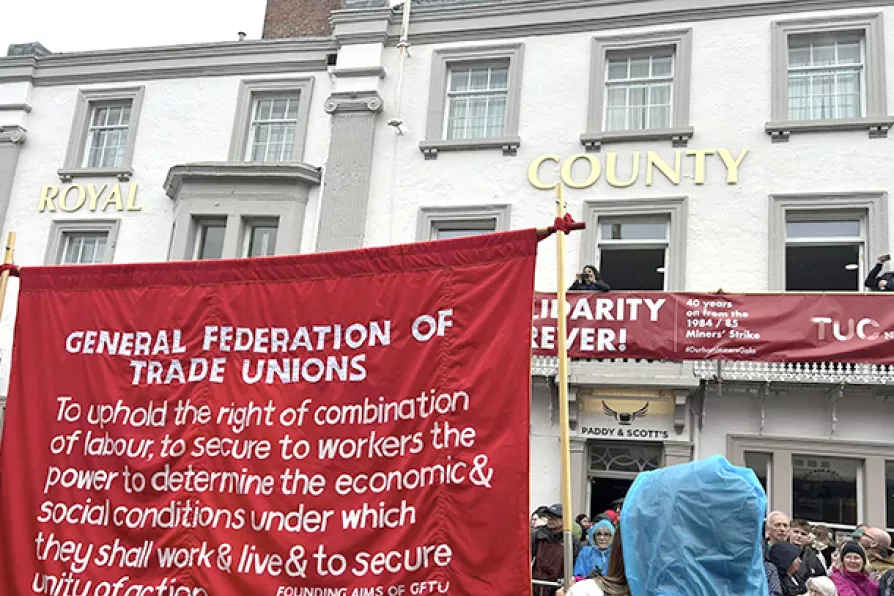
HENRY FOWLER outlines the GFTU’s new 2026-27 education programme and argues that investing in trade union education is essential to building worker power, developing leaders and strengthening collective action