
From London’s holly-sellers to Engels’s flaming Christmas centrepiece, the plum pudding was more than festive fare in Victorian Britain, says KEITH FLETT


In Germany, critics of the government are losing their bank accounts, and more
Repression against left-wing, anti-imperialist and Palestine solidarity structures in Germany is increasingly aimed at undermining their economic means of existence, says LEON WYSTRYCHOWSKI
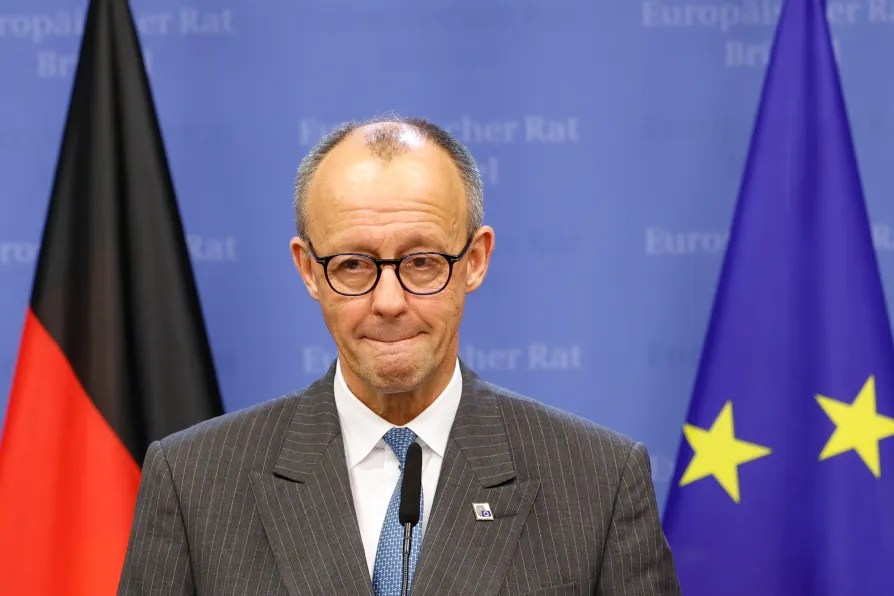
 REPRESSIVE: German Chancellor Friedrich Merz

Once the bustling heart of Christian pilgrimage, Bethlehem now faces shuttered hotels, empty streets and a shrinking Christian community, while Israel’s assault on Gaza and the tightening grip of occupation destroy hopes of peace at the birthplace of Christ, writes Father GEOFF BOTTOMS
From a lockdown digital project to a vital tool for class solidarity, ROBERT POOLE and HENRY FOWLER reflect on half-a-decade of struggle
After years hidden away, Oldham’s memorial to six local volunteers who died fighting fascism in the Spanish civil war has been restored to public view, marking both a victory for campaigners and a renewed tribute to the town’s proud International Brigade heritage, says ROB HARGREAVES
The June 2025 attacks on Iran have heightened the risk of a wider war, exposed the fiction of a rules-based international order and left ordinary Iranians trapped between external aggression and internal repression, says the Committee for Defence of Iranian People’s Rights
While pretending to seek peace, Europe is heading toward a collision course with Russia – using security guarantees, troop deployments, expropriation and censorship as tools, writes SEVIM DAGDELEN
A WWI hero, renowned ornithologist, medical doctor, trade union organiser and founder member of the Communist Party of Great Britain all rolled in one. MAT COWARD tells the story of a life so improbable it was once dismissed as fiction





THE German Communist Party (DKP) announced earlier this month that several associated bank accounts (including that of the party executive) will be terminated as of December 31 2025.
The reasons for the account termination remain unclear and the act in itself raises more questions than answers. The case has also drawn attention to a trend in Germany that appears to be resurfacing more and more: attacks on the material foundations of actors who criticise the German government, and especially its policies on war.
Cuba solidarity as grounds for termination?
According to the DKP, the termination of their bank was preceded by an inquiry from GLS Bank about the party’s donations to Cuba.
The DKP interprets the subsequent cancellation as an attack on Cuba solidarity. Patrik Kobele, chair of the DKP, responded defiantly, stating that the party would further strengthen its “international solidarity with socialist Cuba, which — against the backdrop of [US] sanctions that violate international law — is being turned into an accusation against us.”
Cuba solidarity organisations that also hold accounts with GLS have voiced concern that they could be next.
At the same time, such drastic repression related to Cuba does not fit Germany’s political trend over recent decades. While right-wing actors like to denounce the island as a “dictatorship,” Cuba has enjoyed a relatively positive image even in liberal-left circles — as a poor underdog that supposedly shows socialism to be “a nice idea that fails in practice.”
Germany does not impose sanctions on Cuba. Ordinary travel agencies sell flights to the island, and Cuban rum, cigars and similar products are available not only in fair-trade shops but also in German supermarkets and tobacco stores.
For this reason, some suspect that the move against the DKP is more closely tied to its position on the war in Ukraine. But that raises another question: why invoke Cuba at all, when the war in Ukraine is a far more morally charged political battleground in Germany — one where entirely new laws have already been created to criminalise dissenting views?
Pressure from the Trump administration?
If Cuba is indeed the issue, one can surmise that the pressure may have come from the US. Over the summer, the blockade and sanctions that Washington has imposed illegally on the small socialist country for decades were once again tightened by the Trump administration.
The new measures are aimed primarily at financial transactions. This suspicion is reinforced by another case. As the author has learned, the left-wing legal aid organisation Rote Hilfe (Red Aid), which also banks with GLS, was asked similar questions.
In its case, the focus was reportedly on the so-called “Antifa East,” for whose legal proceedings Rote Hilfe collects donations. This label refers to several anti-fascist activists accused of having acted militantly against neonazi structures in eastern Germany over many years.
On November 13 2025, the Trump administration placed this structure, whose existence as a coherent organisation is highly questionable, on its list of “foreign terrorist organisations,” effective from November 20. In addition, the so-called “Rewards for Justice Programme” run by the FBI, CIA, NSA, and the Department of Defence recently announced a reward of $10 million for information on several European anti-fascist structures, including “Antifa East.”
When this author asked GLS whether the account terminations might be the result of direct or indirect pressure from the US, the bank responded by referring generally to “regulatory obligations,” which are also listed on its website. At the top of that list is the duty to “prevent money laundering and the financing of terrorism.”
The accusation of “terrorism,” however, in connection with the DKP and Cuba or Rote Hilfe and “Antifa East,” is made exclusively by the United States.
An increasingly common practice
Regardless of whether these terminations resulted from direct US pressure, from German authorities, or from pre-emptive compliance by GLS, such attacks have become more frequent in Germany in recent years. At times they also affect right-wing or “Covid-critical” actors.
Above all, and increasingly, they target organisations and individuals who oppose the anti-Russian war discourse or express pro-Palestinian positions. Since 2016, various left-wing and Palestine solidarity parties, organisations, and publishing houses have lost their bank accounts, including — on multiple occasions — the Jewish Voice for a Just Peace. Individuals, too, have repeatedly been affected in recent years.
One particularly extreme case is that of Huseyin Dogru. He was the founder of Red Media, a small but influential left-wing outlet published primarily in English, run from Germany, and known for regularly reporting on Germany’s domestic anti-Palestinian repression. Germany placed Red Media and Dogru on the EU sanctions list. Since then, according to German repression authorities, Dogru is no longer allowed to work or receive benefits.
Anyone, including his own wife, who provides the father of several children with money or material support is liable to prosecution.
German “pro-Russian” influencers have also been subjected to similar sanctions, which in practice amount to denaturalisation — something that has technically been illegal in Germany since liberation from fascism. Even if these measures represent the — thus far — most extreme forms of this kind of repression, they share the same core logic as the account terminations: those affected are to be deprived of their means of existence.
This article is republished from peoplesdispatch.org.

Similar stories
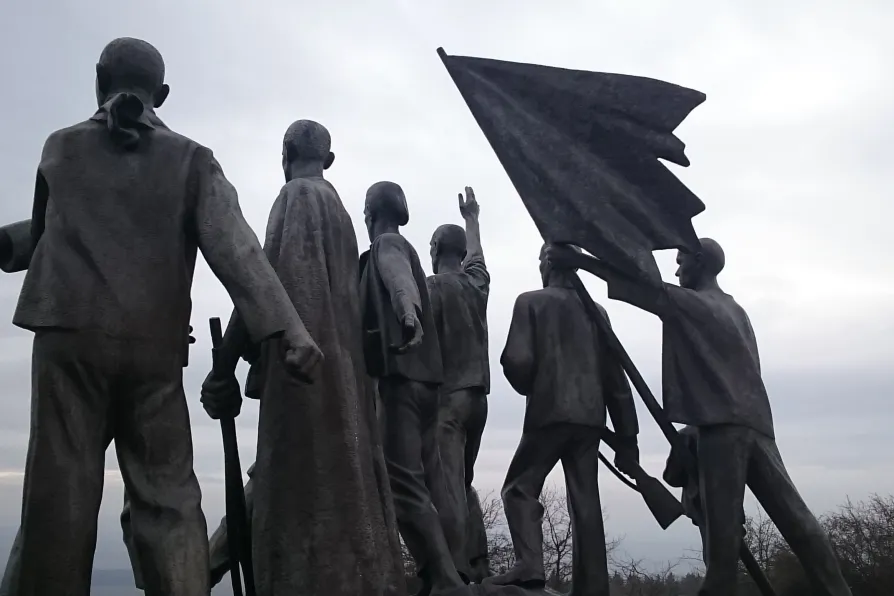
The decision highlights the tension between freedom of expression and the state’s role in shaping historical memory at former concentration camps, reports LEON WYSTRYCHOWSKI

A judge in a German court ruled that the ban activity imposed on renowned Dr Ghassan Abu-Sittah was unlawful, reports LEON WYSTRYCHOWSKI
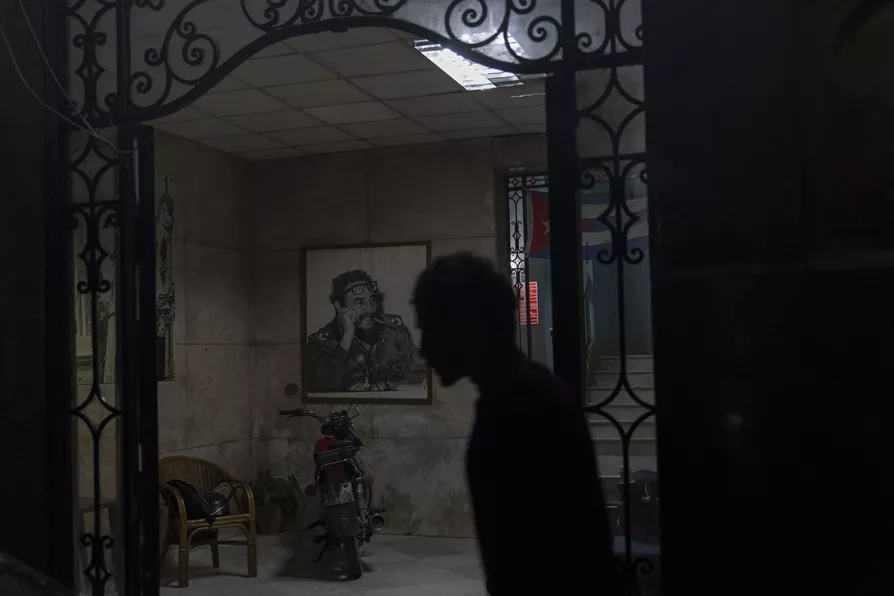
Outgoing president Joe Biden had removed Cuba from the list less than a week prior, a long-awaited move that he committed to in his final days in office
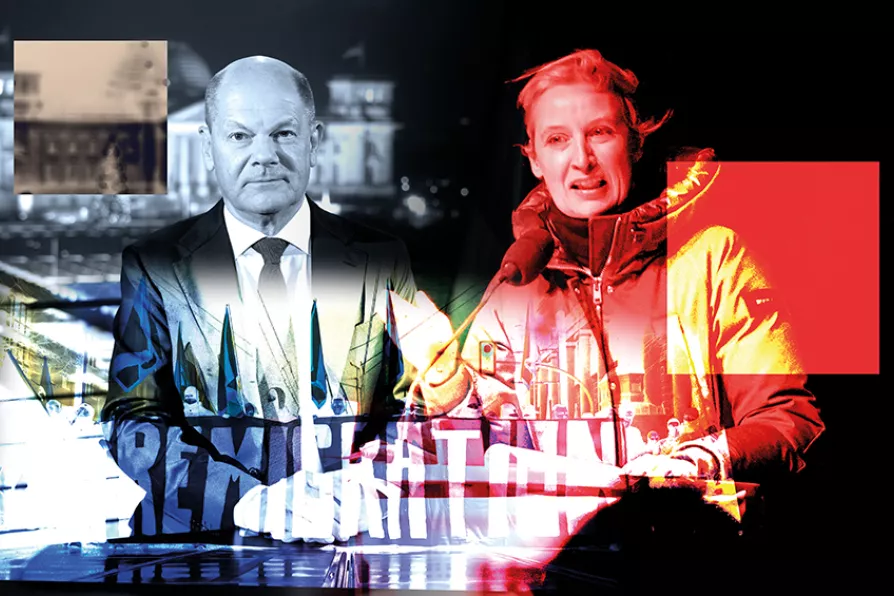
With federal elections coming up in Germany in February, NICK WRIGHT takes a look at the class forces shaping the policies of the main parties, and sees little hope of a breakthrough for the left