
Working people across Britain are fighting back against austerity, war, repression and exploitation. The challenge now is to unite those struggles, says Communist Party of Britain assistant general secretary JOHNNIE HUNTER

Central banks as weapons: how the West learned from the eurozone crisis
Targeting of Russia's basic financial infrastructure is already proving effective — but this is a weapon honed in Europe over the last decade of crisis, writes JAMES MEADWAY


Train drivers’ union Aslef general secretary DAVE CALFE speaks to Ben Chacko about his hopes that Burnham’s devolution agenda will include the importance of the railway
DIANE ABBOTT provides an analysis of the reasons for EU and British voters’ dramatic swing to the right
Some of the review’s proposals could make the benefits system less cruel and dehumanising. But its vague plans for services and non-cash support revive the threat that disabled people will lose control over the money we need to survive, writes DYLAN MURPHY
Believe it or not, there was a time when the US government built beautiful homes for working‑class Americans to deal with a housing shortage, writes ERAN BEN-JOSEPH
MAT COWARD has heaps of good advice on recycling garden and household waste over the winter





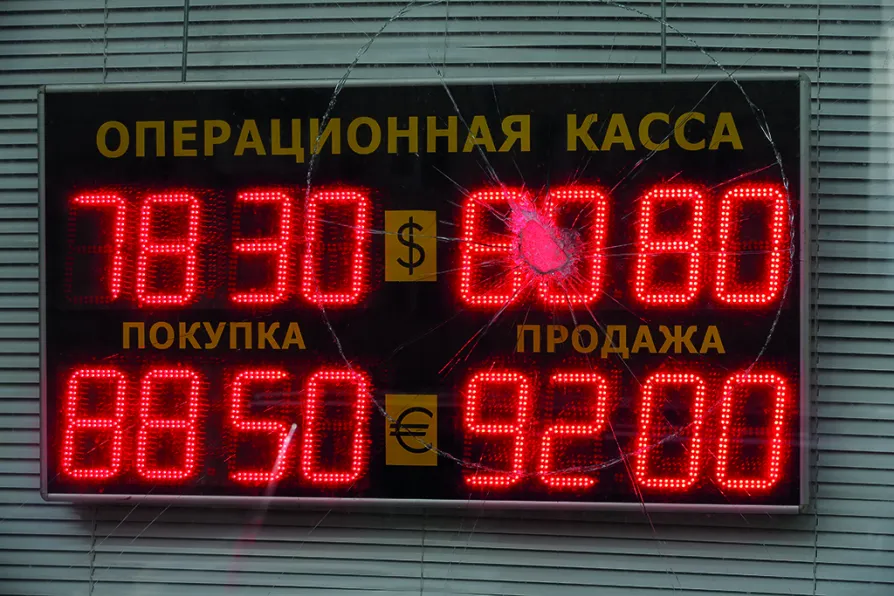
SCENES from Moscow and other Russian cities over the last 24 hours suggest the initial stages of a bank run, whilst the rouble fell almost 40 per cent in early trading as East Asian markets have opened. This was the intended result of the economic sanctions announced by European powers, Canada and the US, subsequently joined by Japan, over the weekend.
The sanctions are measures of an unusually severe degree, threatening potential economic devastation, but the major mechanism they use have been road-tested over the last decade of economic crisis and disorder.
The economic blow from central bank sanctions on Russia will remain exceptionally severe. Bank of Russia will likely find that capital controls and dramatic interest rate hikes are what it relies on to try and defend the rouble and thus its banking system.
Oligarchs and messaging systems

Similar stories

US financial instability is exposing the limits of a dollar-dominated global economy — and giving the Global South a historic chance to build an alternative, says MURAD QURESHI

Friedrich Merz’s call for a new Plaza Accord ignores how Washington’s 1985 currency ambush destroyed Japan without fixing US deficits — China, a sovereign socialist state with 1.4 billion consumers, cannot be bullied the same way, writes CARLOS MARTINEZ
ROGER D HARRIS and SARA FLOUNDERS challenge propaganda against the blockaded socialist island