Britain funds the policing of black culture 16 times better than the culture itself. The Diamond Jubilee is the moment to end that, argues CLAUDIA WEBBE


 Latest editorial

Understanding the defeat of fascism
NICK WRIGHT examines the British ruling class's complex relationship with fascism before, during and after the second world war
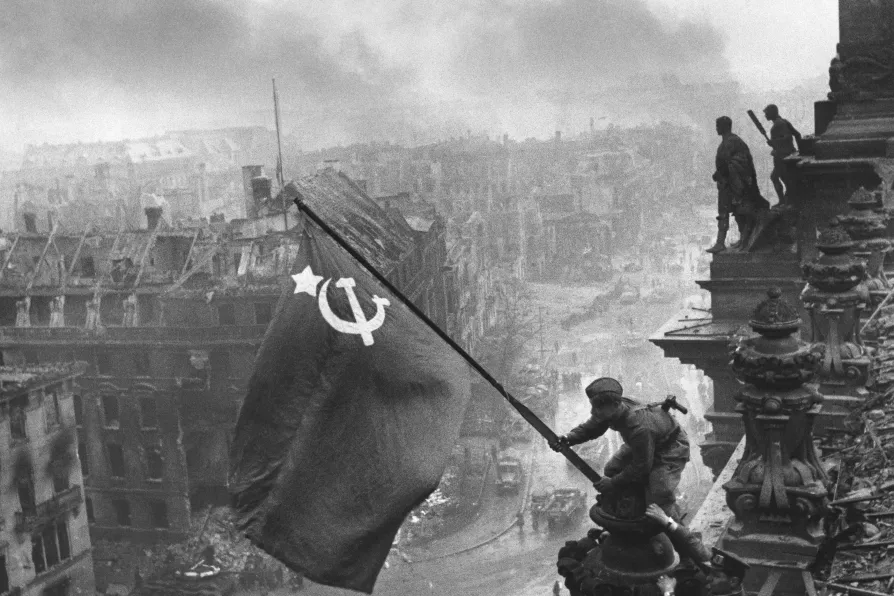 RED FLAG FLYING: The Soviet flag is hoisted over the Reichstag after the Red Army’s liberation of Berlin
Growing instability in the US economy and financial markets could have serious consequences worldwide because of the central role of the US dollar and financial system, argues MICHAEL BURKE
Despite Andy Burnham’s declaration defending the continued partition of the island, all major international and internal trends are converging to make Irish reunification inevitable
Humans are part of the ‘animal kingdom’ – and of nature in general – but also distinct from it and labour (work) is part of what makes us unique, declared Engels. His insights 150 years ago into how our species came to be and how we differ from the rest of nature, are as important today as they were then, says the MARX MEMORIAL LIBRARY
Growing instability in the US economy and financial markets could have serious consequences worldwide because of the central role of the US dollar and financial system, argues MICHAEL BURKE
From Margate to Deal, mining memories are being kept alive. National co-ordinator for General Strike 100, HENRY FOWLER continued his nationwide tour of partner organisations in the Garden of England





MY MUM told me how, as an 18-year-old worker in a Dunstable aircraft factory, she traced every advance of the Red Army on a map, illustrated with the image of Uncle Joe, on her bedroom wall.
For her the threat of fascism was real. Throughout the war my grandparents housed a Dutch family, refugees from the Nazi invasion. My father, as a 21-year-old factory worker, was prepared by the Communist Party for clandestine work and was given a false identity in anticipation of a Nazi occupation. The party even bought up a local newspaper in preparation for the suppression of the Daily Worker.
In the working class there was tremendous opposition to war but a great fear of a Nazi invasion combined with a real sense that the ruling class was preparing to do a deal with the Nazis.

Similar stories

Faced with crises in every direction, Volodymr Zelensky is rewriting his country’s complex history by paying homage to the founding fathers of Ukrainian ultra-nationalism and courting their modern heirs, writes KENNY COYLE

The defence secretary’s resignation reveals not a split over principle but a dispute over pace of military spending, as Britain’s political Establishment unites behind deeper Nato commitments, argues NICK WRIGHT
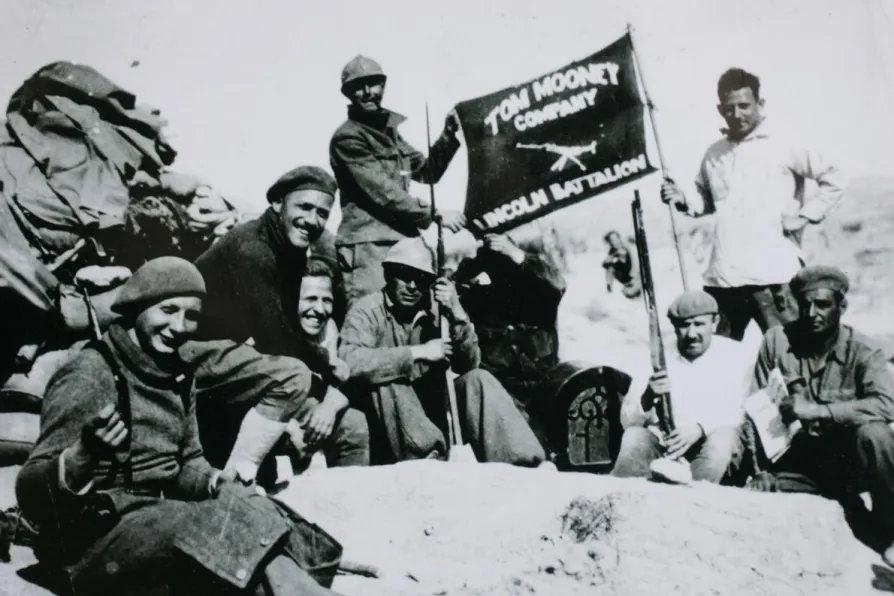
CJ ATKINS commemorates one of the most dramatic moments in working-class history

In a speech to the 12th Xiangshan Forum in Beijing, SEVIM DAGDELEN warns of a growing historical revisionism to whitewash Germany and Japan’s role in WWII as part of a return to a cold war strategy from the West — but multipolarity will win out