Cuban trade union federation CTC leader OSNAY MIGUEL COLINA speaks to Ben Chacko about life and work under a crippling US siege


 Latest editorial
Brazil’s election is the next front line in Washington’s war against a multipolar world
Sovereignty and the rule of law are under threat from Trump’s attacks on Lula’s administration just as they have been across Latin America, argue CARLOS MARTINEZ and SARA VIVACQUA
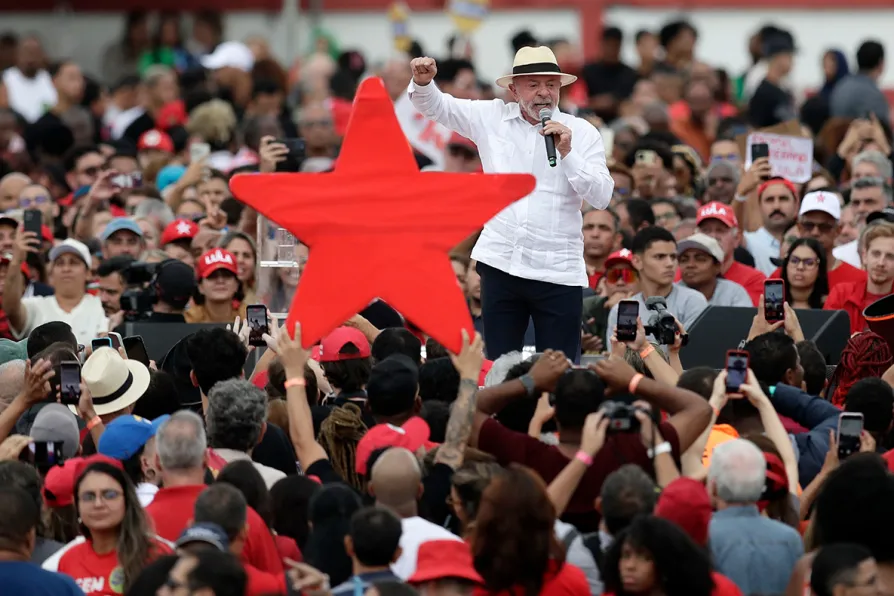 Brazilian President Luiz Inacio Lula da Silva, who is running for re-election, speaks during a campaign rally in Rio de Janeiro, Brazil, Saturday, Aug. 22, 2026. (AP Photo/Bruna Prado)
A part of the British empire’s network of slavery, today the Caribbean island of Nevis faces a new form of exploitation in the form of crypto-colonialism, CLAUDIA WEBBE writes
A new book by Victoria Holmes illuminates the many hidden histories of the oppression experienced by Gypsy/Roma/Traveller community, writes ROGER McKENZIE
Even the oligarchs of the artificial intelligence industries are warning that their creations have the capacity for the ultimate destruction of the planet and its population. ANDREW MURRAY suggests that there might just be other solutions
The Labour government must deliver on its commitment to bring back privatised services into the public sector. This not only saves money but also creates accountability and generates wider social benefits, argues ANDY MCDONALD MP
Public ownership of Great British Railways has enormous potential to improve our railway network, but that can’t happen unless jobs, employee rights and union recognition is at the heart of the transition, argues MARYAM ESLAMDOUST
Challenges from the unscrupulous misuse of AI to steal actors’ voice and physical likenesses is being met with a firm union response, writes LYNDA ROOKE





THE Financial Times reports that the Trump administration is considering fresh Magnitsky sanctions on Alexandre de Moraes, the Brazilian Supreme Court judge who presided over the case that sent former president Jair Bolsonaro to prison for plotting a coup.
Brazil heads to the polls again in October. President Luiz Inacio Lula da Silva’s principal challenger is Senator Flavio Bolsonaro, son of the jailed former president, whose campaign has become entangled in the Banco Master affair, one of the largest banking frauds in the country’s history.
The official justification for the proposed sanctions is human rights and press freedom. Yet one of the FT’s own US sources endorses Donald Trump’s interference outright: De Moraes has “gone after the supporters of Trump. Not just Elon Musk, but Maga types in Brazil. Even if we want a good relationship with Brazil, obviously this guy is an enemy.”
The actual aim is an obvious one: to punish the judge for holding Bolsonaro senior to account over his attempted coup to overturn the 2022 election. After losing to Lula, Bolsonaro plotted with figures around the military to annul the result. On January 8 2023, his supporters stormed the National Congress, the Supreme Federal Court and the presidential palace in Brasilia to trigger a coup.
It was the case arising from that assault, over which De Moraes presided, that sent the former president to prison, and it is for that conviction that Washington now proposes to sanction him. The contrast with the US is instructive: no comparable reckoning followed January 6 2021, and the Brazilian courts have shown an institutional autonomy their US counterparts lacked.
If these proposed sanctions are implemented, it would not be the first such move. The Bolsonaro camp has repeatedly petitioned Washington for sanctions against Brazilian officials, handed US agencies national security material that the Supreme Federal Court says was stolen while Bolsonaro held office. Each move timed to coincide with the electoral calendar.
In July 2025, the US Treasury sanctioned De Moraes under the Global Magnitsky Act — the first time the instrument had been turned on a serving judge of any country’s highest court.
The framework lets Washington freeze the assets of foreigners it accuses of corruption or rights abuses, an extraterritorial reach with absolutely no grounding in international law.
Eduardo Bolsonaro, another of the ex-president’s sons and now a fugitive from Brazilian justice, boasted online that the penalty vindicated his campaigning: “I have the feeling of a mission accomplished.”
Also in 2025, Eduardo Bolsonaro and Paulo Figueiredo, grandson of Brazil’s last military dictator Joao Figueiredo, met US Secretary of State Marco Rubio and Trump at the White House to solicit an investigation spanning digital trade, electronic payments, tariffs and intellectual property.
Within weeks the US trade representative opened a Section 301 case and Trump unveiled a 50 per cent tariff on Brazilian goods in an open letter that tied its removal to Bolsonaro’s release, branding the conviction a “witch-hunt.”
There is rich irony in Washington denouncing “politicised prosecutions” in Brazil. In 2018, Lula himself was jailed on charges the Supreme Court later annulled, having found the presiding judge to be biased — a prosecution the US Department of Justice actively co-operated with, and which removed the front-runner from the presidential race and delivered the presidency to Jair Bolsonaro.
Washington, in short, is treating a sovereign election as its own affair. For Lula the contest is no longer only about another presidential term; it is about proving that interference of this kind can be faced down and beaten — a precedent the whole Global South is watching.
Nobody’s backyard
Nor is this only a strategy directed against Brazil. Venezuela’s president has been kidnapped. Cuba is under an energy siege designed to break it. Colombia has just sworn in a hard-right president with Washington’s backing.
Trumpian quasi-fascists now govern in Chile, Argentina and Honduras. This is the Monroe Doctrine in 21st century dress: Latin America as the United States’ backyard, its courts, its elections, its natural resources and its trade policy all subject to supervision from the north.
Brazil, however, is not an easy nut for Washington to crack. It is one of the world’s 10 largest economies and a charter member of Brics. It now trades more with China than with the United States and it is challenging the tariffs at the World Trade Organisation, with Beijing joining the case. Lula has answered the pressure by leaning into the Global South: co-ordinating with India’s Prime Minister Narendra Modi, invoking Brazil’s Economic Reciprocity Law, and steering commerce away from US markets.
Beijing’s support is concrete rather than merely rhetorical. China now buys more than a quarter of everything Brazil exports. The two economies increasingly settle accounts directly in Brazilian reais and Chinese yuan, backed by a central-bank swap line of 190 billion yuan — around $28bn — cleared outside New York. Chinese investment committed to Brazil reached $6.1bn in 2025, with the carmaker BYD now assembling electric vehicles at Camacari, on the site of the plant Ford abandoned in 2021.
When the July duties took effect, Xi Jinping telephoned Lula to pledge Beijing’s backing for Brazil’s sovereignty against “external interference,” and over the year the two countries set a fresh bilateral trade record. The more of the relationship that sits beyond the dollar, the less a hostile US Treasury can squeeze.
The economic front now carries a military shadow. In May, Trump signed a National Counterterrorism Strategy that for the first time lists “violent left-wing extremists” alongside jihadists and cartels.
In June, two Brazilian criminal networks were designated Foreign Terrorist Organisations — a label that exposes anyone connected to them to secondary US sanctions.
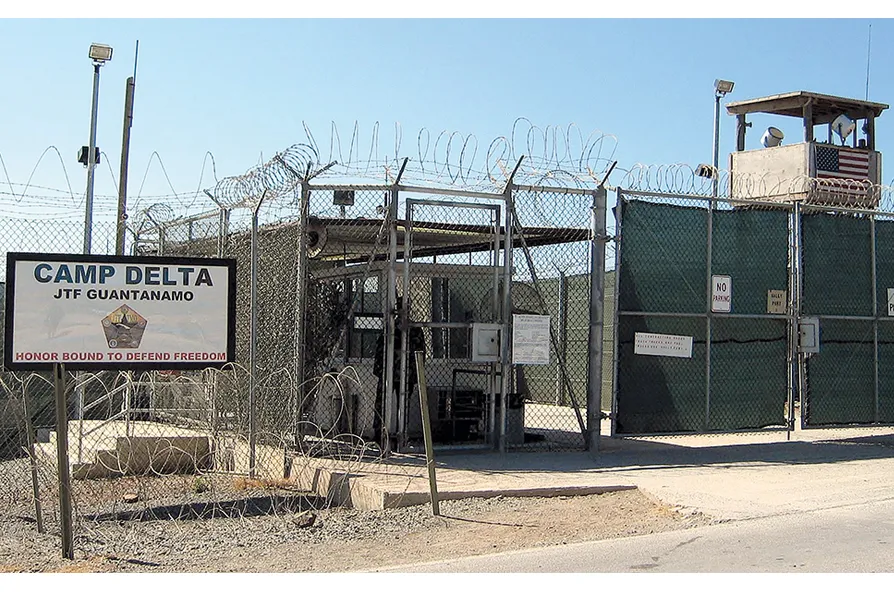
From Guantanamo Bay, the US base in Cuba, War Secretary Pete Hegseth declared that the United States was “taking back our hemisphere,” vowing to pursue targets in Latin America with the same tools once aimed at al-Qaida and Isis.
Brazil’s Foreign Ministry has since warned Congress that the terrorism designation could be used to justify US military action on Brazilian territory.
On August 16, Lula launched his re-election campaign in Sao Bernardo do Campo, the industrial suburb where he led the metalworkers’ strikes against the military dictatorship Washington had helped install in 1964, and for which he was imprisoned.
“As long as I am alive,” he told the stadium, “I will not stop fighting and allow the right to prevail.”
The fight is on. A victory for Lula in October would be a victory for the Brazilian working class, for Latin America, and for progressive forces everywhere.

Similar stories

FRANCISCO DOMINGUEZ introduces the background to a conference on defending Latin America’s sovereignty