

 Latest editorial

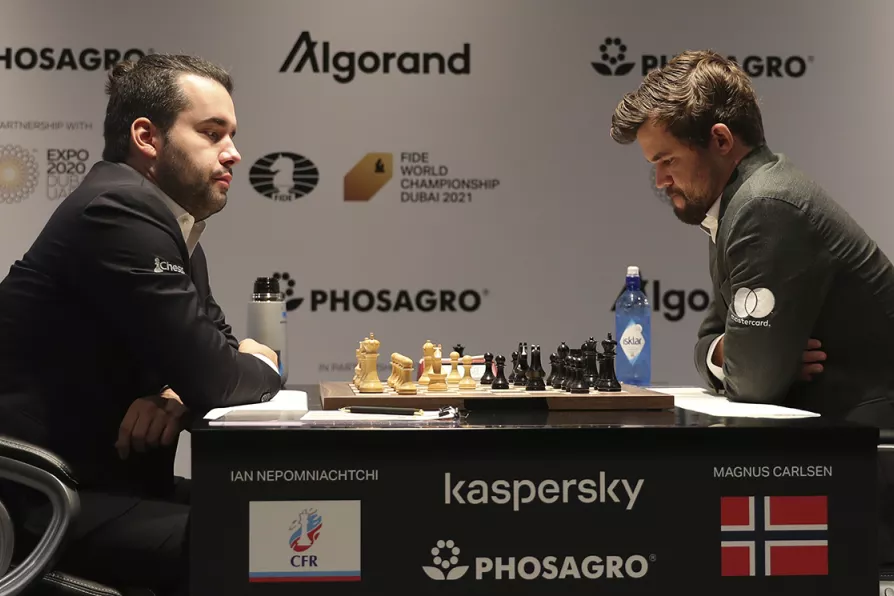 Norway's World Chess Champion Magnus Carlsen, right, competes with Ian Nepomniachtchi of Russia, in game five during the FIDE World Championship at the Dubai Expo, in Dubai, United Arab Emirates, Wednesday, December 1, 2021





NO CODED yoghurts, no hypnotists, no intimidating thugs in the audience these days, but the latest chess world championship, taking place in petrodollar-drenched Dubai, the biggest city in the sportswashing, rights-denying United Arab Emirates, hasn’t lacked drama so far despite opening with a succession of draws.
The game’s moved on since the days of the whey-faced oddball champion: the top modern player tends to be a sociable creature, and focused on the fitness and stamina that the game’s mental challenges demand.
And the mind games started long before Friday’s first game, with Russian challenger Ian Nepomniachtchi confirming in the media that the Zhores supercomputer, based in the Skolkovo Institute of Science & Technology in Moscow, was again part of his team’s armoury, helping the likeable 31-year-old and his aides to analyse complex board positions. Though rated only fifth in the world, the tech had aided Nepo, as he is conveniently known, to clinch the Covid-prolonged candidates tournament in March, earning the right to play Magnus Carlsen, the world champion since 2013, who turned 31 on Tuesday.

JAMES NALTON previews the Three Lions' round of 16 clash against the co-hosts in Mexico City


JAMES NALTON on Munyua’s stinging success at the World Darts Championship