
The UK Prime Minister may have the regal touch in northern England, but he’s been wrong-footed on the constitutional challenges posed by the Celtic Alliance of first ministers from Scotland, Wales and Northern Ireland, argues KENNY MacASKILL

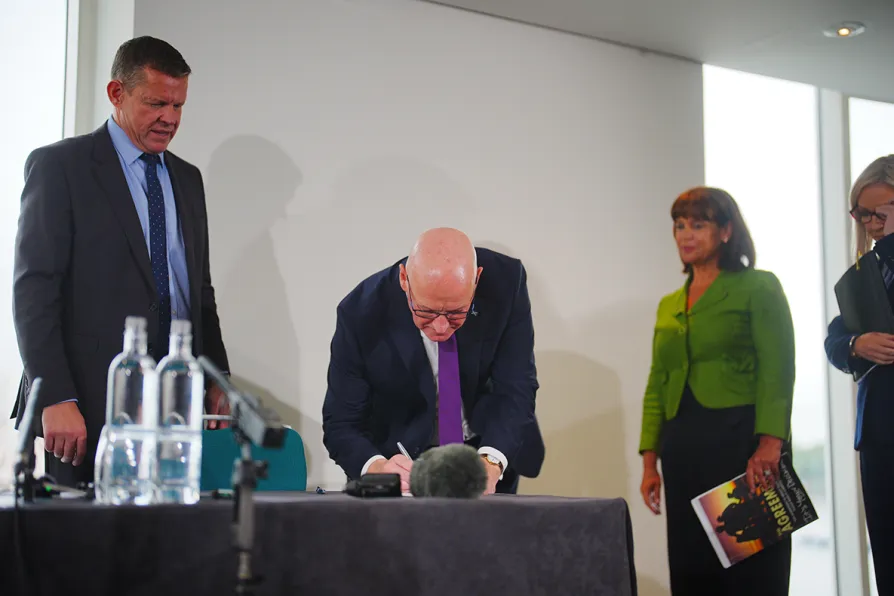
Political strangers on a train
JULIAN VIGO looks at how the Democrats became the war hawk party
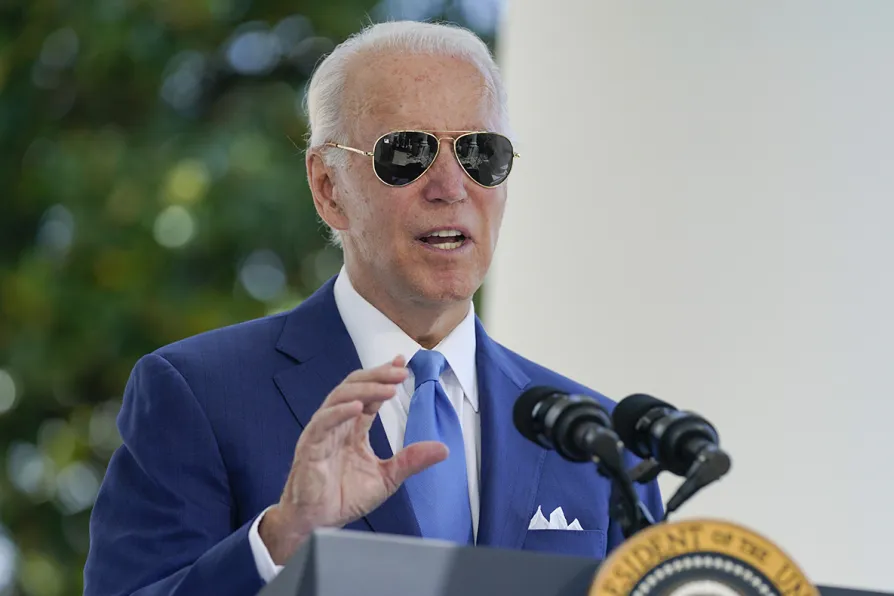
 US President Joe Biden speaks before signing two bills aimed at combating fraud in the Covid-19 small business relief programs Friday, August 5, 2022, at the White House in Washington
NEIRLAY ANDRADE, a member of the Communist Party of Venezuela’s political committee, outlines her party’s position on the crisis facing the country
A look at Taylor Wimpey’s accounts shows why Labour’s market-led housing strategy won’t deliver more, cheaper homes, as promised, says SOLOMON HUGHES
DAVID HORSLEY remembers the remarkable life and death of US black revolutionary George Jackson, whose politically passionate prison letters were published as Soledad Brother
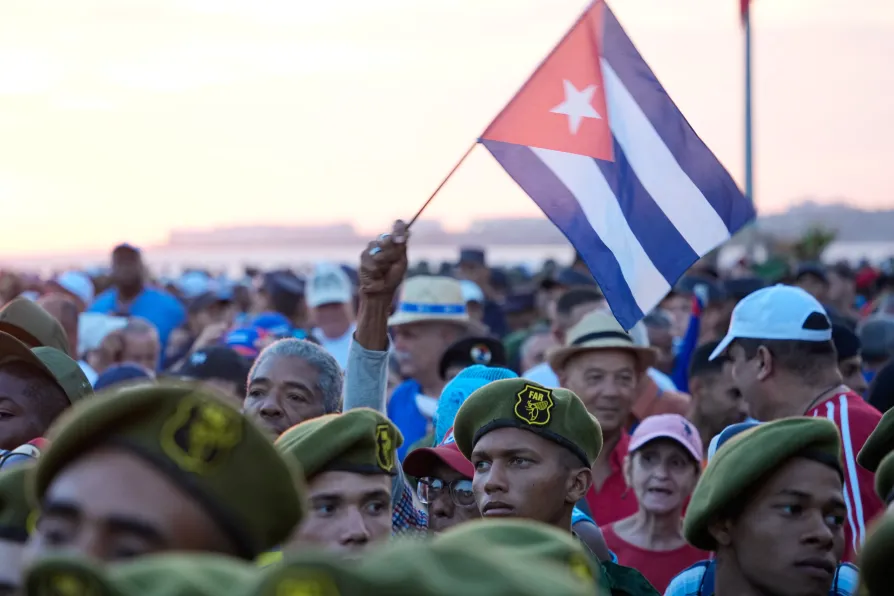
Cuban trade union federation CTC leader OSNAY MIGUEL COLINA speaks to Ben Chacko about life and work under a crippling US siege
A part of the British empire’s network of slavery, today the Caribbean island of Nevis faces a new form of exploitation in the form of crypto-colonialism, CLAUDIA WEBBE writes
Challenges from the unscrupulous misuse of AI to steal actors’ voice and physical likenesses is being met with a firm union response, writes LYNDA ROOKE





I HAVE been noticing it since the US global war on terror. Just three days after September 11 2001, Congress took up a short Bill, the 2001 Authorisation for Use of Military Force, which gave the president the power to use all “necessary and appropriate force” against virtually anyone, anywhere, at any time; and its initial intended use was to launch the invasion of Afghanistan.
The Democrats supported this Bill, with the one exception of Congresswoman Barbara Lee from Oakland, California, who faced death threats as the only lawmaker voting against military conflict.
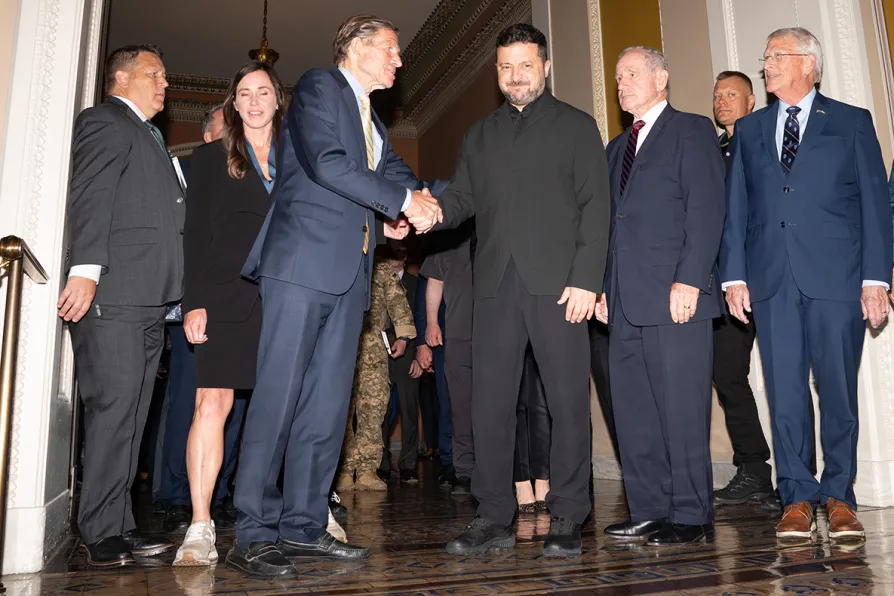
More recently, the Democrats have lent unanimous support for what was to be a $33 billion war package ostensibly with an eye toward funding Ukraine, but what in reality are funds that will go into the coffers of weapons manufacturers such as Raytheon, Lockheed Martin, Boeing and the usual suspects and the CIA.

Similar stories

CARLOS MARTINEZ responds to liberal hawk Simon Tisdall’s evidence-free China-bashing and asks whose agenda it really serves
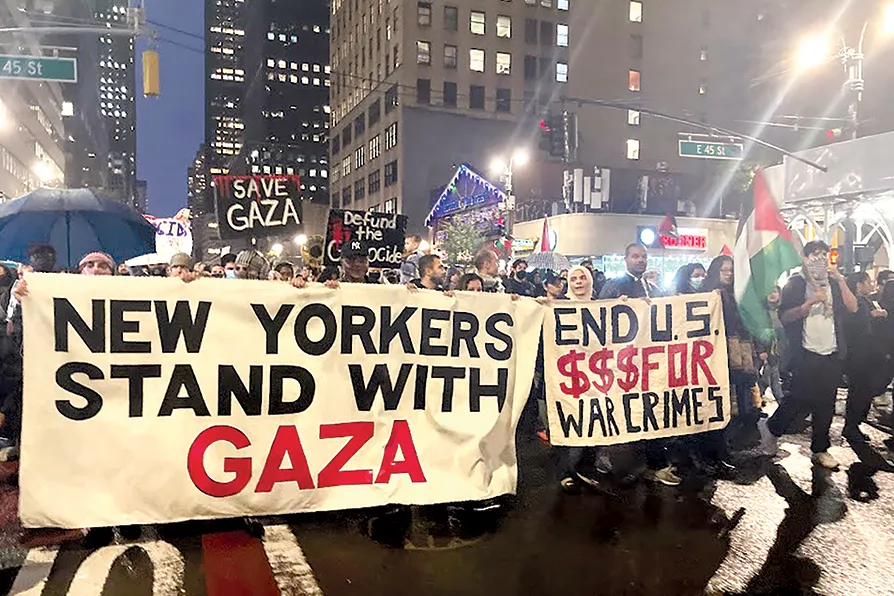
RAMZY BAROUD assesses the notable shift of US public opinion away from a carte blanche for Israel’s actions in the Middle East
ROGER D HARRIS and SARA FLOUNDERS challenge propaganda against the blockaded socialist island