TUC president and POA leader STEVE GILLAN speaks to Ben Chacko on the eve of Congress 2026


 Latest editorial
China’s democracy: how the National People’s Congress works
Western media dismisses the National People’s Congress while ignoring its extensive consultation processes, massive public participation mechanisms, and a tiered structure involving millions of deputies, explains JENNY CLEGG
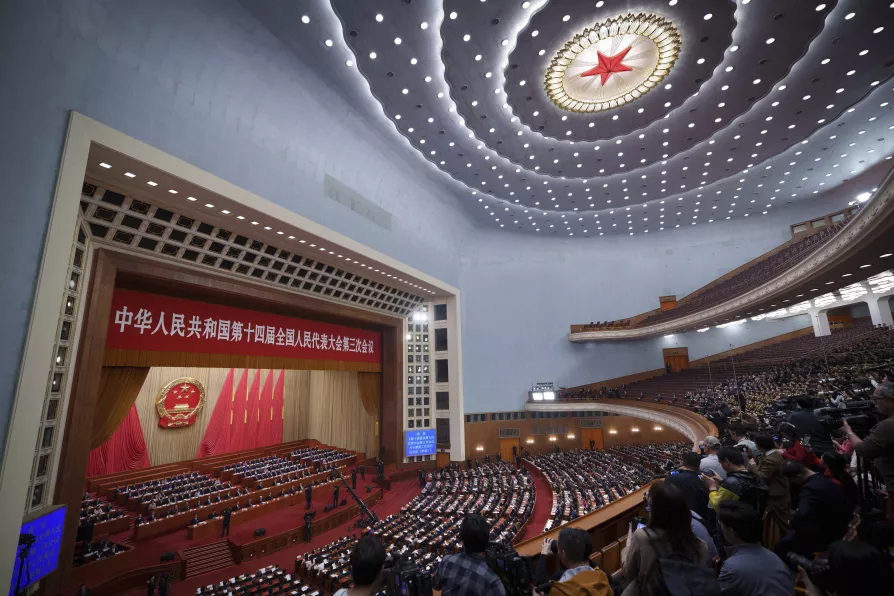 Closing session of the National People's Congress (NPC) at the Great Hall of the People in Beijing, China, March 11, 2025

DOUG NICHOLLS welcomes a turning point at this year’s Congress, where many motions call for a co-ordinated plan to revive British industry, a perspective outlined in his new book
HOPE VIRGO of campaign Dump the Scales warns MPs voting today they should be alert to the threat legalised assisted death poses to people with eating disorders
The Together Alliance is hosting two summits, North and South, to build power and plan action against the scourge of racism peddled by the right. DANIEL KEBEDE urges mass participation
The drift toward militarisation in Europe is not inevitable, left-wing and peace movements can preserve sovereignty and prevent war, says DÁIRE HUGHES MP
Whatever differences exist among international sympathisers of the Bolivarian revolution about its current trajectory, they should unite against the imperialist power that is the source of an enforced retreat, argues ROGER D HARRIS
Trade unions need to step up and force a turn in the policies of the labour movement to effectively confront the far-right threat, argues NICK WRIGHT





CHINA’S nearly 3,000-member National People’s Congress (NPC) has just gathered for its annual meeting in Beijing. Western mainstream media continually disparages China’s main legislature as a “rubber stamp parliament” — mindlessly repeating the phrase to numb readers’ minds to any thought other than that China must be a dictatorship.
That there are other forms of democracy — the idea of democratic centralism, deliberative democracy, has been around for over 100 years — the mainstream media cannot comprehend.
True, the NPC only meets for two weeks a year and never seems to reject any piece of legislation put before it. However, the reason why laws are passed unanimously is that they undergo a prior long and arduous process of deliberation, consultation and revision to ensure disagreements and differences are addressed and ultimately consensus is reached.

Similar stories
China’s investment and commitment to scientific research is already paying off, pushing the country to the centre stage of global technological advance, writes S Krishnaswamy

CARLOS MARTINEZ responds to liberal hawk Simon Tisdall’s evidence-free China-bashing and asks whose agenda it really serves

STEPHEN BELL reports from a delegation that traced the steps of China’s socialist revolution from its first modest meetings to the Red Army’s epic 9,000km battle to create the modern nation that today defies every capitalist assumption

One of the major criticisms of China’s breakneck development in recent decades has been the impact on nature — returning after 15 years away, BEN CHACKO assessed whether the government’s recent turn to environmentalism has yielded results