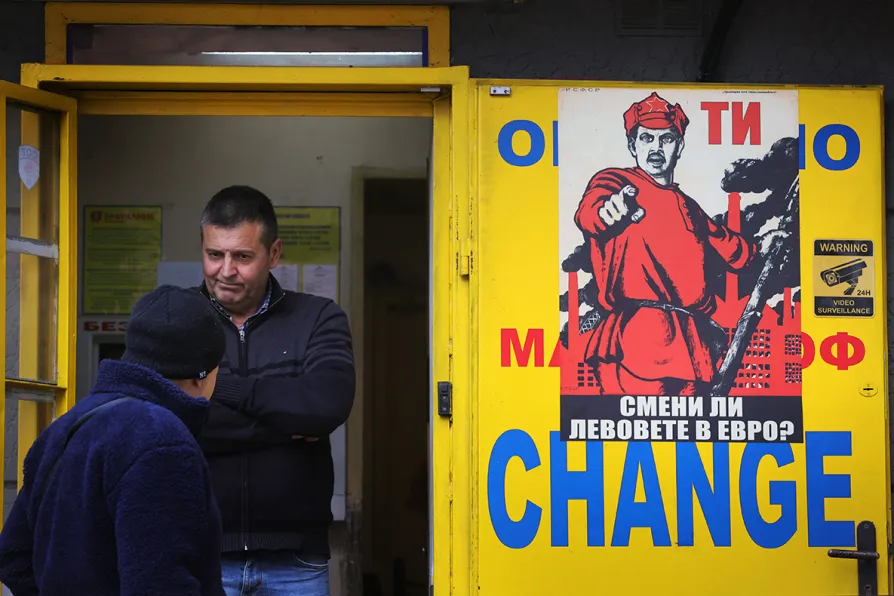
 People stand at a currency exchange office with a poster reading ‘Did you exchange your levs for euros?’ in Sofia, December 27, 2025





BULGARIA on Thursday becomes the 21st country to adopt the euro, despite simmering popular opposition.
Supporters of dropping the lev in favour of closer ties to Brussels are praising the move as Bulgaria’s greatest economic achievement since the counter-revolution of 1989, when a free market replaced the socialist economy. They claim it will attract more external investment.
But public sentiment is not fully behind the change. An EU Eurobarometer poll from March showed that 53 per cent of people opposed joining the eurozone, while 45 per cent backed it.
A separate Eurobarometer poll, taken between October 9 and November 3, showed that about half of Bulgarians opposed the single currency, while 42 per cent were in favour.
Many fear the change will be used as a smokescreen to further bump up prices amid rising inflation.

In an address to the Communist Party’s executive at the weekend international secretary KEVAN NELSON explained why the communists’ watchwords must be Jobs not Bombs and Welfare not Warfare

Washington’s tariff policies become explicable in light of the US economy’s relative decline and the astonishing rise of China, argues MICHAEL BURKE