










THE United States national debt has topped $40 trillion (around £30trn) for the first time in history, according to data released by the US Treasury Department on Wednesday.
The data shows that debt held by the public and intragovernmental holdings stood at $32.266trn (around £24trn) and $7.782 trillion (about £5.7trn), respectively, bringing total public debt outstanding to $40.047trn as of Tuesday.
The milestone, reached months earlier than expected, reflects the US federal government’s persistent budget deficits, as spending continues to exceed revenue, adding to the national debt.
The federal government has spent trillions of dollars in response to the Covid-19 pandemic and subsequently pursued tax cuts and increased military spending.
As a result, US federal debt has grown rapidly in recent years. Rising interest payments have further driven up the total size of the national debt.
Local media described the national debt surpassing $40trn as an ominous milestone for an economy resting on an increasingly shaky fiscal foundation.
Maya MacGuineas, president of the Committee for a Responsible Federal Budget, said on Wednesday that warning signs are flashing “with debt held by the public recently exceeding the size of our economy, the deficit-to-GDP ratio running twice as high as where it should be, and interest costs exceeding our national defence budget.”
Margaret Spellings, president and CEO of the Bipartisan Policy Centre said: “Our current fiscal trajectory is plainly unsustainable.
“Even in the rosiest scenarios, we’re speeding toward a cliff and refusing to turn the wheel.”
In a statement White House spokesman Kush Desai said US President Donald Trump had pledged to clean up former president Joe Biden’s fiscal mismanagement.
“That’s why the Trump administration has been focused on slashing waste, fraud and abuse in federal spending while accelerating economic growth to get America’s debt-to-GDP ratio trending in the right direction again.”


Only an ambitious programme of state-led investment can restore growth and improve living standards, argues MICHAEL BURKE
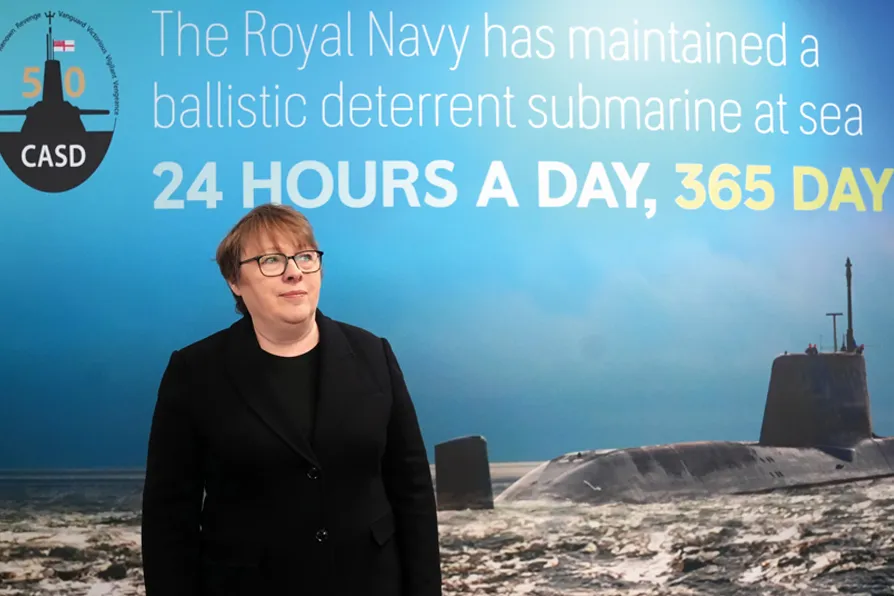
Expanding Britain’s nuclear capability increases the risk of nuclear confrontation. It does not keep us safe – it makes us a target, argues CAROL TURNER

Economists estimate extreme poverty could be drastically reduced for a fraction of global defence spending, yet military budgets continue to expand year on year, says JON TRICKETT MP, ahead of the Stop the War International Conference on Saturday

JENNY CLEGG looks at the key points that defined the China-US relationship, for now